



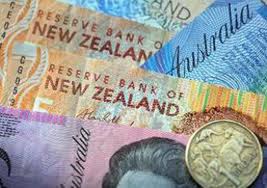
 SYDNEY/WELLINGTON: The Australian and New Zealand dollars consolidated near recent highs on Monday as the US dollar struggled, hit by increasing unease about the US budget standoff.
The Aussie sat at $0.9448, unchanged from late Friday's onshore trade in subdued activity due to a public holiday in the financial capital Sydney.
The Aussie was one of the best performing currency last week with a gain of 1.3 percent to stand within sight of a three-month peak of $0.9530 set in September.
Helping the currency is a sharp decline in Aussie short positions as investors pushed back expectations of an easing in Australia.
Latest data from the Commodity Futures Trading Commission showed net short positions in the Australian dollar almost halved to 34,819 contracts in the week of Sept 24, from more than 60,000 the week before.
Financial markets <0#YIB:> imply a one-in-4 chance of a cut to a record low of 2.25 percent by December, rising to two-in-three by April next year.
"I am surprised that the market is not even more negative than it is today," said Greg Gibbs, a strategist at Royal Bank of Scotland in Singapore.
Markets are increasingly worried that Washington could fail to reach a deal on raising the ceiling by Oct 17, when the Treasury has estimated it will have run out of cash.
He said the markets could become more risk-averse as the deadline nears, added Gibbs.
Support for the Aussie was found at $0.9420, with formidable resistance at the triple top around $0.9460.
The New Zealand dollar also had a quiet session to fetch $0.8315, after pulling back from $0.8352 hit late last week.
Market participants said the kiwi's inability to hold on to the mid-$0.8300 region had prompted some selling, although support was seen around $0.8300.
Supporting the kiwi was a position shift with currency speculators. CFTC data showed net kiwi long positions rose to 8,055 contracts, from -601 the period before.
Analysts said the ongoing government services shutdown in the United States would keep investors risk averse, limiting any kiwi upside even as economic fundamentals continue to show an improving New Zealand economy.
Many in the market believe this will result in a rise in official interest rates early next year, and this view has kept the kiwi near a 4-1/2-month high of $0.8445 hit last month. In a note, Westpac analysts said expectations for higher rates would help to push the kiwi above $0.8600 by year end.
Tracking losses in US Treasuries, New Zealand government bonds slipped, pushing yields around 4 basis points higher across the curve.
Australian government bond futures fell with the three-year bond contract down 5 ticks at 96.940. The 10-year contract also lost 5 ticks to 95.955.


























Comments
Comments are closed for this article.