



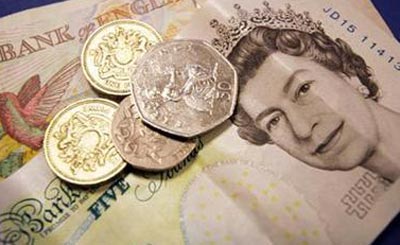
 LONDON: Sterling inched higher on Thursday after data showed a bigger than expected rise in UK retail sales in June, in another sign that the economy is on the mend.
Analysts think sterling will weaken against the dollar in the longer term, but for now they say improving UK data and doubts over the BoE's policy stance and when the Fed will being scaling back its stimulus will guard it from any dramatic slide.
The pound was up 0.1 percent versus the dollar at $1.5220, not far from the two-week high of $1.5270 hit on Wednesday. A reported options expiry at $1.5200 could keep the currency close to that level.
Against the pound, the euro was down 0.2 percent at 86.08 pence, retreating further from the four-month high of 87.12 pence hit on Wednesday.
The pound gained support after the UK retail sales data, which follow Wednesday's better-than-forecast British jobs numbers.
Sterling rallied on Wednesday after minutes unexpectedly showed all nine Bank of England rate-setters opposed expanding its bond-buying programme.
"The second quarter in the UK is shaping up pretty well. We are not out of the woods yet, but we are not at the point where bad data tips the scale towards more quantitative easing immediately," said Simon Smith, chief economist at FXPRO.com.
He said he still sees sterling in a downtrend but perhaps a more gradual one than he expected a few weeks ago.
Sterling struggled to gain, however, as sellers emerge every time the currency climb towards $1.53.
Investors remain cautious that the Bank of England, if it opts to start giving "forward guidance" on the future direction of interest rates, will pledge to keep rates low until a more sustainable recovery is in place.
But Smith said that "forward guidance at the moment is seen as less sterling-negative than going down the road of more QE."
At the same time, although the Fed has said paring back its asset purchases depends on how the economy fares, it is still expected to be the first of the major central banks to step back from an ultra-loose monetary policy.
"I remain long dollar and would sell into any rallies in sterling," said Saeed Amen, FX strategist at Nomura, adding that if sterling stays below the 20-day moving average of around $1.5176 it would be a bearish signal.


























Comments
Comments are closed for this article.