


Energy sector circular debt touches Rs 2 trillion


The country's energy sector circular debt has touched whopping level of Rs 2 trillion as failures are witnessed starting from generation, transmission distribution and recovery.
A couple of months ago, Chairman National Electric Power Regulatory Authority (Nepra), Tauseef H Siddiqui opened a pandora's box when he submitted report to the Prime Minister, Imran Khan, challenging all the claims of Power Division including the figures of circular debt.
According to Chairman Nepra, the stock of circular debt (payables to IPPs and Gencos) and debts parked in the books of PHPL stood at Rs 1.926 billion as of February 2020. His claim was also certified in a presentation of the defunct Pakistan Electric Power Company (Pepco) being headed by an Additional Secretary of Power Division, to the Senate Standing Committee on Power.
Insiders claim that freezing of monthly tariff adjustments for five months as per the decision of federal cabinet, another Rs 70 billion was added to the circular debt. Additional monthly accumulation of circular debt of February and March 2020 was up to Rs 40 billion.
"If the amount of circular debt claimed by Chairman Nepra and current impact of freezing tariff and regular growth in circular debt are clubbed, the stock of circular debt is now over Rs 2 trillion," said an insider. Power Division did not give its versions despite repeated requests.
On March 17, 2020, Power Division explained to the Cabinet that on August 20, 2018 circular debt was Rs 1.262 trillion (Rs 658+604) and till December 2019, the amount was Rs 1.765 trillion (961+ 804 billion). The build-up during the period was Rs 503 billion. It was also claimed that circular debt build-up till June 2020 was to be an addition of Rs 134 billion for one year, which was as per planned circular debt capping plan.
According to circular debt plan approved by the ECC led by Dr Hafeez Shaikh (i) improving power distribution collection in selected Distribution Companies (Discos) annually in the range of 3 per cent to 5 per cent will reduce circular debt flows by Rs 334 billion over the plan period (FY 2020-FY 2023); (ii) five Discos to achieve 100 per cent collection over the plan period; (iii) reducing line losses in selected Discos annually by approximately 1 per cent will provide fiscal space of Rs 118 billion over the plan period; (iv) annual projected generation and sales of Rs 136 GWh and 111 GWh respectively by FY 2022-2023; (v) rationalization of subsidy allocations to bring it to a previous agreed level of 0.4 per cent of GDP from existing level of 0.6 per cent of GDP; (vi) annual reduction of running and permanent defaulters by Rs 78 billion; and (vii) reducing power sector annual flows to less than Rs 75 billion per annum (FY 2022-2023) from the level of Rs 465 billion per annum (FY 2018-19).
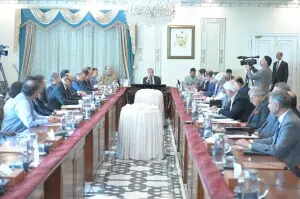
Prime Minister Imran Khan maintains that status of power sector is a major challenge for the government and is the area of prime focus. He further stated at one of a recent meeting of federal cabinet that complexity of power sector required disaggregation of various issues for the purpose of presenting them before cabinet. He cited that the example of subsidy being given to tube wells in Balochistan was one such issue which required detailed deliberations. While referring to the seemingly intractable problem of circular debt he gave the example of Turkey which had resolved this issue.













Comments
Comments are closed for this article.