


Ambani's Jio to make Mumbai trading debut after record $3.2 billion India IPO
- Valued at up to $108.3 billion, Jio, backed by Meta and Alphabet’s Google
Jio Platforms, Asia's richest man Mukesh Ambani's telecoms and digital unit, is set to list in Mumbai after a $3.2 billion IPO, becoming one of India's biggest companies.
- Jio's record-breaking $3.2 billion IPO and massive oversubscription.
- Its $108.3 billion valuation and backing from Meta and Google.
- Mukesh Ambani's vision for Reliance Industries' transformation.
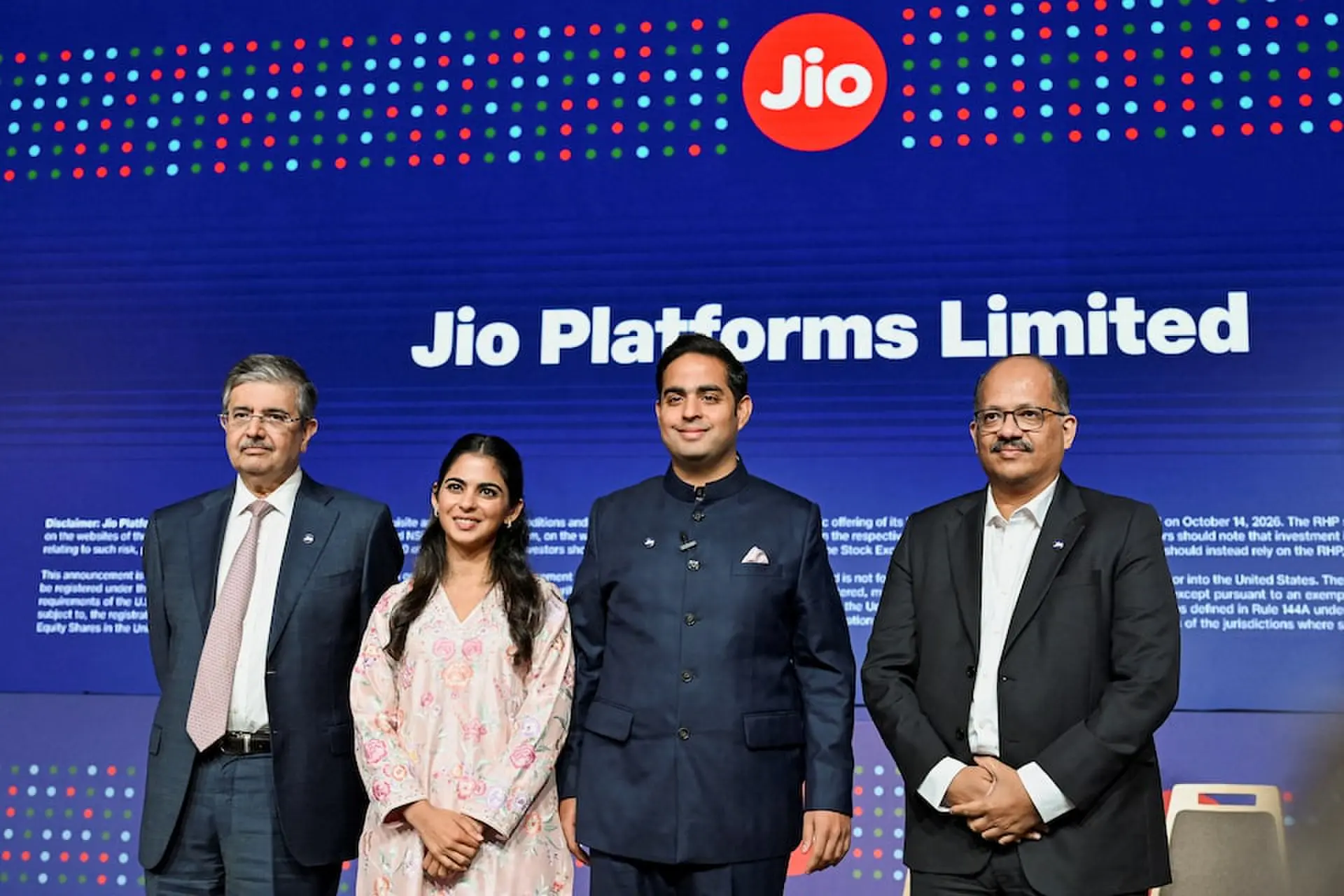
MUMBAI: Asia’s richest man Mukesh Ambani’s telecoms and digital unit Jio Platforms is set to list in Mumbai on Wednesday, after its $3.2 billion IPO drew $77 billion in bids in India’s most-subscribed offering ever.
Investors pile into Ambani’s Jio IPO as bids top 13 times
Valued at up to $108.3 billion, Jio, backed by Meta and Alphabet’s Google, serves more than 530 million customers and will potentially become one of India’s biggest companies by market capitalisation when trading starts.
The listing furthers Ambani’s plan to turn Jio’s parent Reliance Industries from an oil-and-chemicals conglomerate into an “everything company” spanning consumer and technology.
The listing ceremony for Jio is expected to be attended by Akash Ambani, Ambani’s eldest son, who is managing director, an industry source with direct knowledge said.
Reliance did not respond to a Reuters request for comment.
busy IPO market
Ahead of the listing, the premium for Jio shares in the grey market - an unregulated market that allows investors to trade in unlisted shares - indicates gains of about 22%.
India has become the world’s busiest IPO market this year by number of deals, with 246 listings so far, but ranks fourth by money raised at $13.5 billion, behind the United States, mainland China and Hong Kong, LSEG data showed.
Ambani’s Reliance Jio aims for IPO by first half of 2026
Several brokerages called the $108.3 billion valuation attractive, with some pointing to potential upside, though they flagged competition, heavy capital spending and changes in India’s telecom rules, including on spectrum, licensing and fees, as risks.




















Comments