


JI gives govt 7–10 days to provide relief, phase out petroleum levy
- Reaffirms Islamabad long march to take place in mid-November
Jamaat-e-Islami has given the government 7-10 days to provide public relief and abolish the petroleum levy, threatening a mid-November long march if demands are not met.
- JI's ultimatum to the government on public relief and petroleum levy.
- Inadequacy of the government's proposed relief package.
- JI's planned mid-November Islamabad long march.
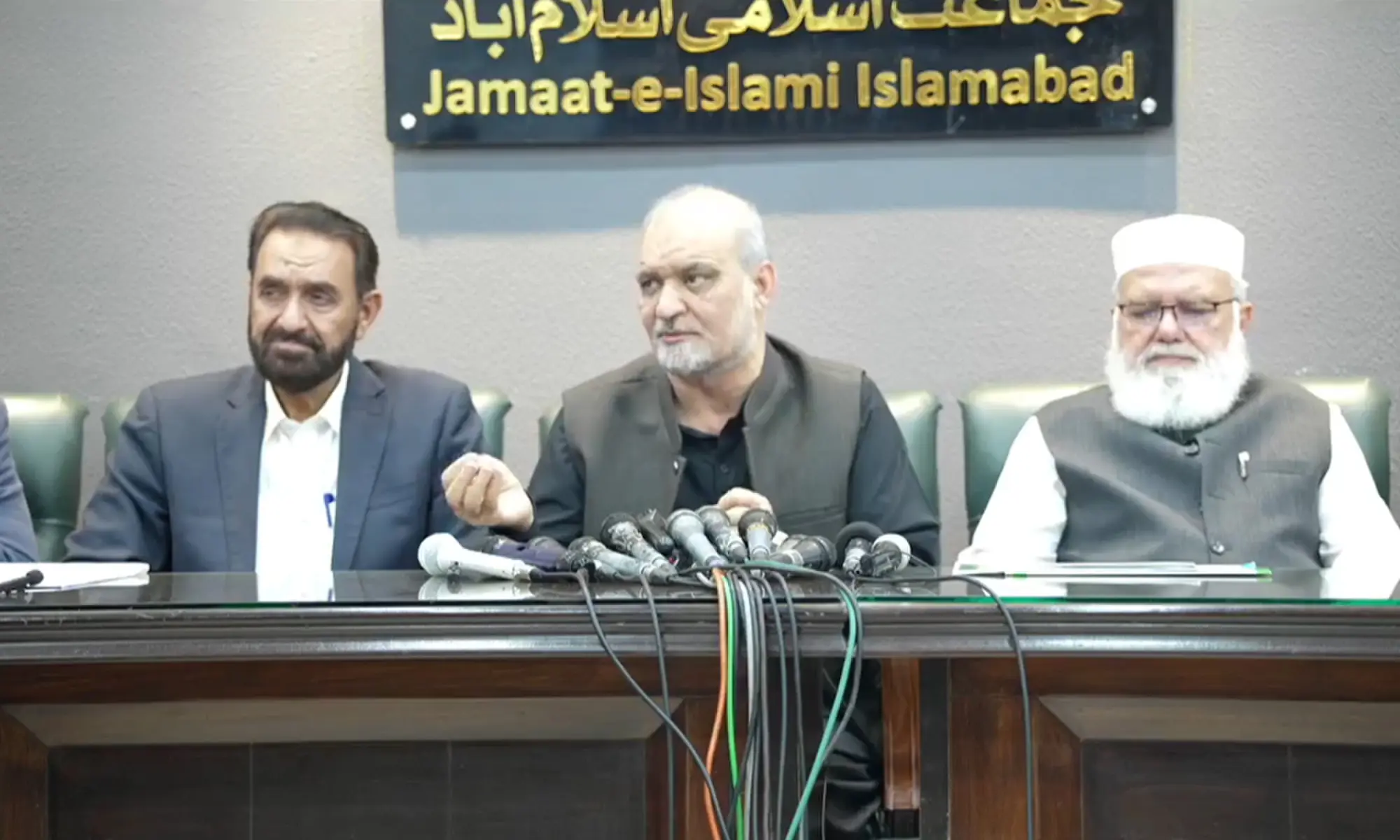
Jamaat-e-Islami (JI) chief Hafiz Naeemur Rehman on Tuesday said his party had given the government seven to 10 days to provide relief to the public and make progress towards abolishing the petroleum levy, while confirming that the party’s planned Islamabad long march remained on schedule for mid-November.
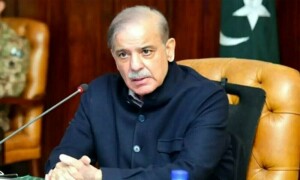
Addressing a press conference after meeting Prime Minister Shehbaz Sharif in Islamabad, Hafiz Naeem said the two sides held detailed discussions on rising living costs, petrol prices, the relief package and the proposed abolition of the petroleum levy.
He said the meeting was held in a constructive atmosphere, with members of the JI delegation and federal ministers also in attendance.
Hafiz Naeem said the government had sought more time to work out relief measures through committees. He added that the prime minister had separately requested seven to 10 days, a request the JI had agreed to accommodate.
The JI chief said the government agreed to expand the previously announced relief package and provide additional assistance to the public. “The prime minister has also proposed phasing out the petroleum levy,” he said, adding that his party has demanded that the levy should be abolished completely.
“The Islamabad march has not been postponed,” Hafiz Naeem said, adding that preparations would be accelerated if the government failed to announce further relief or make progress on the levy’s abolition.
He warned that the party would take its protest to the streets if the government did not meet its demands within the agreed timeframe.
Relief package ‘inadequate’
The JI chief criticised the government’s relief package, saying it was insufficient compared with the amount collected through the petroleum levy.
He said the government was collecting around Rs150 billion a month through the levy, while the relief package was being described by the government as worth Rs32 billion. He also referred to the package as Rs26 billion, highlighting a discrepancy in the figures cited during his remarks.
Hafiz Naeem argued that the proposed relief represented only a limited share of the amount collected and said poor and middle-class households were bearing around 70% of the petroleum levy’s burden, paying more than Rs100 billion collectively.
He demanded an expansion of the relief package, a reduction in petrol prices and the removal of additional taxes, including the petroleum levy, customs duties and the climate support levy.
He said the government should improve its performance and tax collection system rather than shifting the burden of inefficiency and corruption onto the public through taxes on fuel and electricity.
The JI chief said his party would not be satisfied with a reduction of only Rs25 or Rs35 per litre and would continue to demand the complete abolition of the petroleum levy.
JI committee to hold further talks
Hafiz Naeem said a JI committee would continue negotiations with the government on the relief package and petroleum levy. The committee would include Liaquat Baloch, Farasat Shah, Nasrullah Randhawa and Naveed Ali Baig.
He said the government had claimed that its relief package would benefit 10 million people, but maintained that the measures did not adequately address the difficulties faced by low-income and middle-class households.
The JI chief said his party would continue its campaign for lower fuel prices, the abolition of the petroleum levy and meaningful relief for the public.
He added that JI’s Islamabad long march would take place in mid-November and warned that the party would intensify preparations if the government failed to deliver on its commitments.












Comments