


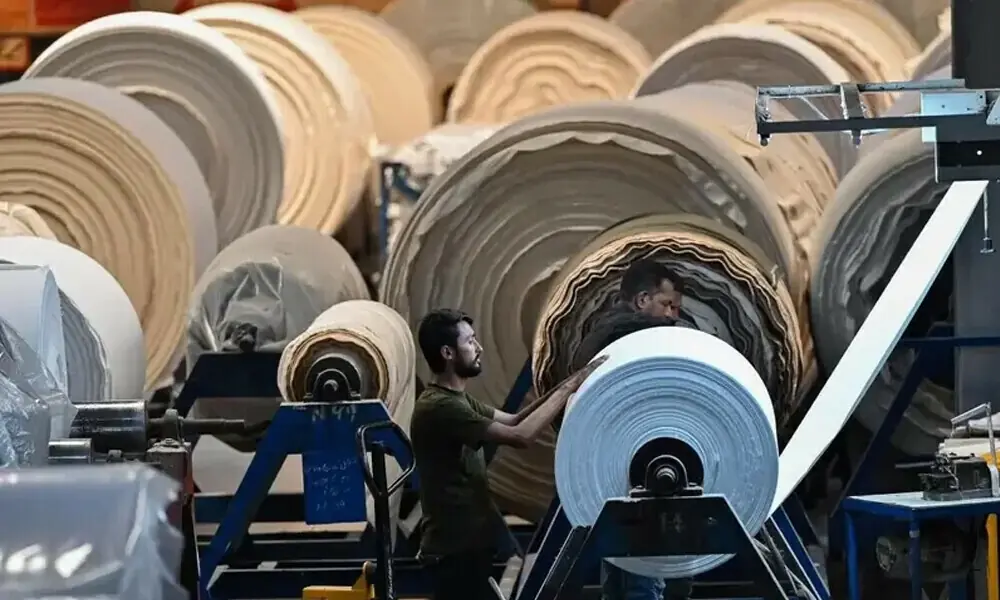
KARACHI: Omer Anwar Lari, Vice Chairman of the Towel Manufacturers’ Association of Pakistan (TMA), has called for immediate and comprehensive policy measures to address the rising cost of doing business, ease liquidity constraints, and restore the international competitiveness of Pakistan’s export-oriented industries.
He emphasized that high energy costs, delayed tax refunds, expensive financing, inefficient logistics and inadequate export incentives are placing increasing pressure on manufacturers, exporters, investment, and employment.
Lari stressed that Pakistan’s textile and home-textile exporters operate in a highly competitive international environment where production costs, delivery timelines, and policy consistency directly influence sourcing decisions. He urged the government to prioritize practical reforms that enable exporters to compete effectively with regional rivals and contribute more substantially to the country’s foreign exchange earnings.
TMA has expressed serious concern over the burden of industrial electricity tariffs and cross-subsidies imposed on industrial consumers under the B3 and B4 categories. The industry estimates that approximately Rs. 56 billion is associated with the cross-subsidy borne by these categories for supporting B1 and B2 consumers. TMA maintains that the tariff structure requires urgent review to ensure that export-oriented industries are not disadvantaged by excessive electricity costs.
The association has also called for a review of the 20 percent off-the-grid levy on captive power plants, gas and RLNG pricing mechanisms, and Unaccounted-for-Gas (UFG) charges, which add to manufacturers’ operating expenses.
The association has further highlighted the adverse impact of high sea-freight charges, frequent General Rate Increases (GRIs), transshipment delays, and excessive dependence on road transportation. These challenges increase shipment costs, create uncertainty in delivery schedules and affect exporters’ ability to meet international buyers’ requirements.
TMA has proposed dedicated daily cargo train services connecting major industrial centres, including Faisalabad, Lahore, Multan, and Sialkot, to facilitate efficient cargo movement, reduce transportation costs, and strengthen Pakistan’s export logistics infrastructure.
TMA is also concerned that exporters continue to face financing costs of approximately 5.5 percent to 8.5 percent under the Export Finance Scheme despite the announced end-user rate of 4.5 percent.
The Association has called for effective implementation of the announced rate and improved access to affordable financing for micro, small, and medium-sized enterprises (MSMEs), which frequently struggle to obtain bank credit because of stringent collateral requirements. Accessible financing is essential for maintaining production, purchasing raw materials, fulfilling export orders and supporting industrial expansion.
Persistent delays in sales tax refunds, including Refund Payment Orders (RPOs) and deferred refunds, income tax refunds, and customs duty drawbacks are creating severe liquidity problems for exporters. These delays tie up working capital that businesses need to meet operational expenses, pay employees, purchase inputs, and maintain uninterrupted production.
TMA has urged the relevant authorities to expedite outstanding refunds and duty drawbacks, simplify procedures, and establish clear processing timelines. The Association has also called for a review of restrictions affecting locally procured inputs under the Export Facilitation Scheme to ensure that exporters are not unnecessarily burdened by additional costs and compliance difficulties.
To improve Pakistan’s regional competitiveness, TMA has called for the immediate announcement of a Drawback of Local Taxes and Levies (DLTL) scheme at a rate of 6 percent to 8 percent, supported by a transparent and sustainable policy framework.
The association has also proposed rationalizing the cumulative burden of mandatory contributions, including the Workers’ Welfare Fund (WWF), Workers’ Profit Participation Fund (WPPF), Social Security, and Employees’ Old-Age Benefits Institution (EOBI). In this regard, TMA recommends that the government examine the feasibility of consolidating these contributions into a single deduction of 0.03 percent on exports and domestic sales, drawing on the proposed Bangladesh-based benchmark, subject to appropriate legal and fiscal review. This measure would simplify compliance, reduce the cost of doing business, and strengthen the competitiveness of Pakistan’s export-oriented industries.
Lari also expressed concern over the closure of international brand sourcing and buying offices in Pakistan, emphasizing that the loss of these offices could weaken direct commercial relationships, reduce export opportunities, and undermine the country’s position in global textile and home-textile supply chains.
He called for a coordinated strategy to retain existing buying offices and attract new international sourcing operations through competitive production costs, consistent policies, efficient logistics, and a predictable business environment.
Mr. Omer Anwar Lari emphasized that resolving these issues requires decisive government action, sustained engagement with industry representatives, and clear implementation timelines.
He stated that reducing industrial costs, ensuring timely refunds, providing affordable export financing, and introducing effective export incentives are essential to strengthening Pakistan’s manufacturing base, safeguarding employment, encouraging investment, and increasing export earnings.
Copyright Business Recorder, 2026




















Comments