


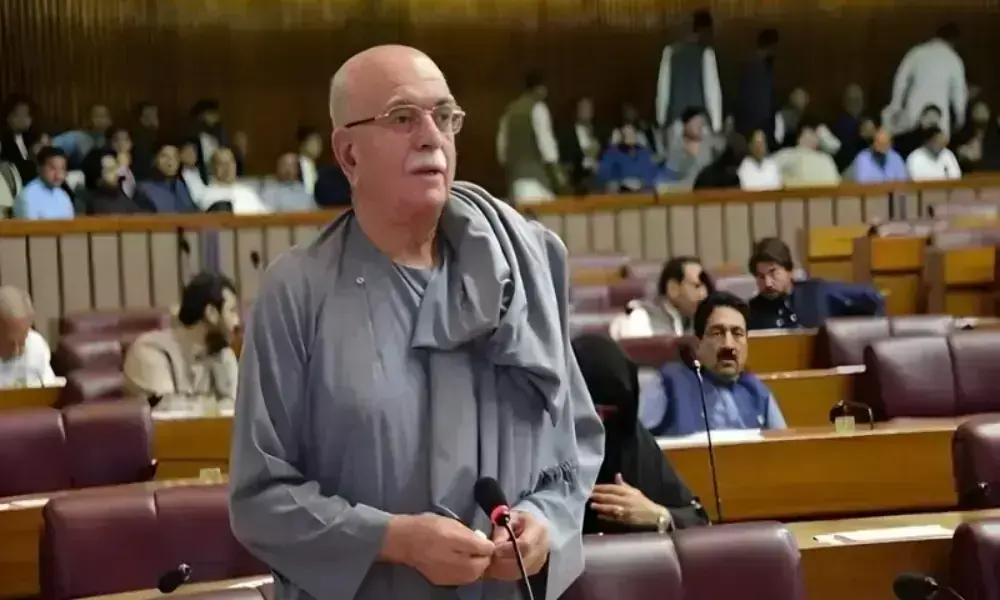
ISLAMABAD: The embattled Pakistan Tehreek-e-Insaf (PTI) and its allies on Wednesday accused the federal government of using security concerns to justify an assault on democratic rule in Khyber Pakhtunkhwa, demanding the withdrawal of the emergency and governor’s rule and warning that confrontation with political opponents could deepen the country’s instability.
Mehmood Khan Achakzai, the PTI-backed opposition leader in National Assembly, urged Prime Minister Shehbaz Sharif to abandon the measures and negotiate directly with the opposition.
He offered to meet the prime minister face-to-face in Parliament, saying the government still had time to reverse what he described as unconstitutional and illegal decisions.
READ ALSO: NA, Senate endorse governor’s rule, emergency in KP
“Even today, I am ready to sit with the prime minister for the sake of the country and the Constitution,” Achakzai said. “The desire to use guns is extremely dangerous.”
Defending Sohail Afridi, the former chief minister of Khyber Pakhtunkhwa, he said he had urged people to resist injustice without abusing anyone.
He warned that the authorities risked transforming political leaders into symbols of martyrdom rather than resolving the grievances driving their support.
Invoking former Prime Minister Zulfikar Ali Bhutto, he said Bhutto had become an even greater spiritual figure than a Qalandar, a mystic, and asked whether the authorities intended to turn PTI founder Imran Khan into a similar figure.
Achakzai also condemned restrictions on Imran Khan’s access to visitors, calling the denial of such access to a prisoner a criminal act.
He said opposition representatives should be allowed to meet Khan, assess his physical and mental condition, and attempt to resume negotiations from where they had stalled.
“We promise that we will meet Imran Khan, will not disclose anything to anyone, and will try to restart the talks from where they stopped,” he said.
Referring to former prime ministers Nawaz Sharif and Benazir Bhutto, he said they too had faced pressure, arguing that the opposition’s demand was simply to meet its leader.
He extended his criticism to the state’s security record, challenging claims that prolonged rule had delivered peace.
Former military rulers Gen Ayub Khan, Gen Ziaul Haq and Gen Pervez Musharraf governed for approximately 10, 11 and 11 years, respectively, he noted, arguing that Pakistan nevertheless became a haven for terrorists trained on its soil.
He raised concerns over the killings of 1,200 prominent social figures in the former Federally Administered Tribal Areas (FATA), alleging that the state had failed to address the causes of violence.
In Waziristan, he said, people were being killed over control of mineral resources. He also questioned why Parliament had not been taken into confidence over the Iran war.
Achakzai alleged corruption involving trillions of rupees and claimed that more than 23,000 civilian and military bureaucrats held dual nationality. He proposed an inquiry committee headed by Defence Minister Khawaja Asif.
PTI Chairman Barrister Gohar Ali Khan mounted a similar challenge, describing October 11 as a black day and demanding the immediate withdrawal of emergency and governor’s rule in KP, along with an apology to the province’s people for what he portrayed as an assault on their democratic rights.
Welcoming Pakistan People’s Party (PPP) chairman Bilawal Bhutto-Zardari’s remarks in favour of negotiations, he said the government could not credibly invoke democracy while removing an elected provincial government.
Counter-terrorism operations, he argued, should follow the National Action Plan (NAP) rather than become a pretext for political intervention.
“If this is the policy against terrorism, then impose an emergency in the riverine areas and Balochistan as well,” he said, questioning why KP was being subjected to such measures while other regions also faced security threats.
He said PTI’s cases had not been scheduled for hearings for 16 months, contributing to the party’s decision to announce a long march.
Although he called terrorism a serious threat, Gohar alleged that India’s intelligence agency, Research and Analysis Wing (RAW), was involved in terrorist activity and demanded operations under the NAP.
He also demanded that Sohail Afridi be brought before the public, alleging that PTI workers were being arrested or taken away.
He questioned the detention of Khan’s three sisters and alleged that authorities were blocking toothpaste and weather-appropriate clothing from reaching the imprisoned ex-premier.
Copyright Business Recorder, 2026






















Comments