


Diplomatic, special service & official passports: Pakistan, Oman sign pact on mutual visa exemption
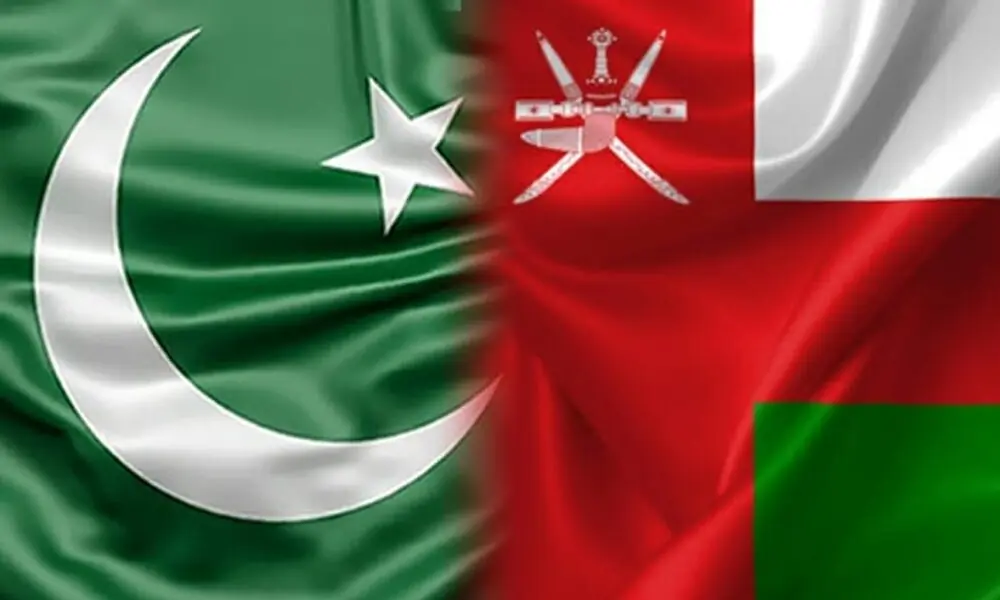
ISLAMABAD: Pakistan and Oman have reaffirmed their commitment to advancing bilateral trade and investment, expanding business partnerships and creating new avenues for Pakistani workers.
Following the 8th Joint Ministerial Commission held here on Wednesday, both sides stressed dialogue, diplomacy and de-escalation to address regional tensions and ensure safe navigation through the Strait of Hormuz and Bab al-Mandab.
Pakistan and Oman have signed the agreement on mutual visa exemption for holders of diplomatic, special service and official passports. This significant step will facilitate official exchanges and contribute to closer engagement between our two brotherly countries.
READ MORE: Omani FM arrives
Both sides exchanged views on the evolving situation in the Gulf, underscoring the importance of restraint, de-escalation, dialogue and diplomacy.
Both countries highlighted the need to ensure the safety and freedom of navigation through the Strait of Hormuz and Bab al-Mandeb, given their critical importance to regional and global food and energy security.
Addressing the joint media briefing along with SayyidBadr bin Hamad bin Hamood AlBusaidi, Foreign Minister of the Sultanate of Oman, Deputy Prime Minister and Foreign Minister, Senator Ishaq Dar stated, ‘’ We have reaffirmed our shared commitment to further strengthening bilateral cooperation across a broad spectrum of sectors.’’
DPM Dar said that Pakistan and Oman exchanged views on the recent Houthi attacks on Saudi Arabia, conveying Pakistan’s strongest condemnation of the attack, which resulted in injuries to several individuals, martyrdom of one Pakistani and injuries to five Pakistani nationals.
He underscored that attacks against civilians and civilian infrastructure are unacceptable, violate international law, and pose a serious threat to regional peace and security. ‘’I reaffirmed Pakistan’s full solidarity with the leadership and people of the Kingdom of Saudi Arabia, as well as our unwavering commitment to the Kingdom’s sovereignty, territorial integrity and security, in accordance with the Makkah Joint Defence Agreement.’’
Pakistan and Oman have expressed concern over the continued expansion of illegal settlements and efforts to alter the status of Al-Quds Al-Sharif, emphasizing the urgent need for the unhindered delivery of humanitarian assistance to the people of Gaza.
Pakistan also raised the issue of Jammu and Kashmir, which remains a long-standing unresolved international dispute.
Both sides also discussed regional developments including the situation in Afghanistan and the Indus Waters Treaty. Pakistan stressed the imperative of ensuring that Afghan territory is not used to carry out activities against Pakistan.
Both countries have decided to hold the 9th Session of the Joint Ministerial Commission in the Sultanate of Oman sometimes in next year.
Foreign Minister of Oman said the 8th Session of the Oman-Pakistan Joint Ministerial Commission provided an opportunity to review the state of bilateral relations and identify opportunities for further strengthening cooperation between the Oman and Pakistan.
He appreciated Pakistan’s constructive role in facilitating dialogue and supporting diplomatic efforts in the region, including its role in the negotiations between Iran and the United States. He said such efforts are important in creating opportunities for engagement, building confidence and advancing peaceful solutions to regional challenges.
Earlier, DPM/FM Dar and Foreign Minister of Oman,Sayyid Badr bin Hamad Al Busaidi co-chaired the 8th Session of the Pakistan–Oman Joint Ministerial Commission in Islamabad Wednesday.
The two sides reaffirmed their close fraternal ties and commitment to expanding bilateral cooperation, particularly in trade and investment, maritime and logistics connectivity, agriculture, industry, energy, workforce mobility, human resource development, education, IT, media and climate change, among other areas.
Both Ministers emphasized the importance of strengthening people-to-people ties, facilitating workforce mobility, and promoting exchanges of business delegations from both countries to unlock new opportunities for trade, investment and institutional collaboration.
Copyright Business Recorder, 2026
























Comments