


Tech, agri, trade sectors: Sindh CM, Hubei leadership meet to forge broader collaboration
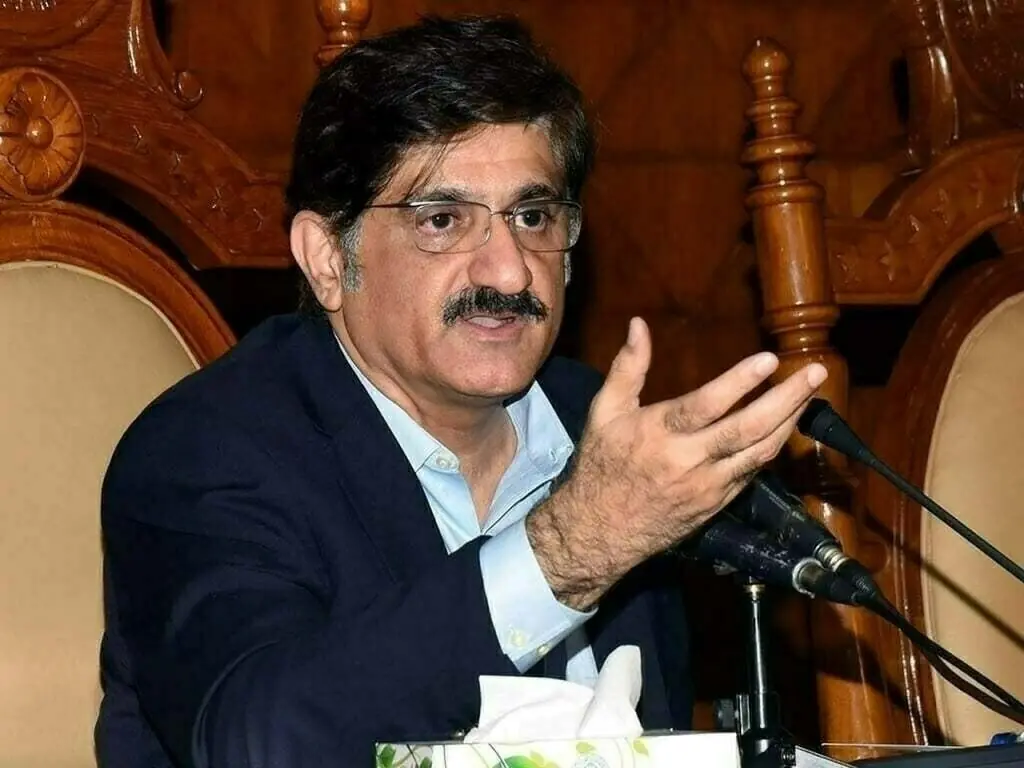
KARACHI: Marking 75 years of enduring diplomatic ties, Sindh Chief Minister Syed Murad Ali Shah met with top leadership of China’s Hubei province on Wednesday to forge broader provincial-level collaboration in agriculture, information technology, education, and vocational training.
Leading a high-level delegation during his official visit to Wuhan, CM Shah held comprehensive talks with Hubei Governor Li Dianxun and provincial Communist Party Secretary Guan Xiaotao. The discussions focused on translating the decades-old Pakistan-China friendship into tangible socioeconomic development projects, enhancing trade, and boosting people-to-people exchanges.
Welcoming the Sindh Chief Minister and his delegation to Wuhan, Hubei Governor Li Dianxun lauded the deep-rooted friendship between Pakistan and China, describing it as an unbreakable bond of mutual trust and strategic cooperation.
Governor Li expressed Hubei’s strong commitment to deepening sub-national cooperation with Sindh, noting that the province’s robust industrial base, advanced manufacturing capabilities, and world-class research institutions offer massive potential for joint ventures. He assured the delegation that Hubei is keen to expand collaboration in modern agriculture, digital industries, vocational training, and business-to-business partnerships, paving the way for mutually beneficial growth under the next phase of the China-Pakistan Economic Corridor (CPEC).
Emphasizing that the Pakistan-China alliance remains the cornerstone of Islamabad’s foreign policy, CM Shah noted that the relationship has successfully weathered all regional and global challenges. He highlighted the upcoming 75th anniversary of diplomatic relations- formally established on May 21, 1951 - and expressed pride that Pakistan was among the first nations to recognize the People’s Republic of China.
Shah welcomed Hubei enterprises to actively participate in the next phase of CPEC, particularly focusing on green growth, agricultural modernization, and skills development.
Agriculture emerged as a focal point of the discussions.
The CM expressed gratitude to China for training 1,000 Pakistani agricultural graduates, many of whom studied at Huazhong Agricultural University. He welcomed ongoing partnerships in horticultural crop research and the establishment of a joint laboratory for smart and digital agriculture.
Highlighting Sindh’s potential in agricultural production, Shah sought Hubei’s expertise in hybrid rice, high-yield seed development, and farm mechanization. He stressed the need for advanced cold-chain logistics to minimise post-harvest losses for Sindh’s high-quality fruits, vegetables, meat, dairy, and fisheries, thereby improving market access.
To boost innovation, the CM proposed linking Wuhan-based tech incubators and investors with Sindh’s startups through joint incubation programmes. He also invited Chinese firms to invest in pilot projects spanning port logistics, industrial automation, and urban traffic management in Karachi.
In the education sector, Shah called for enhanced university-to-university linkages in engineering and digital technologies, alongside joint technical and vocational training (TVET) initiatives to equip Sindh’s youth with market-driven skills for modern manufacturing.
Concluding the visit, both sides expressed confidence that the enhanced engagement between Sindh and Hubei will further strengthen the Pakistan-China All-Weather Strategic Cooperative Partnership.
Meanwhile, Sindh Chief Minister Syed Murad Ali Shah on Wednesday called for a transformative era of academic and educational cooperation between the province of Sindh and China, proposing robust partnerships in teacher training, educational technology, student exchanges, Mandarin language instruction, and collaborative research.
Addressing a distinguished gathering of university leaders, faculty members, and students - both Pakistani and Chinese - at the prestigious Central China Normal University (CCNU) in Wuhan, the CM emphasised that education and youth engagement will serve as the cornerstone for the next chapter of Pakistan-China relations, particularly as both nations mark the 75th anniversary of their diplomatic ties.
The high-profile event was attended by Prof Peng Shuangjie, President of CCNU; Xia Lixin, Secretary of the University Party Committee; along with senior academics, researchers, and students.
Praising CCNU’s legacy since its establishment in 1903, Murad Ali Shah lauded the institution’s longstanding global contributions to teacher education and pedagogical innovation.
“It is an honour to stand in a university that has been educating teachers for more than a century. When you educate a teacher, you educate generations. Institutions such as CCNU shape the future of nations through knowledge, innovation, and human development,” the CM remarked.
Drawing parallels between civilisations, he noted that just as the Yangtze River has shaped Chinese history, the Indus River has profoundly influenced the heritage of Sindh. He highlighted Sindh’s rich civilisational milestones-including Mohenjo-daro, the Makli necropolis, and the literary legacy of Shah Abdul Latif Bhittai-while inviting Chinese students and faculty to visit the vibrant commercial hub of Karachi and experience Sindh’s rich culture firsthand.
Underscoring Sindh’s ongoing educational reforms - which include investments in digital learning, technical education, and the development of Karachi Education City- Murad Ali Shah put forward a concrete, four-point framework for bilateral collaboration with CCNU:
-
Teacher Training: Collaborating between CCNU, Sindh’s Education Department, and provincial universities to elevate training programmes, starting with the preparation of master trainers from Sindh.
-
Academic Mobility: Expanding scholarships, faculty exchanges, research fellowships, and short-term academic programmes to encourage greater cross-border student and professional mobility.
-
Mandarin Language Instruction: Inviting CCNU to support the training of Mandarin teachers across Sindh’s schools and universities to boost cultural, educational, and economic connectivity.
-
Joint Research Initiatives: Establishing collaborative research endeavors targeting critical shared challenges, such as climate change, water management, artificial intelligence, renewable energy, smart cities, and the comparative history of the Indus and Yangtze river civilizations.
In a heartfelt address to Pakistani students enrolled at the university, the CM described them as the true ambassadors of Pakistan. He urged them to absorb as much knowledge as possible and eventually return home to contribute to Sindh’s development. “The strongest bridge between Pakistan and China will not be built with concrete or steel alone - it will be built through educated, skilled, and connected young people who understand one another and work together for a shared future,” he said.
Earlier upon his arrival, the CM was warmly greeted by CCNU Deputy President Li and faculty members. He was later given a detailed briefing on the university’s digital teaching classes, research endeavours, and its standing as a premier institution housing over 30,000 students and 2,500 faculty members across 25 departments.
During formal discussions, CM Murad Ali Shah presented traditional Ajraks and Sindhi caps to President Prof Peng Shuangjie and Party Committee Secretary Xia Lixin as tokens of cultural goodwill. The Chinese leadership welcomed the proposed initiatives, expressing a keen interest in broadening institutional exchanges and student mobility programmes between Sindh and Hubei Province.
The CM was accompanied by a high-level delegation comprising Senior Minister Sharjeel Inam Memon, Minister P&D Jam Khan Shoro, Special Assistant to CM Syed Qasim Naveed, PSCM Agha Wasif, P&D Chairman Najam Shah, Investment Secretary Raja Khurram Shahzad, and Transport Secretary Asad Zaman, and others.
Copyright Business Recorder, 2026
























Comments