


‘PTI has links with TTP’: Federal govt defends imposition of governor’s rule
ISLAMABAD: The federal government has defended its decision to impose governor’s rule and a state of emergency in Khyber Pakhtunkhwa (KP), accusing the Pakistan Tehreek-e-Insaf (PTI) of maintaining links with the banned Tehreek-e-Taliban Pakistan (TTP). Citing a 195 per cent surge in terrorist incidents, the government justified the move, claiming to possess “credible evidence” of the alleged PTI-TTP contacts.
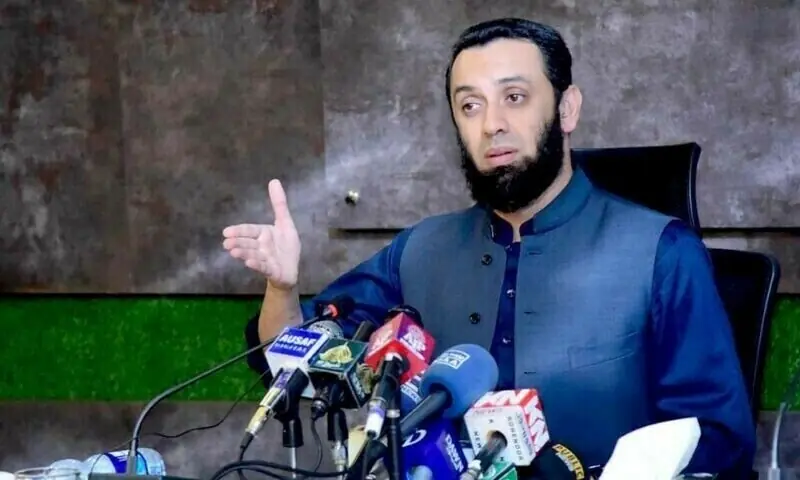
Briefing foreign media representatives here on Tuesday, federal ministers for Information and Broadcasting Attaullah Tarar and Law Azam Nazeer Tarar said the decision had been taken after negotiations with the provincial authorities failed to produce a coordinated counterterrorism strategy. They maintained that the measures were constitutionally valid and aimed at restoring law and order in the province.
The imposition of the state of emergency in Khyber Pakhtunkhwa is strictly in accordance with the Constitution of Pakistan, they added.
Attaullah Tarar alleged that the PTI government had shown sympathy towards terrorist groups and undermined the efforts of security forces. He said the federal government had sought a unified policy against terrorism rather than pursuing political objectives.
“We had only one agenda. There was no political agenda,” he said, adding that the PTI and the provincial government could continue their political activities while the two sides worked towards a common counterterrorism strategy.
The information minister argued that Pakistan could not pursue one policy towards Afghanistan at the federal level and a different approach at the provincial level. He said Islamabad was engaging with Afghanistan’s interim government to prevent its territory from being used for attacks inside Pakistan, while the KP government had adopted a different approach.
Tarar claimed the government had credible evidence of contacts between the PTI and the TTP and would disclose details at a later stage. He also alleged that political representatives of other parties had faced restrictions on movement in areas affected by militancy, whereas the PTI’s political march had passed through such areas following coordination with terrorist organisations.
He described the PTI as the TTP’s “B team”, alleging that its political narrative had weakened law enforcement agencies and benefited militant groups.
Citing official figures, Law Minister said approximately 2,900 terrorist incidents had been recorded in KP between 2021 and 2024, compared with around 8,600 during 2024-26, representing an increase of 195 per cent.
Attaullah Tarar said 3,774 terrorist incidents were reported in 2025 and another 2,857 up to September 2026. He cited 3,512 fatalities in 2025 and 2,775 in 2026 up to the time of the briefing.
The information minister said attacks targeting police personnel had increased by 168 per cent, while 18 police installations had been targeted over the preceding two years. He also referred to an increase in the use of improvised explosive devices and heavy losses suffered by police and other law enforcement personnel.
He criticised the provincial government for allegedly failing to strengthen its police force and counterterrorism infrastructure despite receiving substantial financial resources.
Questioning the utilisation of approximately Rs800 billion allocated to KP under the National Finance Commission (NFC) framework, Tarar asked why the funds had not been used to strengthen the Counter-Terrorism Department (CTD), install Safe City surveillance cameras, establish forensic laboratories and equip police with modern technology.
He also accused the provincial government of failing to establish effective vehicle and motorcycle registration systems that could help security agencies trace their use. He alleged that terrorism, political interests and illegal economic activities, including cross-border smuggling involving minerals, timber, tobacco, gold and precious stones, had become interconnected.
Tarar said the provincial government had also failed to participate consistently in high-level meetings convened to coordinate the implementation of the National Action Plan. He alleged that governance failures had affected public services, including education and health.
Recalling a visit to Kohat, where he met injured people and visited the families of those killed in a terrorist attack, the minister said residents wanted an end to violence that had damaged their lives and livelihoods. He also paid tribute to the armed forces, police and other security personnel killed in counterterrorism operations, criticising the provincial government for what he described as inadequate support for their sacrifices.
Defending the legal basis for the decision, Law Minister said Articles 232 and 234 of the Constitution provided for federal intervention in circumstances involving serious internal disturbances and a breakdown of constitutional machinery in a province.
He said the federal cabinet had approved the decision by consensus after considering reports on the deteriorating security situation and exploring negotiations with the provincial government.
“Pakistan is a federation. So there is a division of powers,” he said, adding that federal and provincial authorities were expected to work together when security challenges exceeded the capacity of provincial administration.
The law minister said the proclamation authorised the federal government to assume responsibility for provincial affairs or delegate specified responsibilities to the governor, in accordance with the constitutional provisions invoked.
He added that the measure would be subject to the approval procedures prescribed by the Constitution, including consideration by parliament. Referring to Article 234, he said governor’s rule could remain in force for a maximum of six months under the applicable constitutional framework, while cautioning against speculation about its duration.The law minister said no specific timeframe could be given for the duration of the emergency or governor’s rule, explaining that the two measures had different durations and could be extended if circumstances required.
The law minister said the government had initially attempted to secure agreement with the provincial authorities on counterterrorism measures but had failed to obtain the necessary cooperation. He contrasted the response of the KP government with that of the Balochistan government, which he said had actively engaged with security agencies and supported rehabilitation efforts after attacks.
He maintained that the federal government had acted to protect residents and restore coordination between provincial and federal security institutions.
The ministers also outlined a proposed Area Representative and Development Council (ARDC) for 12 conflict-affected districts of KP, intended to oversee security, administration and development.
The structure would include a chairman, vice-chairman, council members and spokesperson, supported by an additional chief secretary and senior officials responsible for policing, law enforcement, narcotics control, legal affairs, tribal affairs, human rights, budgeting and revenue. YahyaAkhunzada was identified as the administrator.
AttaullahTarar said the council would ensure regional and tribal representation, allowing local communities to participate in decisions affecting their security and development. He said the arrangement would prioritise law and order, followed by improvements in public services and economic opportunities.
Defending the proposed membership, he said the individuals selected had relevant professional qualifications and public-service experience. He cited former senior civil servants, legal experts, health professionals, a former senator and representatives with experience in administration and development.
Among those mentioned were retired Lieutenant General NigarJohar, former Federal Board of Revenue chairman Dr Muhammad Irshad, former senator Osman Saifullah Khan and MNA Samar Haroon Bilour, whose family has suffered losses in terrorist attacks.
The minister said the council would have a legal mandate to deal with matters falling within its jurisdiction, including relevant legal cases. He added that decisions concerning accountability for alleged wrongdoing under the previous provincial administration would be taken through the applicable process.
Both ministers said the new arrangement was intended to improve coordination, strengthen counterterrorism operations and restore peace in KP. They reiterated that the federal government considered a unified national policy essential to defeating militancy and protecting the province’s residents.
The Law Minister said the option has been exercised after thorough deliberations in the federal cabinet for the unity, security, and well-being of the state of Pakistan. He also noted that elected governments in the past have exercised this constitutional option.
Asked why emergency provisions had been invoked in KP but not in Balochistan, Azam said the federal government had assessed the two provinces differently on the basis of their respective governments’ responses to terrorism.
He said the Balochistan chief minister had been actively engaging with security agencies, visiting areas affected by attacks, supporting rehabilitation work and meeting injured people and bereaved families.
“Your actions speak louder than your words,” he said, arguing that the Balochistan government had demonstrated its resolve to fight terrorism.
On the question of whether the new arrangement would succeed in eliminating terrorism, Azam said the government was hopeful that the situation would improve, while acknowledging that the precise duration of governor’s rule could not be predicted.
Copyright Business Recorder, 2026






















Comments