


Iran says it receives US response to latest proposal as Washington pulls out of Iraq
- Iran received a US response to its peace plan, but with Trump's prior rejection, the conflict and Strait of Hormuz disruption persist
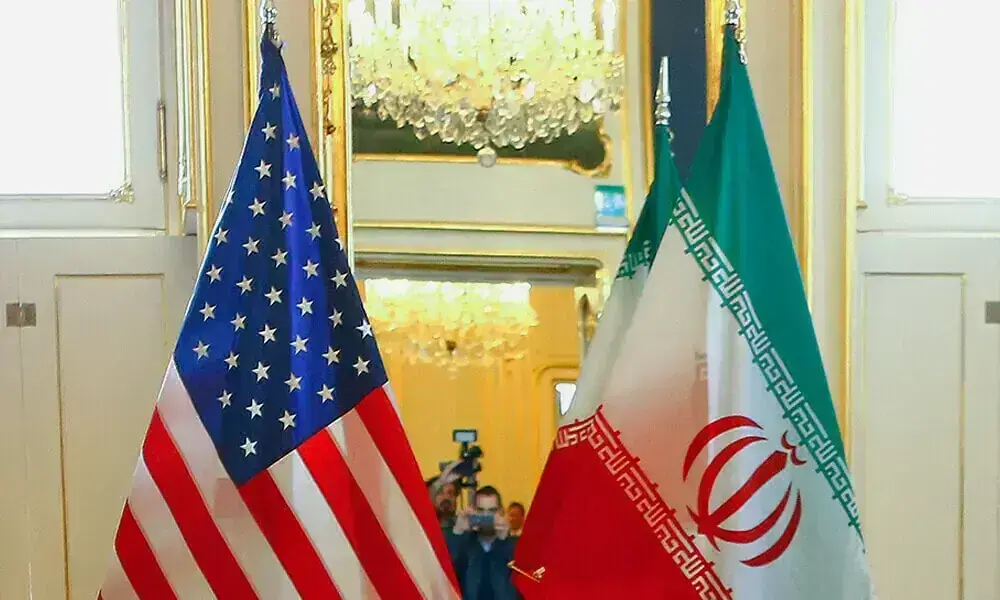

BAGHDAD/DUBAI: Iran said on Wednesday it had received a US response to its latest proposal to resurrect the collapsed ceasefire in the Gulf, days after President Donald Trump said he had rejected it.
Iran’s allies were celebrating on Wednesday after Washington withdrew the last of its forces from neighboring Iraq, where 4,500 US troops died in the biggest US war of the century. More than 200,000 Iraqi civilians were killed in chaos unleashed after US forces toppled Saddam Hussein in 2003.
Tehran views the pullout as a victory for its “axis of resistance” of allied armed groups and a step towards its aim of driving US forces out of the region.
With the US-Israeli war against Iran now entering its eighth month, Iran put forward a proposal last week under which the United States would lift its blockade of Iranian ports and Iran would reopen the disrupted Strait of Hormuz within seven days.
Trump said on Sunday he had rejected the proposal, although Iran’s Foreign Minister Abbas Araqchi said Tehran had not received a formal rejection. In a post on X on Wednesday, an Iranian government spokesperson said Araqchi had conveyed a US response to the Iranian government.
Iran says its plan aims to restore an interim agreement that collapsed weeks after it was signed by Trump and Iran’s President Masoud Pezeshkian in June.
Last week, Qatari mediators shuttled between US and Iranian envoys in New York on the sidelines of a meeting of the United Nations, the first proximity talks between the warring sides since the ceasefire unravelled.
An official briefed on the talks, who is not Iranian and spoke to Reuters on condition of anonymity, said the Qataris had briefed Araqchi on the US response on Tuesday when Araqchi stopped off in Doha on his way home from New York. According to the official, the sides largely agree about the steps that are needed but still disagree about the order in which to take them.
Iran wants an eventual deal to grant it control over the Strait of Hormuz, the world’s most important oil shipping route, which runs past its coast.
Shipping through the strait has increased in recent weeks, with shippers charging high fees to brave the risk of attacks. But flows of crude oil, refined products, and natural gas remain substantially disrupted. In the latest incidents, Britain’s UKMTO maritime security body reported on Wednesday that two ships had been hit by projectiles the previous day.
US withdrawal seen in Iraq as defeat for Washington
US and Iraqi officials announced the withdrawal of the last American troops from bases in Iraq on Wednesday, fulfilling a plan agreed in 2024 under President Joe Biden and carried out by the Trump administration while it wages war with Iran next door.
The withdrawal was celebrated by Iran and its allies. It marked an “historic victory for the Iraqi Islamic resistance groups and honorable Iraqis and a crushing defeat for the American project,” said Abu Mojtaba al-Yasiri, a commander in the Islamic Resistance in Iraq, an umbrella group of armed factions.
Iraq, which the United States invaded in 2003, and Tehran has established broad political and military influence there.
The country has frequently become a proxy battlefield between the United States and Iran. Of the 18 US service members listed as killed since Trump launched “Operation Epic Fury” in February, seven died in Iraq. Washington blames groups in Iraq for striking neighbouring countries, most recently knocking out a big Saudi oil pipeline three weeks ago.
The US withdrawal raises “the possibility that Iran’s proxies will feel increasingly empowered in the absence of a Western military presence,” said Baghdad-based political analyst Ahmed Younis. “These groups may attempt to expand their role in shaping state policies and consolidating their presence within key institutions.”
At home in the United States, polls show the Iran war was unpopular from the outset. The disruption to global energy supplies and resulting surge in fuel prices have hurt Trump’s Republicans, trying to hang on to both houses of Congress in legislative elections five weeks away.
Iran’s Islamic Revolutionary Guard Corps urged Americans on Tuesday to vote out Trump’s allies.
“Remove from power the evil, deceitful, and violent politicians who are responsible for America’s current state,” they wrote in a 26-page letter to US voters. “Make sure your politicians understand that the world has changed.”
The war has intensified an economic crisis inside Iran, but Tehran has retained the ability to strike its neighbours and menace ships in the strait, where a fifth of global oil transited before the war. Trump says the war will be over soon and Iran will ultimately surrender.
“I don’t know if they are going to give up yet but they’ll give up,” he told reporters on Tuesday. “They are doing very poorly.”


















Comments