


Relief on petrol price for optics only?
The government approved a 75 billion-rupee fuel relief package for small vehicle owners, but critics argue it's insufficient, poorly targeted, and faces challenges from rising global oil prices and government spending.
- Government's 75 billion-rupee fuel relief package.
- Criticisms regarding the package's targeting and effectiveness.
- Impact of global conflicts on oil prices and Gulf country finances.
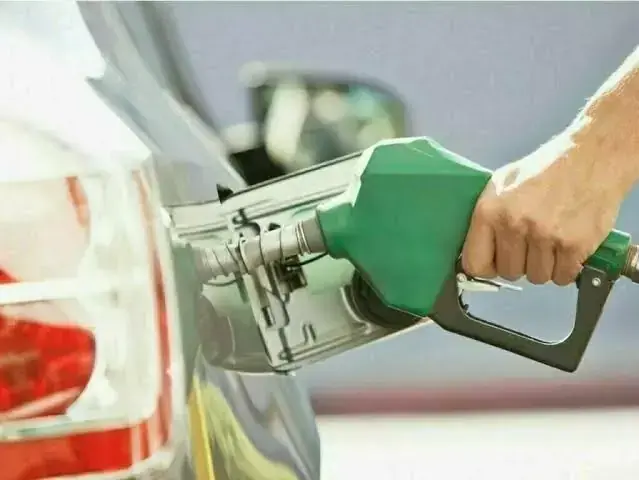
EDITORIAL: The Economic Coordination cabinet has approved a 75 billion-rupee relief package for three months (24.6 billion rupees per month) proposed by the petroleum division that envisages providing 100 per litre to 11.8 million - owners of two wheelers, three wheelers and cars up to 800cc.
The maximum monthly relief is estimated at 2000 rupees with the two and three wheelers eligible for up to 20 litres a month while cars up to 800cc will be eligible for 30 litres per month. This proposal, as per the Minister for Petroleum Pervaiz Malik, was formulated on the instructions of the Prime Minister and post-dates the submission of proposals by the Jammat-i-Islami, to the Ministry of Planning, Development and Special Initiatives on 11 September that sought a reduction in the petroleum levy to 5 to 10 rupee per litre, budgeted to generate 1.67 trillion rupees in the current year, and its replacement with the following: an increase in existing taxes on imported luxury consumer items, higher income tax on income above one billion rupees, interest rate reduction, withdrawal of exemptions, agriculture income tax, increase in carbon levy on corporations and businesses, wealth tax, and retail sector brought into the tax net.
There are major constraints facing the government in terms of implementing its own relief package as well as in the Jamaat-i-Islami proposals. Shortages of petroleum and products in the international market are rising with each passing day as conflict in the Middle East is continuing and widening (reference to the stepped up Houthi attacks on Saudi Arabia) – a factor that compelled the government to announce on 17 July this year that it has shifted to a daily pricing mechanism for oil and products replacing the fortnightly pricing mechanism. With no end in sight of the conflicts in the Middle East as well as between Russia and Ukraine the package may not be adequate well before the three-month period of its application is over.
The package, though well intended appears to have been offered for optics to convey the government’s concern for the ever-increasing burden on the masses. It, however, misses the point that a vast majority of people belonging to the poorest segment of the country cannot even own motorcycles. They are largely dependent on public transport, i.e., buses that run on HSD and there is no respite in its cost. It would have been far more effective if the petroleum levy had been slashed on petrol and HSD by reducing its collection target by 75 billion rupees.
One way to create space for itself that can be passed onto the consumers is for the government to cut its own current expenditure that continues to comprise 93 percent of total budget outlay and includes a downward revision in mark-up payments (through a reduction in the policy rate though it is doubtful if the Fund would approve it given the rise in inflation), outlay for pensions rising to 1.16 trillion rupees (indicative of reforms still pending), and raising wages for those who draw their salaries at the taxpayers’ expense.
It is also relevant to note that the incumbent government’s strategy to usher development in the country was premised on higher direct investment from friendly countries. In this context it is pertinent to note that the Middle East conflict has severely compromised the surplus of the Gulf countries: Saudi Arabia suffered a deficit of over 9.1 billion dollars in the second quarter of this year and is in early talks to raise at least 8 billion dollars in a new bank loan to manage financial pressures from the regional conflict with Iran, and Saudi Aramco is holding separate early stage loans talks; and the United Arab Emirates requested a financial lifeline from the US after its oil sales plunged due to the conflict.
Copyright Business Recorder, 2026



















Comments