


Bridging exclusion
The UN General Assembly adopted Pakistan's resolution on "Access to Assistive Technology," a crucial step to help 2.5 billion people, especially in poorer nations, overcome barriers to independence and participation.
- Global need for assistive technology.
- Assistive technology for independence and participation.
- Challenges in implementing assistive technology access.
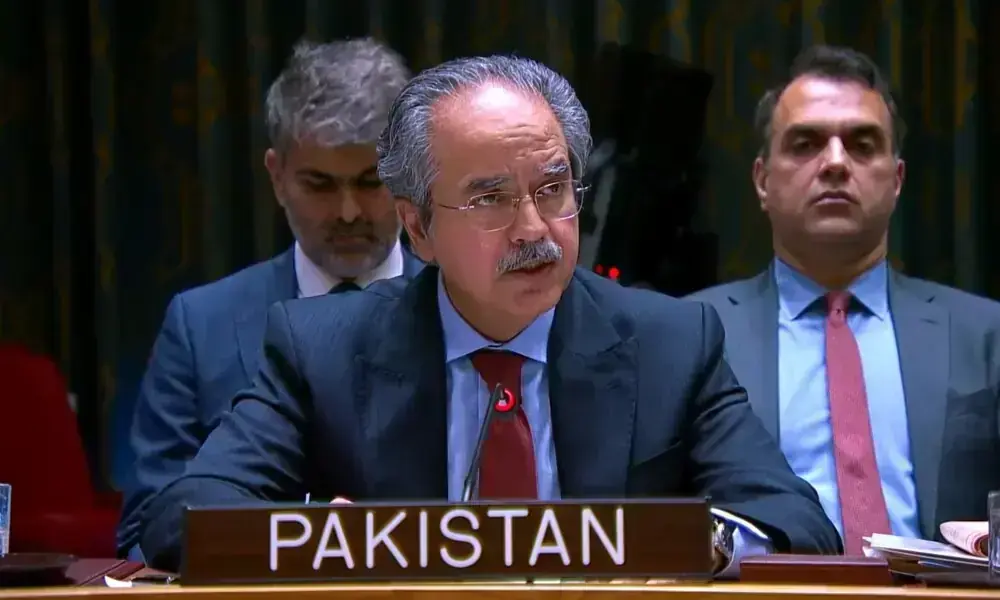
EDITORIAL: The UN General Assembly’s consensus adoption on Wednesday of Pakistan’s resolution on “Access to Assistive Technology” is a welcome development, particularly for millions of people in poorer countries whose ability to study, work and live independently is constrained not only by their disabilities, but also by the absence of affordable and accessible technology.
The scale of the problem merits greater attention. As Pakistan’s permanent representative to the UN, Ambassador Asim Iftikhar Ahmad, pointed out, an estimated 2.5 billion people globally require one or more assistive products or related services. Yet millions remain without them because of prohibitive costs, inadequate infrastructure, limited availability and a shortage of trained personnel. For people in developing countries, these obstacles can reinforce poverty and exclusion, depriving them of opportunities that others take for granted.
Assistive technology is not merely a matter of healthcare; its significance extends far beyond the medical sphere. A wheelchair can determine whether a person can attend school or reach a workplace; a hearing aid can facilitate education and communication; and a screen reader can make employment and public services accessible to someone who is visually impaired. Such devices should therefore be viewed as instruments of participation and independence rather than merely as medical equipment. The resolution is significant in this regard because it links
access to assistive technology with education, employment, healthcare, social protection and broader development goals.
Pakistan deserves credit for bringing this issue to the centre of international attention. The initiative builds on the country’s earlier efforts, including the World Health Assembly resolution adopted in 2018 to improve access to assistive technology. There is also an important humanitarian dimension to the present resolution. Wars, displacement and natural disasters can dramatically increase the vulnerability of people who depend on assistive devices. Ensuring continuity of access during emergencies should consequently be incorporated into humanitarian preparedness and response rather than treated as an afterthought.
The contribution to the resolution of Counsellor Saima Saleem, Pakistan’s first visually impaired career diplomat and a user of assistive technology, is especially noteworthy. Her involvement brings a perspective that statistics and diplomatic negotiations cannot fully capture. It is a reminder that people directly affected by accessibility barriers should have a meaningful role in shaping policies intended to address them. Such participation is essential if international commitments are to reflect realities on the ground.
But resolutions, however laudable, do not by themselves change lives. The difficult part begins with implementation. Developing countries will need financial assistance, technical cooperation, trained personnel and reliable supply chains to translate the UN commitment into affordable and sustainable access. Governments must also ensure that assistive technology is integrated into education, healthcare, employment and social protection systems. International agencies and donor countries, meanwhile, should ensure that financing and technology transfer become practical components of the new commitment rather than remaining matters of principle.
The consensus at the General Assembly should therefore be regarded as a beginning rather than an achievement in itself. Pakistan has helped secure international recognition for an issue that has long deserved greater attention. The next test is whether member states can convert that recognition into measurable improvements in the lives of those who remain excluded.
Copyright Business Recorder, 2026





















Comments