


September power bills: Adjustment pains a plenty
September 2026 electricity bills are set to be the highest in two years, driven by significant Fuel Charges Adjustments and Quarterly Tariff Adjustments, impacting consumers nationwide.
- Significant Fuel Charges Adjustments (FCA) driving bill increases.
- Record-high RLNG fuel costs and generation expenses.
- Impact of Quarterly Tariff Adjustments and industrial grid migration.
- IMF conditions on captive generation and furnace oil levy.
- Rising net-metering generation and its effects on grid demand.

September 2026 electricity bills are poised to be the highest in two years, across categories, as various adjustments take effect. The two latest decisions by the power regulator have put the September adjustments north of Rs2.5/unit, likely to take the average domestic consumer tariff to Rs28.23/unit (as per the PBS CPI methodology).
On a year-on-year basis, this is an increase of 29 percent and will be a big factor in keeping the September CPI in double digits.
The sharpest adjustment comes in the form of monthly Fuel Charges Adjustments (FCA), which is the biggest positive adjustment in 24 months at Rs2.06/unit. This is up from just 10 paisas FCA in the same period last year, and 75 paisas per unit from last month.
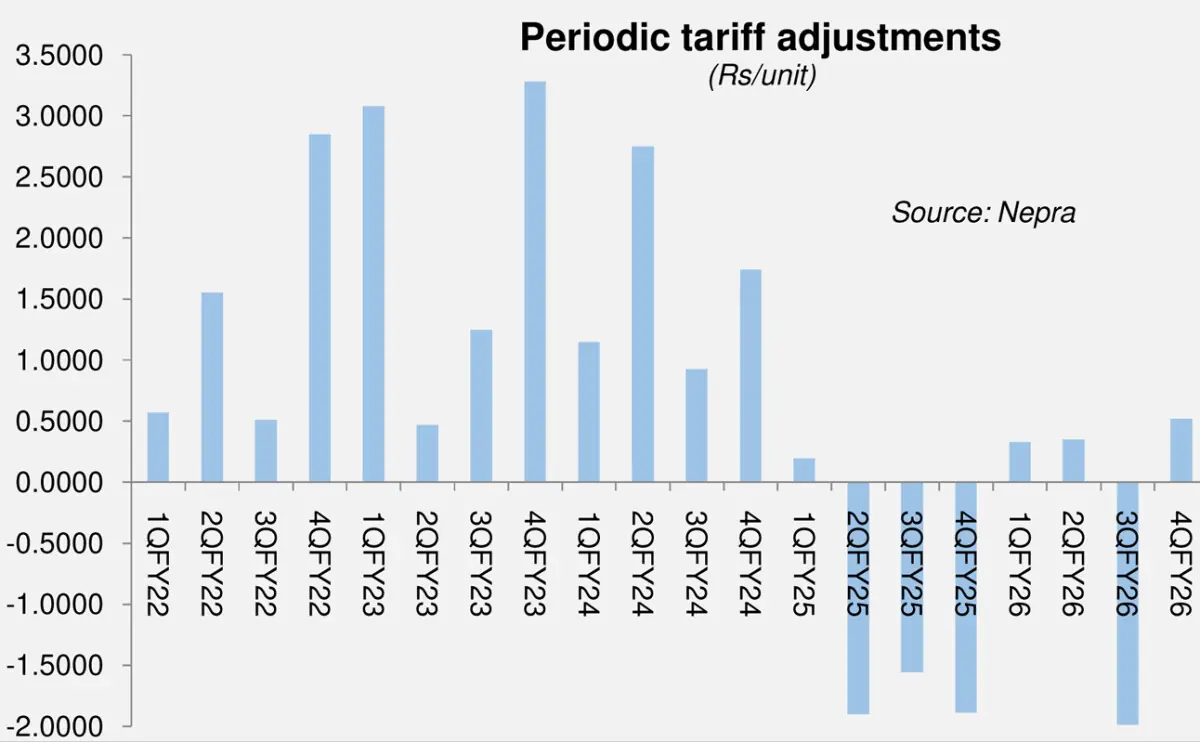
Since the FCA is applied in retrospect, on the consumption of July units, to be billed in September, the heat will be felt severely, especially by domestic consumers.
In absolute terms, fuel charges in July 2026 are the highest in 49 months at Rs139 billion. Not coincidentally, the RLNG fuel bill at Rs77 billion is also the highest in as many months. Only in June 2022, when the RLNG fuel bill was higher than in July 2026, was generation almost double what it was in July 2026. On a per-unit basis, RLNG generation cost at Rs47/unit is comfortably the highest ever in history, surpassing the previous high of Rs35/unit.
With RLNG molecules still hard to fetch, and rates excessively high, more of the same seems to be in store for the month gone by and the ongoing one. Hydel flows can come to the rescue, but nuclear’s delayed maintenance plans could throw a spanner in the works.
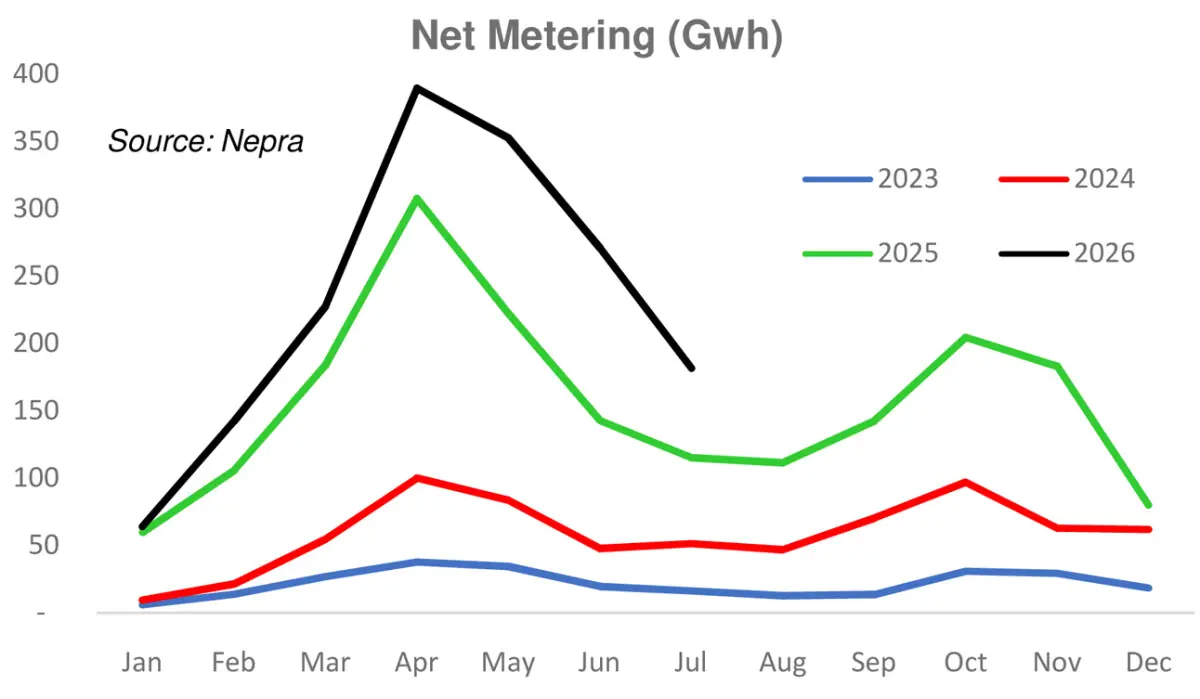
The other side is that of the Quarterly Tariff Adjustment (QTA), which remains relatively modest at 52 paisas per unit, to be in effect from September through November. That said, it replaces the largest negative adjustment of almost Rs2/unit, and the consequential impact, as a result, will be much higher. While modest, this is also the highest QTA since 4QFY24.
A large part of the retreat continues to come from the recovery of Power Purchase Price (PPP) on incremental units.
Bulk of this emerges from the migration of industrial units from captive generation to the grid, and that helped arrest the capacity charges overrun, which was close to Rs44 billion. Had it not been for the impact of incremental units, the capacity component alone would have led to an adjustment close to Rs1.7–1.8/unit.
Industrial consumers have continued to seek relief on captive usage. But it should be clear by now that it is not coming.
Pakistan, under the IMF RSF Facility, has signed to do away with captive-based generation, and it will remain the case for the foreseeable future. Similar is the case with the levy on furnace oil, which is an IMF programme condition, and will not be changed mid-programme, no matter how much sense it may have started to make to generate power on FO over RLNG at some point.
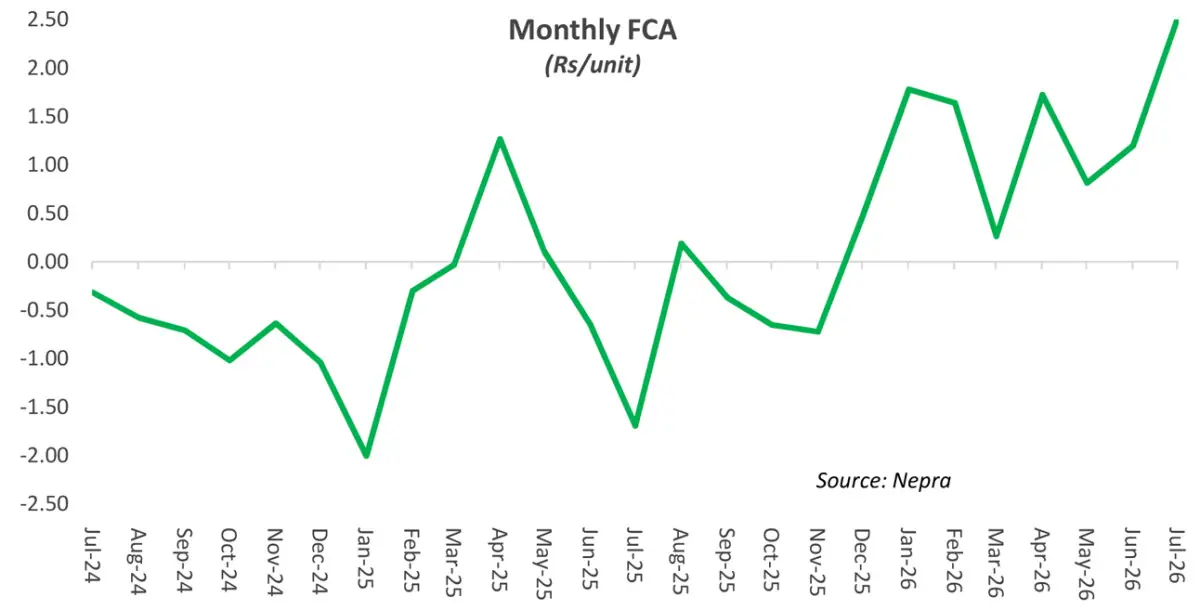
All this while, net-metering generation keeps rising. July 2026 saw it increase 1.6 times over the same period last year, and nearly quadruple from two years ago. The day and night demand curves have long been telling the story, and a lot of marginal cost variance and grid stability needs, resulting in running more expensive fuels, have come from the rise of metered and non-metered solar generation. In this backdrop, the health of industrial demand becomes pivotal to the overall demand profile of the grid and will have consequences for upcoming adjustments, particularly as the base narrows on captive migration to the grid.






















Comments