


Can Pakistan’s airports survive privatisation?
Pakistan's airport privatization raises questions about the financial sustainability of the remaining network, as historical revenues relied heavily on non-airport operations and aeronautical income.
- The financial sustainability of Pakistan's remaining airport network.
- Historical reliance on non-airport revenues and property revaluation.
- Opportunities for diversifying airport income beyond aeronautical sources.
- Underinvestment in infrastructure despite strong cash reserves.
With PIA successfully privatized, Pakistan is entering one of the most significant transformations in the history of its aviation sector. The Government’s decision to privatize major airports expects improved infrastructure, enhanced passenger experience and increased private sector investment. Yet beneath the optimism lies a fundamental economic question that has received surprisingly little public attention:
What will happen to the financial sustainability of Pakistan’s remaining airport network once its largest airports are privatized?
To explore this question, I conducted an independent financial analysis covering the period 2009 to 2019, using the available audited financial statements published by the then Pakistan Civil Aviation Authority (PCAA).
The objective was not simply to review historical financial performance but to understand the underlying economics of Pakistan’s airport business in the context of future privatization. This article elaborates some key findings even though the analysis was conducted to the depth of analysing the profitability ratios.
Unfortunately, following the separation of the former Pakistan Civil Aviation Authority into the Pakistan Airports Authority (PAA) and the Pakistan Civil Aviation Authority (CAA), these historical financial statements are no longer publicly available through the official websites.
Moreover, despite the institutional restructuring, publicly accessible audited financial statements for the subsequent years—where one would reasonably expect reports through 2025—have not been made available.
Greater financial transparency would not only support informed public debate but would also benefit policymakers, investors, researchers and other stakeholders interested in the long-term sustainability of Pakistan’s aviation sector.
Rather than accepting the published financial statements at face value, the analysis adjusted the reported figures to separate revenues generated from airport operations from those generated by air navigation services and recurring property revaluation gains. This approach provides a clearer picture of the underlying financial performance of airport operations, particularly in a post-privatization environment where navigation services may remain with the regulator while airport operations are transferred to private concessionaires.
The findings raise important questions.
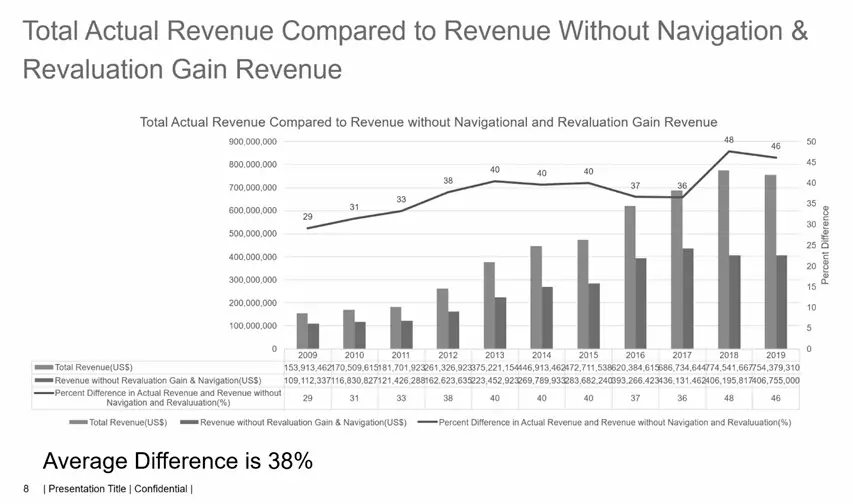
The analysis indicates that a substantial proportion of reported revenues has historically originated from navigation services and property revaluation gains. When these items are excluded to evaluate the airport business on a standalone basis, the financial picture changes considerably, with average reported revenues reducing on average by 38 percent over the period analysed.
This does not imply that Pakistan’s airports are unprofitable. Rather, it highlights the importance of distinguishing between the revenues from airport operations and those from air navigation services. Such distinctions become increasingly important when governments transition from integrated public authorities to separate airport operators and regulators.
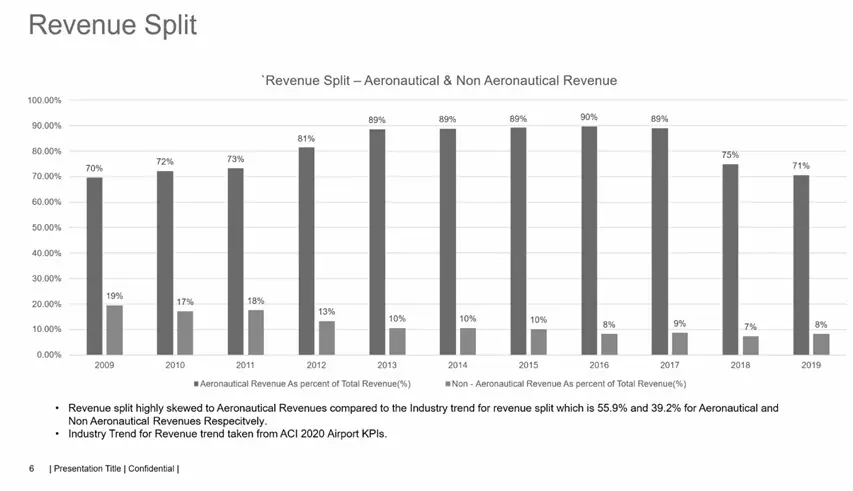
The study also highlights another structural characteristic of Pakistan’s airport sector: a heavy reliance on aeronautical revenues. Internationally, successful airports have progressively diversified their income through commercial activities such as retail, food and beverage, real estate, parking and advertising. According to the analysis, Pakistan’s revenue mix remains overwhelmingly dependent on aeronautical income, leaving significant opportunities to strengthen long-term financial resilience through commercial development.
Passenger growth presents another challenge. While global and Asia-Pacific airports experienced strong traffic growth before the pandemic, Pakistan’s growth trajectory remained comparatively modest. Since airport economics fundamentally depend on passenger throughput, increasing traffic volumes should remain a strategic national priority alongside infrastructure investment.
Another noteworthy finding from the financial statements is the Authority’s consistently strong cash position, with substantial cash and bank balances accumulated over the years. While maintaining adequate liquidity is essential for any airport operator, these reserves also represent a significant opportunity to accelerate investment in airport infrastructure, technology and passenger services.
Such investment becomes even more important given the persistent operational challenges experienced at Pakistan’s major airports, where passengers frequently encounter overcrowding and congestion at critical touch points, including check-in, immigration, security screening, baggage claim and arrivals. At the same time, the adoption of modern airport technologies—such as self-service processing, biometric identity management, advanced baggage systems, passenger flow analytics and integrated airport operations platforms—has remained limited compared with many regional and international airports.
Perhaps the most significant policy question concerns the future of Pakistan’s regional airports. Historically, the country’s largest airports have generated the majority of overall revenues and profitability, helping support many smaller airports across the national network. As privatization progresses, policymakers will need to determine how these regional airports will remain financially sustainable while continuing to provide essential connectivity and public service obligations.
Airport privatization is not simply a commercial transaction. It represents a restructuring of how aviation infrastructure is financed, regulated and operated. For this reason, financial transparency and objective economic analysis should become central components of the decision-making process.
This study is not intended to criticize privatization. On the contrary, privatization can create significant opportunities for investment, operational excellence and improved passenger experience. However, achieving these outcomes requires a clear understanding of the true economics of airport operations and the long-term implications for the wider airport network.
Pakistan has a unique opportunity to build a modern, financially sustainable airport system. Realizing that opportunity will require decisions grounded not only in engineering and infrastructure planning, but also in sound economic analysis.
Copyright Business Recorder, 2026
The writer is an aviation technology and airport transformation consultant with more than 20 years of international experience advising airports, airlines and governments on airport modernization, digital transformation and aviation infrastructure projects. He is the Founder of Rahman & Subhan Consultants. He can be reached at [email protected]



















Comments