


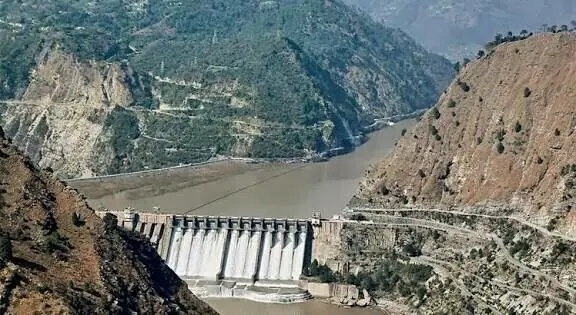
EDITORIAL: The award issued by the Hague-based Permanent Court of Arbitration (PCA) on the Indus Waters Treaty (IWT) comes as a vindication of Pakistan’s position and reinforces a fundamental principle of international law: treaties cannot simply be suspended or discarded unilaterally. The ruling provides important legal clarity, declaring that the IWT “remains fully in force” and that India must observe its obligations under the treaty, including those governing the design and operation of its hydroelectric projects on the Western Rivers.
Pakistan has consistently maintained that the IWT provides a rules-based framework for governing the use of the Indus, Jhelum and Chenab rivers, and that disputes over hydroelectric projects must be addressed through the mechanisms established by the treaty. The agreement has survived wars, political crises and decades of hostility between the two countries. Its remarkable durability demonstrated that even deeply adversarial neighbours can preserve mechanisms of cooperation when vital shared resources are at stake; unfortunately, however, that principle was challenged when the Modi government unilaterally placed the treaty in “abeyance”.
For Pakistan, the stakes could hardly be higher. The country depends on the Indus River system for agriculture, food security, hydropower and the livelihoods of millions of people. Any attempt to use water as a political or strategic instrument therefore carries consequences far beyond a conventional diplomatic dispute. Islamabad has already made clear that any attempt by India to block or stop Pakistan’s share of the Indus waters would constitute an “act of war”. Given these stakes, the PCA’s reaffirmation of the treaty’s continuing validity is particularly significant.
The court’s findings also undercut several arguments advanced by India to justify its decision. It found that Pakistan’s alleged failure to agree to modifications of the treaty did not constitute a material breach, noting that the IWT did not oblige Pakistan to enter such negotiations. Nor, the court concluded, could India’s allegations concerning terrorism provide a legal basis for suspending the treaty, which specifically governs the two countries’ rights and obligations regarding the Indus waters.
The interim measures concerning the Ratle hydroelectric project are equally important. By restricting certain construction activities until 90 days after the neutral expert’s final decision, expected in 2027, the PCA has sought to ensure that the dispute is not prejudiced by irreversible developments. Pakistan has long raised legitimate concerns about the design and operation of Indian projects on the Western Rivers. This legal vindication should not lead to complacency. The government’s stated willingness to explore a pathway back to engagement under the treaty is therefore important. Courts can clarify legal obligations; they cannot replace sustained diplomacy and institutional cooperation.
India’s rejection of the PCA’s jurisdiction is unfortunate, but does not diminish the significance of the ruling. If international agreements are to have meaning, states cannot be permitted to accept treaty obligations when convenient and disregard them when circumstances change.
Pakistan must now consolidate its legal position, closely monitor developments on the Western Rivers, pursue the neutral-expert process and press for the restoration of meaningful institutional engagement. The Indus Waters Treaty has endured because it provides rules for managing disagreement. It must not become another casualty of India-Pakistan tensions.
Copyright Business Recorder, 2026






















Comments