


Indus Waters Treaty: Weaponising a lifeline
Prime Minister Shehbaz Sharif warned against weaponizing water, citing India's actions regarding the Indus Waters Treaty. This poses an existential threat to Pakistan's economy and regional stability, demanding international attention.
- India's actions regarding the Indus Waters Treaty.
- Water's potential as a geopolitical weapon.
- Pakistan's economic and ecological vulnerability.
- International obligations for shared water resources.
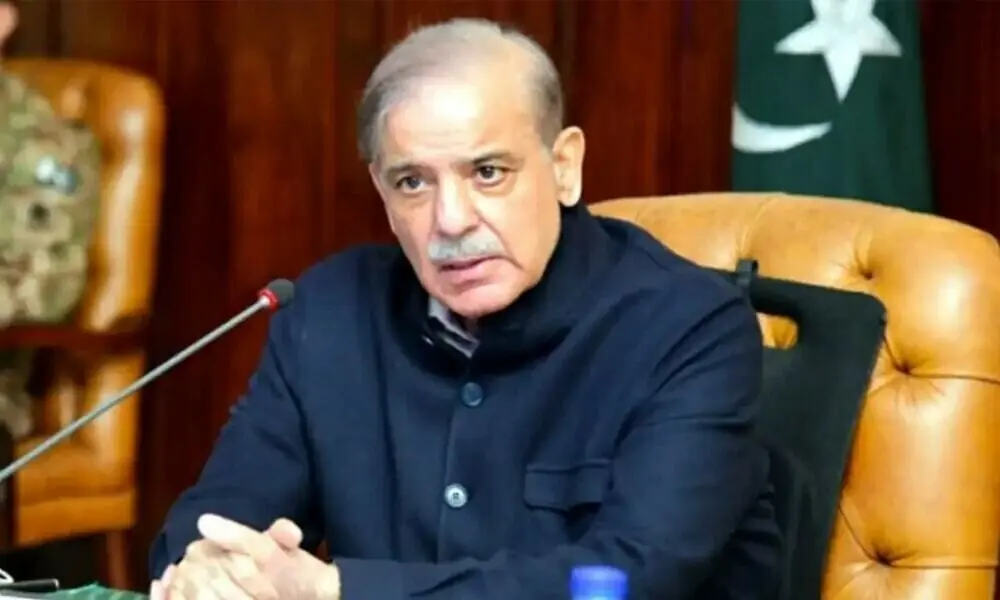
EDITORIAL: Prime Minister Shehbaz Sharif’s remarks at the Shanghai Cooperation Organisation summit in Bishkek that water must never be weaponised or used as an instrument of coercion merit attention and unequivocal agreement.
His warning comes as the management of shared water resources becomes an increasingly consequential dimension of regional security following India’s 2025 decision to place the Indus Waters Treaty (IWT) in abeyance.
The Permanent Court of Arbitration’s ruling a day earlier that the treaty remains in force reinforces the fundamental principle that such obligations cannot be discarded at political convenience.
The issue here, one must note, is the deeply troubling proposition that control over water can be used as a means of political pressure. As the prime minister put it, water is the lifeblood of the region.
Indeed, the principle is broader still: water, in fact, is the lifeblood of human existence. It sustains agriculture, ecosystems, industry and communities; and its availability determines whether societies prosper or struggle to survive.
Any attempt by a state to obstruct or manipulate the flow of an internationally shared water resource in violation of treaty obligations therefore carries consequences far more serious than an ordinary diplomatic dispute.
This is why Islamabad’s description of India’s action as an act of war is entirely justified. Since announcing its decision to hold the IWT in abeyance, New Delhi has created much uncertainty around river flows into Pakistan at critical stages of the agricultural cycle, while also approving hydropower projects over western rivers allocated to Pakistan under the treaty. For a water-stressed country whose economy depends heavily on the Indus river system, this is clearly an existential concern, with the potential damage extending well beyond farming. Pakistan’s agriculture supports millions of livelihoods and sustains a vast chain of economic activity, from fertiliser and seed markets to food processing, transport and rural commerce.
A significant disruption in water availability could therefore reverberate through the entire economy. Lower agricultural output would threaten farmers’ incomes, tighten food supplies and push up prices, while weaker production could hurt exports and the industries dependent on agricultural raw materials.
Water insecurity, then, could quickly become food, employment and economic insecurity.
One must note though that the implications here will not stay limited to Pakistan’s water and economic security. The delicate ecological balance of the entire Himalayan region will also be at risk.
The rivers originating in the Himalayas form an interconnected ecological system. Artificially altering river flows and accelerating interventions in fragile mountain environments can have consequences for ecosystems and communities across the region, and not just in Pakistan.
At a time when climate change is already intensifying glacier melt, floods, droughts and extreme weather, as tragically demonstrated by Nepal’s recent floods, further disruption of these systems could magnify risks for millions. There should, therefore, be no ambiguity about the key principles at stake here: international agreements governing shared waters are not optional arrangements to be invoked when convenient and discarded when circumstances change; and, water cannot be treated as a geopolitical weapon simply because one country happens to control the upstream flows.
A deliberate attempt to deny populations access to an essential resource crosses a profoundly dangerous moral line, and where it violates international obligations and causes grave civilian harm raises serious questions under international law.
Pakistan must continue to defend its treaty rights through diplomatic and legal means, while urgently improving its own water storage, conservation and management. But the international community must also recognise the wider principle articulated by the prime minister: rivers cannot become weapons. In a warming and increasingly water-stressed world, treating them as such could endanger peace, human lives and the ecological future of entire regions.
Copyright Business Recorder, 2026




















Comments