


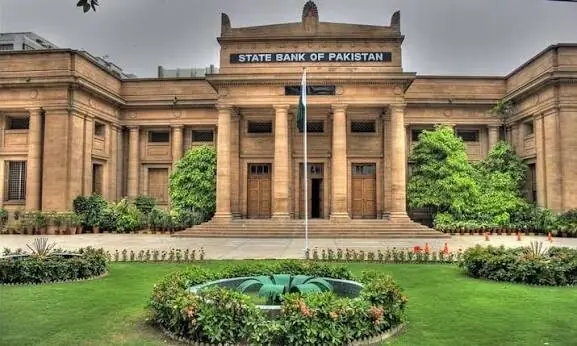
EDITORIAL: State Bank of Pakistan (SBP) in its bi-annual Monetary Policy Report has projected a rise in economic activity in the current fiscal year highlighted a key risk notably uncertainty associated with external factors, including due to the Middle East conflict, adverse climate change and global tariff policies.
The country’s top civilian and military leadership is proactively engaged in mediating between Iran and the US, implementing mitigating measures to deal with the negative climate change effect on our economy as well as engaging with US counterparts to reduce applicable tariffs on Pakistani exports.
However, the report did note a major internal factor that could contribute to a failure to meet the projected rise in economic activity: delays in implementation of the structural reform agenda, currently being rigidly monitored by the International Monetary Fund (IMF) under the ongoing programme loan, that could “further weaken exports, slow productivity gains and reduce the economy’s capacity to sustain higher growth without generating excessive inflationary and current account pressures.”
Persistent claim by the SBP based on its surveys that economic activity has been picking up in recent years can at best be described as selective two counts.
First, these surveys on which this assessment is based have a distinct element of an experimenter bias or, in other words, the companies which are part of the survey provide a more optimistic outlook to the SBP than they actually feel. This view is strengthened by the fact that surveys carried out by independent media reveal a different picture.
And, secondly, unemployment has been rising but with inventories depleting, especially in the auto sector, the more obvious conclusion is that output has not increased though sales have and that too with increased imports.
Economic theory suggests that the IMF supported contractionary fiscal (higher taxes) and monetary policy (higher policy rate) is anti-growth; however, the Fund has insisted on these measures, with particular reference to ending the elite capture of the economy on taxes and credit that is naturally opposed by these pressure groups. What is fairly evident by now, with the country on the brink of engaging on the fourth quarter SLA review, is that the tax structure has not changed, the reliance on indirect taxes, whose incidence on the poor is greater than on the rich, continues (currently indirect taxes account for almost 80 percent of all FBR collections – including under the head of direct taxes given that around 70 to 75 percent of these are imposed as withholding taxes on goods—which are defined as a sales tax passed on in their entirety to consumers). In this instance even the audit achievements cited often by Chairman FBR are mainly at the factory gate, which has translated into higher prices, for example, in the case of sugar.
With respect to the monetary policy, the current rate is 11.5 percent, quite low by recent Pakistani standards as it reached a high of 22 percent, but more than the double what is prevailing in regional competing countries. That has yet again prompted calls for its reduction.
Reports of misuse of the recently approved export subsidy and incentive scheme, including export refinance scheme totaling 88 billion rupees, have surfaced and it is unclear whether the government got approval from the Fund for this scheme or whether this would become a sticking point in the forthcoming SLA.
While conventional wisdom in Pakistan supports the export sector as an engine of growth—despite the raw material and semi-finished imports it requires that widen the current account deficit, or the fact that remittance inflows have overtaken export revenue—monetary and fiscal incentives for exporters remain a policy thrust that has not yet been abandoned. There is, therefore, a need to undertake a careful cost-benefit analysis of the contribution of each export subsector to revenue generation and foreign exchange earnings.
The persistent optimism of an expected uptick in economic activity does no favours to anyone, including the reputation of the economic managers. A better and honest grasp of the situation would enable informed timely decisions, which is a far better approach.
Copyright Business Recorder, 2026




















Comments