


Apple trains its own AI model for China market with Alibaba's support, sources say
- The AI model was developed in partnership with Alibaba Group and trained with the Chinese tech giant’s support
Apple has developed its own large language model for the China market, partnering with Alibaba, to integrate AI features into its devices and navigate local regulations, a shift from its previous third-party reliance.
- Apple's unique dual-track AI strategy in China.
- Regulatory approval for Apple's proprietary AI in China.
- Alibaba's Qwen model integration with Apple Intelligence.
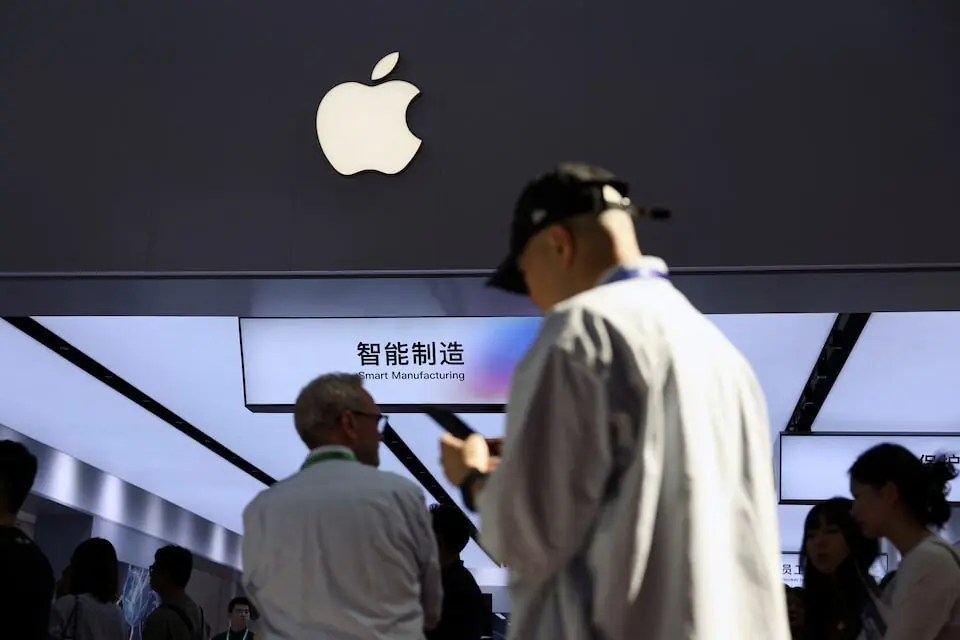

Apple has trained a large language model specifically for the China market, three people familiar with the matter said, a departure from the iPhone maker’s strategy of relying on third-party models to power AI features in the country.
The AI model was developed in partnership with Alibaba Group and trained with the Chinese tech giant’s support, the people said, declining to be named as the information is sensitive and not public.
Apple’s training of its own China-specific model has not been reported before.
The company had previously leaned towards domestic partners’ models to bring generative AI to iPhones and other devices sold in China, where US models such as Anthropic’s Claude and OpenAI’s ChatGPT, which Apple pairs with its own technology in its home market, are not available.
Apple and Alibaba did not respond to requests for comment.
Apple Intelligence, the company’s suite of AI tools, is expected to launch in China in the coming months after an update to its iOS operating system, the people said.
Musk’s xAI sues Apple, OpenAI alleging antitrust violations
A China-tailored model of its own would give Apple greater control over the AI experience in its most competitive overseas market, where it has lost ground to local rivals including Huawei that have raced ahead with AI-equipped handsets.
Apple’s planned rollout represents a unique dual-track strategy on AI deployment for a foreign firm in China, which would allow it to navigate steep regulatory hurdles that have limited access for many other US technology firms.
It would also make Apple the first foreign company approved by Beijing to offer a proprietary AI model in China, marking a rare collaboration by US and Chinese tech firms amid a widening trade and diplomatic rift between the two countries over AI.
Regulatory hurdles cleared but uncertainty remains
The move follows a lengthy regulatory process that ended last month, when the Cyberspace Administration of China, the country’s internet watchdog, registered Apple’s generative AI service, clearing the way for Apple Intelligence to reach Chinese iPhones for the first time.
‘Ted Lasso’ returns to the pitch with a new challenge on Apple TV
Under that arrangement, Alibaba’s Qwen model is to be incorporated into the version of Apple Intelligence that ships with compatible iPhone, iPad, Mac and Vision Pro models in China, and the service was also set to incorporate technology from Baidu, Reuters reported in July. Last week, Apple published a Chinese-language guide explaining how eligible Mac users in mainland China could connect Qwen to its Siri digital assistant and Writing Tools feature, a Mac-specific arrangement that could help it compete in China’s AI PC market.
Apple has since deleted the guide, without providing an explanation. Alibaba’s US-listed shares climbed about 4% in premarket trading on news of the July registration, underscoring investor expectations that the tie-up could reshape China’s AI ecosystem.
Apple looks to ai for boost in China
Apple’s partnership with Alibaba was first confirmed in February 2025, when Alibaba chairman Joe Tsai, speaking at the World Governments Summit in Dubai, said Apple would use the Chinese company’s AI to power its phones in China.
Taiwan’s Foxconn reports 35% rise in Q2 profit, beats forecasts
“They talked to a number of companies in China. In the end they chose to do business with us,” Tsai said at the time.
The rollout was subsequently delayed as Apple worked to adapt its features to Chinese regulations.
China remains critical to Apple’s fortunes, accounting for a significant share of its revenue.
The absence of AI features on Chinese iPhones had been cited as a factor weighing on sales as consumers gravitated toward domestic brands offering built-in AI assistants.
It was not immediately clear what role Apple’s self-trained model would play alongside third-party Chinese models and how those are working together.

























Comments