


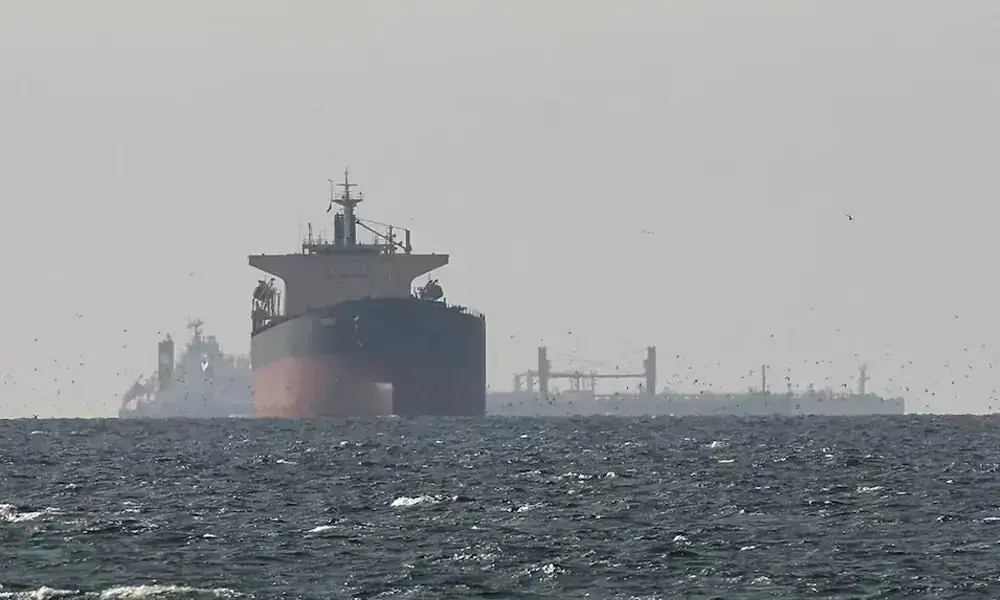

HOUSTON: US imports of Middle Eastern crude are set to hit about 600,000 barrels per day in August, the highest since the Iran war began, as a brief opening of the Strait of Hormuz and the rerouting of Saudi oil through the Suez Canal pushed barrels toward American ports, ship-tracking data showed.
Nearly a dozen ships loaded with Middle Eastern crude were headed to US ports as American refiners and traders moved swiftly to snap up barrels that exited the strait when a memorandum of understanding signed by US and Iran in June helped release vessels from the maritime choke point.
Also boosting imports are cargoes from Saudi Arabia’s Red Sea port of Yanbu that are travelling through the Suez Canal to the United States. Saudi Arabia has rerouted its crude output to Yanbu via its east-west pipeline to get around Iranian attacks on shipping in the Strait of Hormuz.
However, Yemen’s Iran-backed Houthi militants last month launched a maritime blockade of Saudi Arabia, and the risk of attacks at the Bab el-Mandeb Strait on the southern end of the Red Sea has forced many tankers to head north and exit the shipping channel via the Suez Canal.
That has increased exports from the region to the United States, as the journey to US ports from the Suez Canal is shorter than the route to Asia. Vessels exiting via the northern route can still sail to Asia, but the voyage would take nearly four weeks longer than typical and raise costs.
“Sending Saudi crude on tankers to the US rather than to Asia may be a preferable option given fleet logistics and the shorter time on the water,” said Kpler analyst Matt Smith. Liberia-flagged tanker Aqualoyalty, chartered by US refiner PBF Energy, loaded crude oil at Egypt’s Sidi Kerir port and discharged at Paulsboro in New Jersey on Thursday. The Aframax tanker can carry about 750,000 barrels.
Marshall Islands-flagged supertanker Front Gaula loaded Saudi Arabian oil earlier this month at Yanbu and was headed to the United States after passing the Suez Canal.
Since a very large crude carrier (VLCC) can only traverse the canal partially loaded, the vessel lightens its load on the Red Sea side by shipping a portion of the crude on Egypt’s SUMED pipeline and then reloads the barrels on the Mediterranean side after traversing the canal.
No Middle Eastern crude barrels reached the US last month, while imports peaked at about 708,000 bpd in February this year.
The US had not received crude oil from Saudi Arabia for five straight weeks as of the end of July or imported any oil from Iraq for six weeks in a row, weekly data from the Energy Information Administration showed.
Dozens of empty vessels sail
TO US Meanwhile, the redirection of some of the Saudi barrels to the US has tightened supplies for Asian refiners that have in turn looked to American oil.
At least two dozen empty VLCCs were signaling the US as their destination to pick up oil, a Reuters analysis of ship tracking data and fixtures showed. A similarly large convoy had sailed toward the US in April as refiners and traders in Asia and Europe scrambled for alternative barrels after the Strait of Hormuz shut-in.
The disruption to Middle Eastern supply has made US crude the go-to alternative for global buyers, drawing empty supertankers to American ports to load crude.
“As US barrels continue to remain the marginal barrels rebalancing the export markets, that’s pulling VLCCs towards the Gulf Coast for late-August and September loading,” said Rohit Rathod, an analyst with Vortexa, adding that empty vessels heading to the US could be as high as 40.






















Comments