


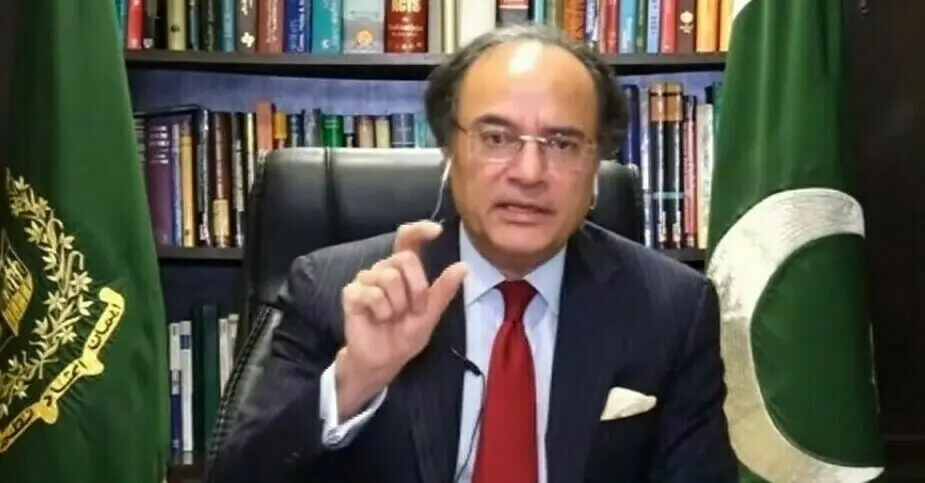

ISLAMABAD: Finance Minister Muhammad Aurangzeb on Monday said the establishment of the Pakistan Virtual Assets Regulatory Authority (PVARA) marks a key milestone in the government’s strategy to position Pakistan as a digital economy, providing a modern regulatory framework for virtual assets and strengthening oversight of the fast-growing digital finance sector.
The finance minister held an interactive session with participants of the URAAN Overseas Pakistanis Summer Scholars Programme, a six-week internship initiative organised by the Ministry of Planning, Development and Special Initiatives.
Highlighting the government’s efforts to position Pakistan for the digital economy, the finance minister briefed the participants on the establishment of PVARA to provide a modern regulatory framework for digital assets. He emphasised that the initiative would promote responsible innovation, strengthen regulatory oversight, and enable Pakistan to capitalise on emerging opportunities in digital finance.
READ MORE: Govt explores tokenisation of sovereign bonds, NPCs
The URAAN Overseas Pakistanis Summer Scholars Programme brings together overseas Pakistani students and young scholars from leading international universities, providing them an opportunity to engage with public institutions and contribute their education, research, and international exposure towards Pakistan’s development and prosperity.
Welcoming the participants to the Finance Division, the finance minister appreciated the initiative for strengthening engagement with Pakistan’s young global talent.
He encouraged the scholars to remain connected with the country and leverage their knowledge, innovation, and international experience to contribute towards Pakistan’s long-term economic development.
During the interaction, the finance minister shared an overview of Pakistan’s economic outlook and the government’s reform agenda.
He highlighted the progress made over the past two and a half years in strengthening macroeconomic stability and noted that the government’s focus is now on achieving sustainable economic growth through higher exports, increased investment, fiscal discipline, and continued structural reforms.
He emphasised that creating an enabling environment for private sector-led growth remains central to the government’s economic strategy.
The finance minister also highlighted recent improvements in Pakistan’s sovereign credit profile and shared the government’s efforts to strengthen engagement with international capital markets.
He referred to Pakistan’s successful return to global capital markets, including the inaugural Panda Bond issuance, and outlined ongoing initiatives to diversify financing sources through innovative financial instruments.
He also noted that these developments reflect growing international confidence in Pakistan’s economic direction and reform agenda.
The finance minister further outlined the government’s measures to improve the business environment by reducing the cost of doing business through rationalised taxation, affordable financing, competitive energy pricing, and reforms aimed at strengthening export competitiveness.
He underscored the importance of productivity, innovation, and export diversification to enhance Pakistan’s competitiveness and support sustainable economic growth.
During an interactive question-and-answer session, participants exchanged views with the finance minister on a range of issues, including economic reforms, export promotion, climate finance, and investment opportunities.
The finance minister encouraged the scholars to apply their education, research, and international exposure in contributing to Pakistan’s economic transformation and reaffirmed the government’s commitment to creating opportunities for young professionals to play a meaningful role in the country’s future.
Copyright Business Recorder, 2026



















Comments