


Support of PM, Health minister sought: YPAP accuses DRAP of allowing drug making cos to hike prices
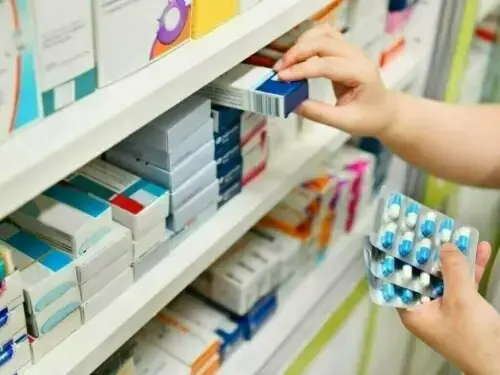

ISLAMABAD: The Young Pharmacists Association of Pakistan (YPAP) on Monday accused the Drug Regulatory Authority of Pakistan (DRAP) of allowing drug manufacturing companies to increase medicine prices freely, urging the prime minister and Health minister to intervene as almost all the life-saving drugs have become unaffordable for the common man.
Addressing at a press conference here, YPAP Chairman Dr Mohammad Usman, YPAP President Dr Hina Shaukaut, along with Rahila Hafeez Rana, said that public sector hospitals purchase various essential medicines from the same drug manufacturers at significantly low prices, and the same medicines are being sold at around 4000 percent higher rates in private hospitals
Sharing a comparison of life saving medicine prices fixed in Punjab’s public hospitals and the open market they said that Omeprazole 20mg per unit was costing Rs 1.7 in Punjab’s government run hospitals while same medicine was being sold at Rs 67.85 per unit reflecting a price differential of 3991.18 percent, Monekulast 10mg tab rate is Rs 3.07 in Punjab’s public hospitals while in open market it costs Rs 93 per tablet reflecting 3,029.31 percent difference. The Punjab government is purchasing esitalopram 10mg at Rs 2.93 per unit, while in the open market it was being sold at Rs 100, showing a difference of 3412.97 percent. The Punjab government was buying Ceftriaxine 1gram injection at Rs 78 while in the open market it was being sold at Rs 1,244, showing a difference of 1,595 percent.
The YPAP members also accused DRAP Chief Dr Obaidullah of taking bribes from the pharma companies, saying over the past few years he had visited abroad 100 times. They also accused him of being involved in money laundering activities.
Dr Usman alleged that DRAP officials were involved in benefiting pharmaceutical companies to make undue profits. They increased the import bill of medicines and also encouraged Transfer Pricing (money laundering). The above officials were making their utmost efforts since 2012 to remove control on medicine prices, and remained successful on 6th February 2024, when Pakistani state authorities were busy with the General Elections in the Country. The DRAP has registered such medicines in Pakistan, which were already banned in Europe, e.g., Panadol Extend 665mg; and approved its advertisement in the mass media. Panadol 500mg was removed from the market for two years (2020-21) to convert patients to Panadol Extend 665mg. The DRAP has introduced a nefarious way to loot poor patients by enlistment of medicines without fixing prices. A few anti-Pakistan DRAP officials are regularly getting foreign tours offered by private pharmaceutical companies (which is a direct bribe), resulting in an increasing import bill for medicines day by day.
The YPAP demanded immediate policy action from the government to rein in costs, particularly for non-essential medicines that are becoming increasingly unaffordable for ordinary citizens. The call for intervention comes amid growing public concern over the price surge that followed the controversial deregulation of non-essential medicines during the tenure of the unelected caretaker government in 2023–24.
The deregulation policy removed price controls on hundreds of medicines, allowing pharmaceutical companies to set prices without oversight. As a result, the prices of commonly used drugs for conditions like blood pressure, diabetes, psychiatric disorders, and infections have skyrocketed—putting them out of reach for a large portion of the population.
They further alleged that, unfortunately, 999 out of 1000 doctors are not prescribing medicines and diagnostic tests based on real disease; rather, prescriptions are based on the volume of bribes paid by pharmaceutical companies and diagnostic laboratories to doctors, which is a homicidal crime. The more the volume of bribes, the heavier becomes the prescription.
Dr Usman said that pharmaceutical companies are profit-making organizations; they do not believe in charity. How can we assume that pharma companies would reduce their profits or business? On the other hand, our regulator of medicines, i.e., a few anti-Pakistan officials of the DRAP, are extremely corrupt, which is favorable for profit-making pharma companies. Pharmaceutical companies, by lobbing always get key appointments of DRAP for the most corrupt officials.
When contacted, DRAP Chief Dr Obaidullah rubbished all the accusations leveled against him by the YPAP, adding that some elements of the association were leveling the same baseless allegations against him, former DRAP heads, and other senior officials since 2017. He said that the association must bring proof instead of leveling allegations.
Copyright Business Recorder, 2026


















Comments