


Bawany Sugar Mills: SC upholds FBR’s input tax adjustment rejection decision
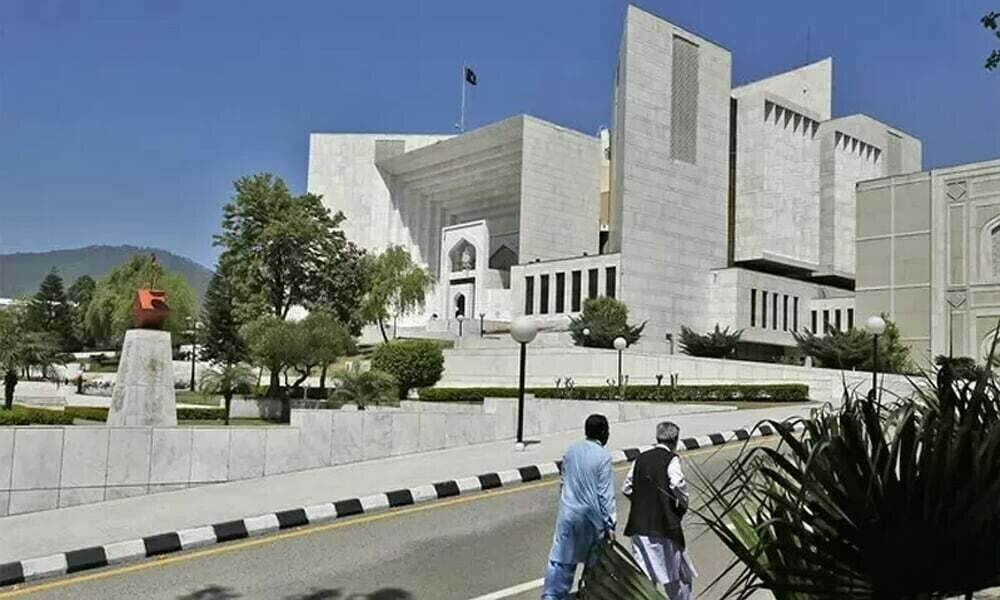
ISLAMABAD: The Supreme Court on Friday held that a party’s concession on a legal issue cannot stop a court from reaching the correct interpretation of the law, ruling that courts are not bound by admissions made by parties or their counsel when deciding questions of law.
A three-member bench, headed by Chief Justice Yahya Afridi and comprising Justice Irfan Saadat Khan and Justice Shakeel Ahmed, examined whether input tax claimed by Bawany Sugar Mills Ltd, Karachi, the respondent in the case, on construction materials – specifically cement and steel used in immovable structures – was legally excluded under the relevant provisions of the Sales Tax Act.
The bench also considered whether statutory requirements relating to banking transactions and treasury deposits could be disregarded.
The court set aside the Sindh High Court (SHC) judgment dated August 10, 2017, as well as the order of the Appellate Tribunal Inland Revenue (ATIR) dated July 1, 2016, and restored the Order-in-Original, issued by a tax office of the Federal Board of Revenue (FBR), which had disallowed the input tax adjustment.
The bench observed that the case involved substantial questions of law concerning the interpretation of Sections 3, 8(1)(ca), 8A and 73 of the Sales Tax Act, 1990, on which leave to appeal had been granted by the apex court on June 21, 2018.
The verdict said that even if a representative or counsel had conceded a legal point before the ATIR or the High Court, such a concession could not be treated as binding because “there is no estoppels against a statute”.
The court further held that the SHC and the ATIR were incorrect in treating the matter as involving only questions of fact.
The proper interpretation of statutory exclusions under Section 8, the applicability of amended SROs, and enforcement of the banking requirements under Section 73 of the Act were questions of law requiring judicial determination.
The dispute arose from tax periods between July 2013 and December 2013, when Bawany Sugar Mills Ltd claimed input tax adjustment on building materials, including cement and steel, used in the construction of its plant and machinery.
The Deputy Commissioner Inland Revenue (DCIR) noted that an amendment introduced through SRO 4571 dated May 27, 2013, had specifically excluded building materials from the scope of input tax adjustment.
Treating the omission of this exclusion by the taxpayer as an error, the DCIR issued notices seeking verification of supporting documents.
The respondent submitted its reply, but the DCIR was not satisfied, observing that the company had failed to produce purchase invoices, books of accounts, bank statements and other required records. According to the department, this failure amounted to violations of Sections 8(1)(ca), 8A and 73 of the Sales Tax Act, 1990.
The assessment proceedings subsequently resulted in an order disallowing the input tax adjustment and imposing a tax demand of Rs22,758,773, along with a penalty of Rs682,761, through an Order-in-Original dated January 30, 2015.
The company challenged the order before the commissioner Inland Revenue (Appeals), who dismissed the appeal. It then approached the ATIR, which allowed the taxpayer’s appeal and set aside the disallowance orders passed by the lower authorities on July 1, 2016.
The department subsequently challenged the ATIR decision before the Sindh High Court through a Tax Reference Application under Section 47 of the Act.
The SHC dismissed the application through its judgment dated August 10, 2017, ruling in favour of the taxpayer. The department then moved the Supreme Court against the High Court’s decision.
Advocate Dr Shah Nawaz, appearing for the department, argued that the High Court had wrongly dismissed the reference at the outset by treating pure or mixed questions of law as mere findings of fact.
Citing various judgments, he contended that where a dispute involves the legal consequences of admitted facts under specific statutory provisions, it necessarily raises a question of law.
He further argued that any concession made by a departmental representative or counsel could not prevent the High Court from exercising its statutory jurisdiction under Section 47 of the Act.
Counsel for Bawany Sugar Mills Ltd defended the decisions of the SHC and the ATIR, arguing that the company was entitled to claim input adjustment on cement and steel because the materials formed an integral part of its business operations.
Copyright Business Recorder, 2026

























Comments