


OPEC+ likely to raise oil output targets from August again, sources say
- The target will increase by about 188,000 barrels per day for August
OPEC+ is expected to further increase oil output targets from August, continuing to unwind previous cuts amidst falling oil prices and a review of member production capacities.
- Expected OPEC+ oil output target hike.
- Factors influencing current oil prices.
- Iraq's potential departure from OPEC.
- UAE's exit from the OPEC+ alliance.
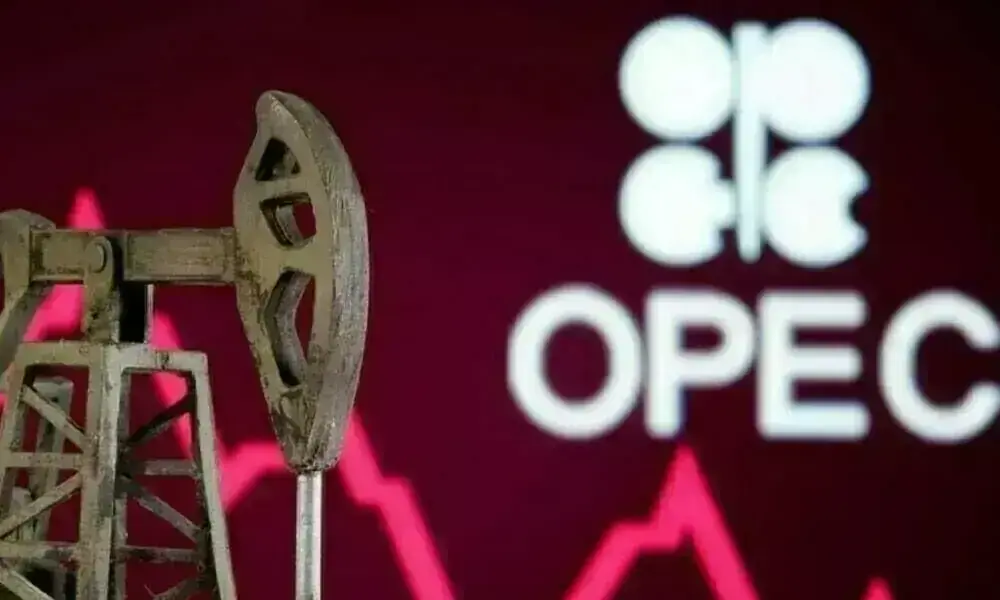

LONDON: OPEC+ oil-producing countries will likely agree a further hike in their output targets from August when they meet on Sunday, three sources said on Wednesday, adding to supply at a time of falling prices as the Strait of Hormuz gradually reopens.
The target will increase by about 188,000 barrels per day for August, the same as for June and July, the sources said.
OPEC did not immediately respond to a request for comment. All sources spoke on condition of anonymity and said no final decision had been made.
Seven core members of OPEC+, which groups OPEC and allied producers including Russia, have increased their output quotas from April to July by almost 800,000 barrels per day.
The Iran war, however, has led to a sharp drop in production among key members. OPEC+ output fell to 33.13 million bpd in May, according to OPEC data, from 42.77 million bpd in February.
Still, oil prices have returned to pre-war levels, pressured by weaker Chinese imports, higher exports from non-Middle East producers, a record strategic stock release coordinated by the International Energy Agency, and the U.S.-Iran memorandum of understanding to end the war that helped ease supply concerns.
Brent crude prices were trading at just over $72 a barrel by 1309 GMT.
Last week sources told Reuters thatIraq, OPEC’s second-largest producer after Saudi Arabia and one of its five founding members, had consideredquitting the group if it was not allowed to significantly increase oil production. Officials in Baghdad subsequently said they supported a reassessment of OPEC production quotas to better reflect member states’ conditions.
Rollback of 2023 supply cut
The seven producers — Saudi Arabia, Russia, Iraq, Kuwait, Algeria, Kazakhstan and Oman — are boosting output as part of a phased rollback of a 1.65 million bpd supply cut agreed in 2023, when the group still included the UAE.
The UAE quit the alliance in late April because it wanted to align its capacity more closely with its production, free of production restraints imposed by the group.
OPEC+ is carrying out a review of its members’ oil production capacity to be used as a reference for 2027 production baselines, from which quotas are set.
From August, the seven have about 379,000 bpd of the original cut to return to the market, taking into account the UAE exit from May 1, according to Reuters calculations.
That would mean that the group would unwind the remainder of the cut by the end of September if they continue unwinding at the same pace.















Comments