


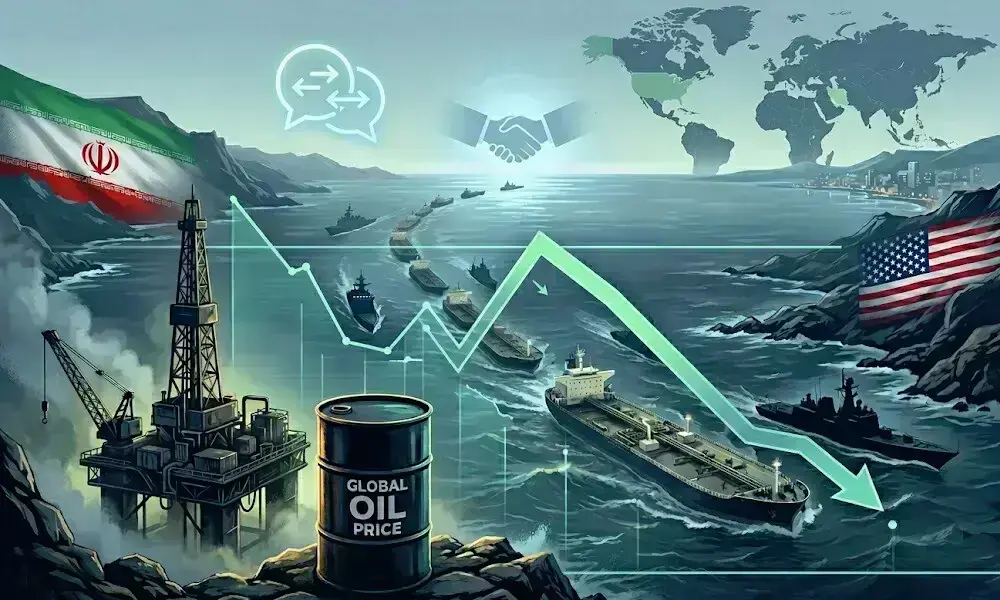
HOUSTON: Oil prices fell on Thursday to their lowest since before the start of the Iran war at the end of February as an interim deal to end fighting, reopen the Strait of Hormuz and ease sanctions on Tehran boosted the global supply outlook.
Brent crude futures were down USD1.85, or 2.33 percent, at USD77.69 a barrel at 11:15 a.m. CDT (1615 GMT), while US West Texas Intermediate fell USD1.89, or 2.46 percent, to USD74.90 a barrel.
Brent touched its lowest level since February 27, which was the last day of trading before the initial US-Israeli strikes on Iran, while WTI was at its lowest since March 4.
READ MORE: Oil falls to lowest since start of Iran war after ceasefire deal signed
“The potential reopening of the Strait of Hormuz removes the big risk premium that had been baked into crude from (the) disrupted 20 percent of global oil flows,” said Phil Flynn, senior analyst with the Price Futures Group in a morning note.
“While some say full normalization may take weeks - insurance, repairs, sanctions relief - but the direction is clear, and as we have found out that the more pessimistic timeline (has) been proven to be too pessimistic,” Flynn said. The 14-point memorandum of understanding between the United States and Iran begins a 60-day negotiation period during which Iran will allow toll-free passage through the Strait of Hormuz. The deal calls for traffic through the strait to be restored to its full capacity within 30 days.
The preliminary accord defers many of the more difficult issues, such as Iran’s nuclear program, and also requires the United States and its partners to come up with a $300-billion plan to finance Iran’s recovery. Analysts expect a gradual recovery in flows through the Strait of Hormuz, while industry experts have cautioned that prices may not plummet as demand recovers and inventories are refilled.
Investment bank Goldman Sachs expects Gulf exports to normalize to pre-war levels by end-July, with crude production recovering by October.
The bank estimates that a normalization in exports to pre-war levels might be achieved with a 13 million barrel-per-day increase in Hormuz flows from current levels to around 70 percent of pre-war levels.
BNP Paribas does not currently anticipate a return to pre-war prices and views USD75 per barrel as a “durable floor for the foreseeable future,” it said in a note, given ongoing supply losses and higher demand. Brent traded around USD60 to USD70 per barrel in the first two months of the year before the war. China, the world’s second-largest oil consumer, is forecast to consume 753 million metric tons in 2026, down 4.9 percent from 2025 amid a pivot to new energy and high oil prices, according to a report published by PetroChina’s research unit. Ukrainian drones hit the Russian capital’s oil refinery for the second time this week in what Ukraine cast as a demonstration of its growing capabilities.























Comments