


US intelligence chiefs face fresh scrutiny over Iran war
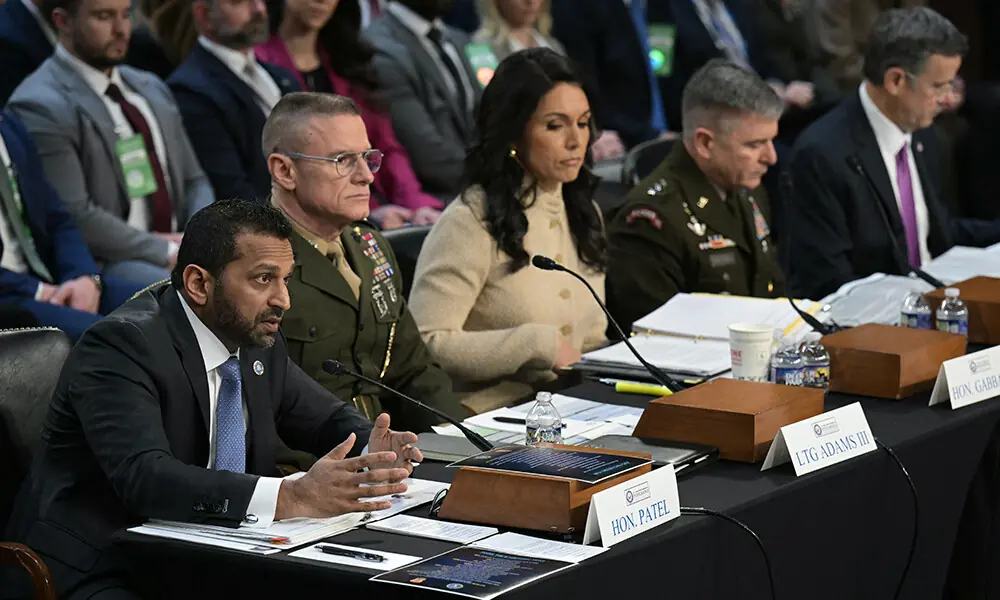

WASHINGTON: Top officials from US President Donald Trump’s administration returned to Capitol Hill on Thursday for a second day of testimony on worldwide threats, with intelligence chief Tulsi Gabbard facing renewed questions over the rationale for the Iran war.
Gabbard, Trump’s director of national intelligence, was joined by CIA Director John Ratcliffe and FBI Director Kash Patel in front of the House Intelligence Committee for a hearing that was expected to revisit sharp exchanges from the Senate a day earlier.
Wednesday’s session was dominated by disputes over the veracity of Trump’s claim that Iran posed an “imminent” nuclear threat before the United States and Israel launched their campaign.
Pressed repeatedly by lawmakers, Gabbard declined to directly endorse that characterization, instead arguing that determining what constitutes an imminent threat is ultimately the responsibility of the president.
Her response drew pushback from Democrats, who argued that assessing threats is central to the intelligence community’s role.
READ MORE: Trump vows no more attacks by Israel on Iran gas field after it ‘violently lashed out’
The issue was compounded by an unusual moment during her opening statement, when Gabbard skipped over a section of prepared remarks stating that Iran’s nuclear program had been “obliterated” in US strikes last June and had not been rebuilt since.
She later confirmed under questioning that the omitted passage still reflected the intelligence community’s assessment.
Gabbard also told lawmakers Iran’s government remains “intact but largely degraded” after sustained strikes, underscoring a more measured assessment than some of the administration’s public rhetoric.
The testimony comes amid growing scrutiny of the intelligence underpinning the conflict, particularly following the resignation this week of Joe Kent, a senior counterterrorism official and close ally of Gabbard, who stepped down in protest of the war.
In a letter to Trump, Kent argued that Iran did not pose an imminent threat prior to the strikes – a claim that has further fueled questions from lawmakers on both sides of the aisle.
Republicans have largely rallied behind Trump’s handling of the conflict, though the resignation has raised concerns about potential fractures within the president’s political coalition.
Vice President JD Vance has sought to downplay those tensions, saying the administration was determined to avoid a prolonged conflict, even as Defense Secretary Pete Hegseth told reporters Thursday there was no “definitive time frame” for ending the war.
Thursday’s House hearing was expected to probe many of the same fault lines, with lawmakers likely to press intelligence officials on the gap between their assessments and the White House’s public justification for the war.
The session will also widen to cover broader global threats, but the conflict with Iran – now entering its third week – was set to dominate proceedings once again.




















Comments
Comments are closed for this article.