


Iranian cluster missiles pose extra challenge for Israel’s air defences
- Israel failed to intercept one of the cluster missiles overnight, and its small bomblets scattered into civilian areas in Tel Aviv
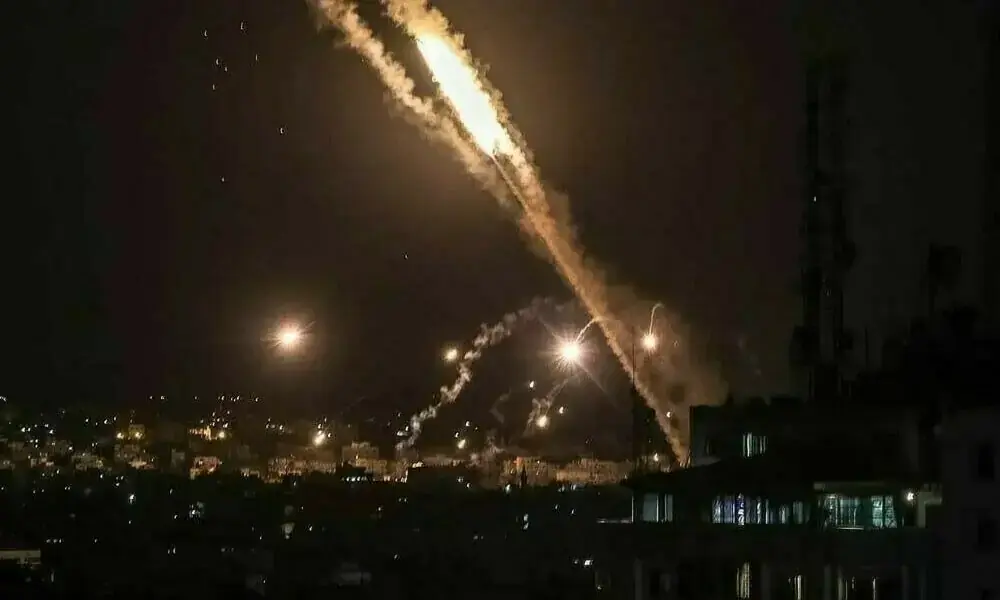

TEL AVIV: Iran has launched dozens of missiles with cluster munition warheads at Israel since the start of the war, posing a challenge for Israel’s missile defence shield as they need to be hit before they split and disperse into smaller explosives.
Israel failed to intercept one of the cluster missiles overnight, and its small bomblets scattered into civilian areas in Tel Aviv. A couple in their 70s was killed, and one of Tel Aviv’s main train stations suffered damage.
Israeli military spokesperson Lieutenant Colonel Nadav Shoshani told reporters that the couple was killed in their apartment by a single, cluster munition bomblet.
“This cluster bomb was fired by the Iranian regime towards a centre of mass population, firing dozens of rockets towards the civilians, deliberately targeting civilians,” he said. “This is a war crime by the Iranian regime…”
Shoshani said the military was doing all it could to intercept these missiles as “high up as possible” to minimize damage.
Munitions banned by more than 100 countries
Cluster munitions open in mid-air and scatter as many as several hundred “bomblets” over a wide area. They often fail to explode, creating virtual minefields that can kill or injure anyone who finds them later.
READ MORE: Iran strikes Tel Aviv with cluster warheads in retaliation for killing of security chief
More than 100 countries agreed at an international conference in Dublin in 2008 to ban the use of cluster munitions. However, Israel and Iran have not joined the ban, and neither have major powers including the U.S., China and Russia.
Israel’s Home Front Command, which issues safety directives to citizens during wartime, has published videos warning of the dangers of munitions, saying they can “become dangerous explosive traps”, particularly for small children or pets.
The military has said about half of the missiles fired from Iran since Israel and the U.S. jointly attacked Iran on February 28 have been cluster warheads. They were also fired by Iran during a 12-day Israel-Iran war last June.
An Israeli military official said Iranian cluster warheads have about 24 submunitions, each containing approximately 2–5 kg of explosives. They break apart at an altitude of 7–10 km above the ground, creating dozens of separate impact sites.
READ MORE: Iran’s nuclear doctrine not likely to change, foreign minister says
“Each submunition can detonate when it hits the ground or another hard surface,” the official said. “Its effect is similar to the explosion of a grenade - relatively limited local damage but highly dangerous to anyone nearby.”
‘Must be intercepted above the atmosphere’
Yehoshua Kalisky, a senior researcher at the Institute for National Security Studies at Tel Aviv University, said most missiles are intercepted by Israel’s Arrow-3 anti-ballistic missile system.
To prevent damage, “they must be intercepted above the atmosphere as far as possible from the target area,” Kalisky said. “There’s no other way, because once the cluster bombs are released (in the atmosphere), you cannot intercept them.”
Shoshani said Israel’s offensive capabilities were also crucial. Israel says it has bombed hundreds of targets in Iran, including missile launching sites. An estimated 3,000-plus people have been killed in Iran since the start of the war, according to the U.S.-based Iran human rights group HRANA.
“We’ve been degrading their ability to fire missiles, (along with) active defence systems and the passive defence system, sirens and people going to the safe rooms,” said Shoshani of efforts to prevent Israeli casualties from Iranian missiles.
“The combination of all that has had great success, but is still not perfect.”




















Comments
Comments are closed for this article.