


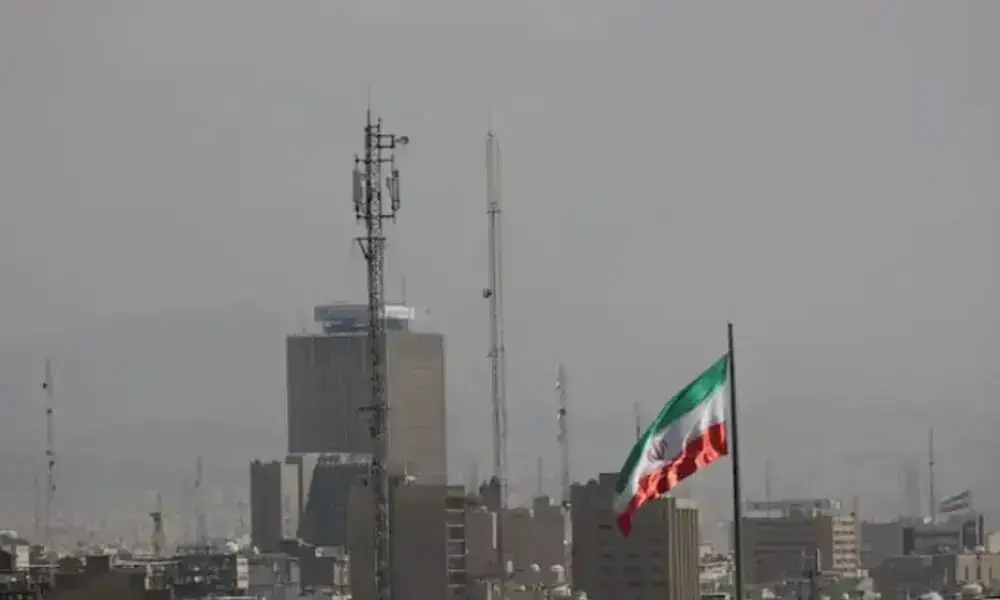

If one feels that Muslims across the world should support Iran in its ongoing conflict with the US-Israel alliance, is it merely because the nation — forced to confront two nuclear powers simultaneously — boasts a predominantly Muslim population? Or are there reasons beyond religious affinity for other Muslim nations to support the government in Tehran?
Well, there are a host of compelling reasons why the global Muslim community should assert that Tehran has consistently held the moral high ground when it comes to the West’s behaviour towards Islamic nations.
The first reason lies in the historical context of Western hostility. The Iranian nation has laboured under Western sanctions right since the Islamic Revolution of 1979. The West, particularly the United States, never afforded Iran’s government the opportunity to establish normal relations. For its part, Iran never wavered from calling a spade a spade; the result is a mutual animosity that has defined the last four decades of relations between the two sides.
History of economic warfare
The economic hardships faced by Iranians are, therefore, not solely the fault of their government, but a logical consequence also of the sanctions imposed by the US. Furthermore, the US has frequently provided funding to various foreign groups to foment unrest inside Iran.
Compounding this problem is the attitude of Western media, which remains prejudiced against pro-Islam governments — a fact I have observed personally throughout a 33-year career in journalism.
The Islamic Republic faced its first US sanctions just months after its inception, when President Jimmy Carter froze USD8.1 billion in assets. While briefly lifted in 1981, embargoes were revived during the Iran-Iraq War. (During this war, the West firmly sided with none other than Saddam Hussain).
The 1990s saw an escalation with the 1996 Iran Sanctions Act, and after 2000, measures intensified against Iranian banks. This culminated in the 2018 “maximum pressure” campaign following the US withdrawal from the nuclear deal.
Despite these restrictions, Iran has survived through a drive for self-sufficiency. Other Muslim countries view this with fascination, wondering how, despite such formidable opposition, Iran keeps forging ahead through perseverance.
Democratic double standards
It is often overlooked that Iran is a democracy that has adapted the concept of popular voting. One could argue it is a more robust democracy than many of its neighbours, which remain absolute monarchies. While Iran’s Ulema Council vets presidential candidates, this is consistent with a state that styles itself as an Islamic Republic.
In contrast, Israel styles itself as a Jewish state rather than a secular democracy. Western powers oppose Iran’s Islamic identity tooth and nail but never question Israel’s religious character. Furthermore, while the Israeli government continues to occupy Palestinian lands, it denies Palestinians the right to vote in its general elections. The West ignores this disenfranchisement because an Islamic government is viewed as a threat, while a Jewish government is deemed acceptable regardless of its democratic deficits.
The geopolitical dichotomy is equally stark regarding nuclear capabilities. Israel’s well-documented N-arsenal — estimated at 80–400 warheads — draws no Western sanctions, despite its history of brutal military actions against almost all its neighbours.
In contrast, even a hint of a nuclear programme in a Muslim-majority state triggers intense scrutiny and threats. This disparity proves that strategic alliances trump non-proliferation principles.
Betrayal of diplomacy
One began to support Tehran in 2015 when it negotiated in good faith and ultimately signed the Joint Comprehensive Plan of Action. Under that deal, Iran agreed to cap nuclear enrichment at less than 4 per cent, effectively abandoning the pursuit of a nuclear weapon in exchange for the lifting of sanctions. Under this landmark agreement, Iran dismantled much of its programme and permitted robust inspections.
However, in 2018, President Donald Trump abruptly and unilaterally withdrew the US from the agreement, reimposing sanctions. This unjustified move validated Iran’s long-standing doubts regarding Western intentions.
The situation reached another breaking point in June of 2025. Just as a new deal seemed imminent, Israel and the United States launched coordinated attacks on Iranian nuclear facilities and Revolutionary Guard bases, shattering the talks.
The escalation peaked yet again on 28th February, 2026. On the very day mediators anticipated the closing of a new deal, the US and Israel launched joint military operations against the Islamic government. The very first wave of airstrikes resulted in the martyrdom of Iran’s Supreme Leader, Ayatollah Ali Khamenei, and dozens of top officials. Iran has since retaliated with missile salvos and the closure of the Strait of Hormuz, plunging the region into total war.
Bottom line
Iran entered into negotiations with Washington at least thrice — in 2015, 2025, and 2026. Each time a deal was signed or neared completion, Tehran was deceived. In return for diplomacy, they received only death and destruction.
No neutral observer should accuse Iran of being the aggressor. From the breaking of treaties to the imposition of decades of economic warfare, the West has consistently undermined the path to peace. This reality is obvious to Muslim populations worldwide, even if many of their governments maintain a shameful silence on the international stage.
Copyright Business Recorder, 2026
The writer is an author and teaches journalism at Hamdard University




















Comments
Comments are closed for this article.