


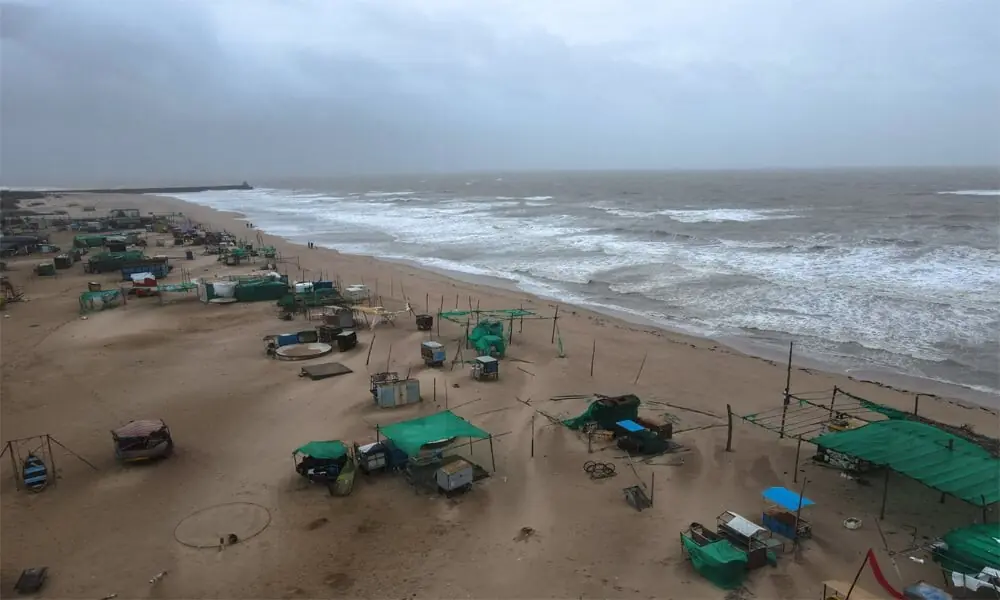
HYDERABAD: Community development leaders emphasised that sustainable progress in coastal and climate-vulnerable areas can only be achieved when climate-resilience principles are fully integrated into local planning, service delivery, and infrastructure development, ensuring that development initiatives are inclusive, risk-informed, and responsive to the growing impacts of climate change.
These views were shared during a capacity-building workshop held in District Thatta, bringing together 20 community leaders from eight Village Organisations (VOs). The training was supported by the Pakistan Poverty Alleviation Fund (PPAF) under its Restoring Social Services and Climate Resilience Project, which focuses on strengthening community systems in disaster - and climate-affected regions.
The workshop was facilitated by Sindh Community Foundation (SCF) as part of its broader commitment to enhancing community resilience and institutional sustainability in rural Sindh. Participants explored the critical role of Village Organisations in addressing climate risks such as flooding, coastal erosion, salinity intrusion, and extreme heat, while promoting inclusive and accountable local development.
Sessions focused on strengthening community institutions, participatory governance, inclusive leadership, and practical planning tools that enable VOs to design, manage, and sustain grassroots development initiatives. Special emphasis was placed on applying a climate-resilience lens to local priorities, particularly in small-scale infrastructure and the restoration of essential social services in coastal areas.
The training was led by Javed Hussain, Executive Director of SCF, and Ameer Hamza, who facilitated interactive and hands-on learning through real-life examples and group work. Speaking at the workshop, Javed Hussain highlighted that strong and inclusive community institutions are the backbone of sustainable and climate-resilient development.
He stressed that coastal communities in Thatta face deepening poverty due to repeated climate shocks—including floods, cyclones, and erosion—making climate-responsive infrastructure and services an urgent priority. He also emphasised that joint leadership by women and men within Village Organisations strengthens community responses to social, economic, and climate-related challenges and improves engagement with local government systems.
Participants actively took part in discussions, group exercises, and action-planning sessions. By the end of the workshop, representatives from ten Village Organisations had conducted initial needs assessments and identified priority development interventions using climate-resilient approaches.
At the conclusion of the training, 20 Village Organisations formally came together to establish a Community-Based Climate-Responsive Coastal Development Network in District Thatta. The network will serve as a platform for joint planning, peer learning, community-led assessments, and coordinated engagement with local authorities to promote sustainable coastal development.
Copyright Business Recorder, 2026






















Comments
Comments are closed for this article.