


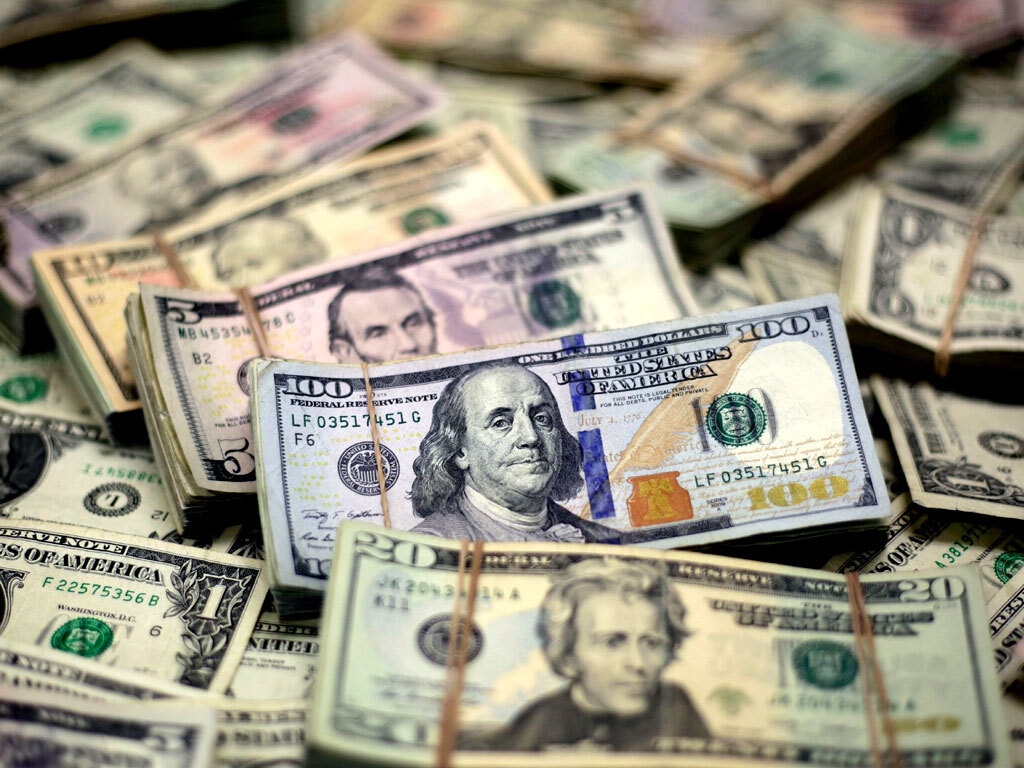

NEW YORK: The US dollar slid on Tuesday as a slew of mixed economic data, some delayed and therefore dated, reinforced expectations that the Federal Reserve will cut interest rates next month.
In US late morning trading, the euro was up 0.5 percent against the dollar at USD1.1577, while sterling gained 0.6 percent to USD1.3184.
The dollar index, a measure of its performance against its major counterparts, fell 0.5 percent to 99.746 following the release of September retail sales and producer price data, after it initially held on to its gains from last week when the index rose nearly 1 percent.
“Producer prices were stable and retail sales showed a modest consumer slowdown, and this keeps a December rate cut on the table,” said Scott Helfstein, head of investment strategy, at Global X, in emailed comments.
Data showed US retail sales rose 0.2 percent in September, less than 0.4 percent forecast by economists polled by Reuters and slowing from an unrevised 0.6 percent gain in August.
Producer prices, on the other hand, increased 0.3 percent, in line with expectation, after an unrevised 0.1 percent drop in August; however, at the core level prices inched up 0.1 percent, below the consensus forecast of 0.2 percent.
In addition, the latest US consumer confidence number declined to 88.7 in November, from an upwardly revised 95.5 in October, which further hurt dollar sentiment. Economists polled by Reuters had forecast the index edging down to 93.4 from the previously reported 94.6 in October.
The economic data followed dovish comments from policymakers in the past few days that helped cement rate cut expectations.
On Monday, Fed Governor Christopher Waller said the job market was weak enough to warrant another quarter-point rate cut in December, though action beyond that depended on a flood of data that was delayed by the federal government shutdown.
Waller’s comments followed similar remarks by New York Fed President John Williams on Friday.
Traders are now pricing in an 83 percent chance of a cut next month, up from 50 percent a week earlier, CME FedWatch showed. That huge swing underscores the challenge the market faces in pricing in near-term rates in the absence of economic data caused by the longest-ever US government shutdown, which ended on November 14.
Francesco Pesole, currency analyst at ING, said some “year-end rebalancing flows before Thanksgiving may be getting in the way” of dollar weakening.
However, he added in a note to clients, “unless markets have a hawkish rethink, the dollar looks too strong relative to short-term rate differentials at these levels, and we see some material downside risks.”
In other currency pairs, the yen, which has been on the defensive since hitting 10-month lows last week, firmed on Tuesday to 156.055 per dollar, leaving the dollar down 0.5 percent against the Japanese currency.
Investors have been waiting for any signs of official buying from Tokyo to support its currency, which has weakened by nearly 10 yen since the start of October after fiscal dove Sanae Takaichi took over as Japan’s prime minister.
Pesole said thinner liquidity around Thanksgiving could present good conditions for the Bank of Japan to intervene in USD/JPY, ideally after a market-driven correction in the pair.




















Comments
Comments are closed for this article.