


School oversight and management: Sindh unveils digital attendance system
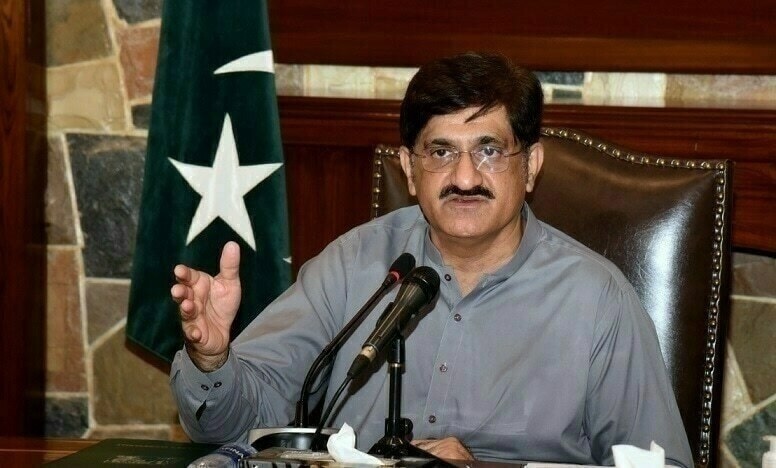

KARACHI: Sindh Chief Minister Syed Murad Ali Shah inaugurated the Student Attendance Monitoring and Redress System (SAMRS) on Thursday, describing it as a major innovation in Pakistan’s education sector that integrates technology and data-driven decision-making into reform efforts.
At the launch ceremony held at a local hotel, the chief minister said the initiative marks the first integrated digital platform in Sindh — and in any province of Pakistan — that connects student attendance with school facilities, teacher performance, and learning results.
He explained that the new system would enable the provincial government to make evidence-based policy decisions, helping to pinpoint challenges faced by students and design timely responses.
The event was attended by Education Minister Syed Sardar Shah, World Bank Country Director Bolormaa Amgaabazar, senior representatives from Unicef, the Global Partnership for Education (GPE), Asian Development Bank (ADB), the British Council, JICA, and officials from the School Education and Literacy Department (SELD), along with education specialists and development partners.
Murad Ali Shah shared that SAMRS had already been rolled out in 600 schools across 12 districts, with plans to expand it to four additional districts with Unicef’s assistance. The platform is built not only to record attendance but also to anticipate student dropouts, recommend interventions, and strengthen school administration.
“SAMRS is a model that Pakistan can follow,” he said. “We are institutionalising it through a new policy that ensures long-term sustainability, ownership, and integration with Sindh’s education governance framework,” said the Chief Minister.
He announced that the provincial government is institutionalising SAMRS through a new policy framework to ensure its sustainability and alignment with Sindh’s education governance system.
The ceremony was attended by Education Minister Syed Sardar Shah, the World Bank Country Director Bolormaa Amgaabazar, senior representatives of UNICEF, the Global Partnership for Education (GPE), Asian Development Bank (ADB), British Council, JICA, officials of the School Education and Literacy Department (SELD), education experts, and development partners.
The chief minister thanked the World Bank, GPE, and other partners for their continued collaboration and acknowledged the efforts of the School Education Department, Reform Support Unit (RSU), and SELECT Project team for their role in the system’s development.
He also underscored the need to connect education with health, nutrition, and child protection, suggesting that SAMRS could be linked to programs such as child immunisation, health assessments, and social protection initiatives.
The chief minister also highlighted the broader SELECT Project, funded by the World Bank and GPE, focusing on improving early-grade literacy, transforming teaching practices, developing climate-resilient school infrastructure, and increasing student retention through SAMRS and capacity-building initiatives.
The $154.7 million programme covers 12 districts and aims to reduce learning poverty and promote school attendance, especially among girls.
The government announced plans to expand SAMRS province-wide via a structured training cascade beginning with master trainers and extending to cluster heads and all satellite schools.
“This is how we turn innovation into a legacy,” the CM said.
Murad Ali Shah reaffirmed that every reform undertaken by the Sindh government - from technological systems to infrastructure projects - is aimed at ensuring no child is left behind. “Our commitment to the children of Sindh is unwavering,” he said. “Every child deserves to be present, engaged, and thriving. This is the future we are building together.”
Copyright Business Recorder, 2025

























Comments
Comments are closed for this article.