



Pakistan’s solar debate has once again returned to the Prime Minister’s desk — and once again, politics may trump policy.
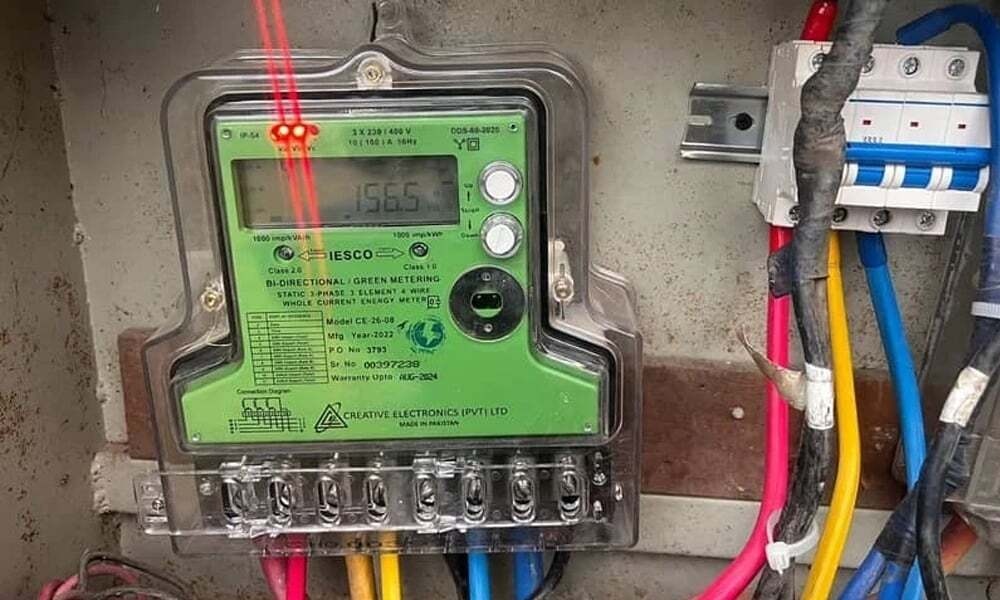
The Power Division has warned that the existing net-metering framework is becoming fiscally unsustainable, proposing a reduction in the buyback rate from Rs 22 per unit to around Rs 11.3 per unit (earlier floated at Rs 10). The logic is straightforward: every rooftop system that exports surplus power to the grid erodes the paying base while fixed costs remain unchanged. Yet the government has blinked twice before, shelving similar reform proposals after lobbying pressure.
This time, the Prime Minister has asked for “a thorough review” — both buyback rate and of the legal standing of contracts under the Net Metering Rules 2015 — before any move is finalized. He has also instructed that a new Net Billing framework be drafted for future consumers and a communication plan devised to sell the policy shift.
The hesitation is understandable but costly. In FY24, net-metered generation cut grid sales by an estimated 3.2 billion kWh, adding roughly Rs101 billion to the collective burden of grid-connected consumers — an implicit cross-subsidy. Projections show this ballooning to 18.8 billion kWh by FY34, inflating the burden to Rs545 billion and average tariffs by Rs3.6 per unit. These are not hypothetical figures; they are baked into the IGCEP 2025, which now classifies rooftop solar as a forced addition that complicates least-cost power planning.
This is not an argument against solar — Pakistan needs it. But it also needs equity. About 300,000 net-metering consumers — mostly affluent households — enjoy buyback rates linked to the National Average Power Purchase Price, while 32 million grid consumers shoulder rising capacity and fixed charges. That imbalance is no longer defensible.
The current policy structure allowed consumers to recover solar investments in just two years — among the fastest paybacks globally. The proposed Rs11.3 per unit rate would extend payback to around four to five years, still within international norms and still financially attractive. The outrage that such a recalibration would “kill” rooftop solar is misplaced. Even with lower rates, returns remain strong — particularly for those optimizing self-consumption.
Globally, as rooftop adoption has scaled, incentives have been rationalized. Vietnam halved its feed-in tariff once its solar boom took off. Australia and Europe have shifted toward dynamic, time-of-use-based billing that reflects the grid’s real-time value. Pakistan, meanwhile, remains in the gold-rush phase — romanticizing rooftop solar while ignoring fiscal and technical implications.
Ironically, the loudest debate is about the smaller slice of the solar story. The real revolution is happening behind the meter — households, small businesses, and farmers installing systems without any grid export. They are powering tube-wells, retail shops, and homes independently, reducing both bills and reliance on erratic supply. That’s where Pakistan’s true solar momentum lies. For these users, net metering is irrelevant; savings come from self-generation.
For net-metered consumers, the proposed rate cut merely lengthens payback periods slightly. In fact, with battery storage costs falling fast, the economics of maximizing self-use are improving rapidly. As storage becomes cheaper, consumers can store excess power for nighttime use instead of exporting it. In that future, pricing the grid buyback appropriately — not generously — makes perfect sense. Today’s Rs22 per unit rate is simply too lucrative for a service that uses the grid as a backup.
Allowing installations up to 1.5 times a consumer’s sanctioned load has created localized over-generation. Distribution companies report reverse power flow on several feeders, forcing system operators to take emergency steps to stabilize voltage. As Secretary Power told a parliamentary committee, “On some occasions, the system operator is compelled to restore supply of high-loss feeders to protect the system.” That is not a trivial operational issue — it’s a warning about structural imbalance. The grid was built for predictable demand, not unpredictable injections of decentralized generation. Without tariff reform and capacity planning updates, technical instability and cost distortion will worsen. Nepra flagged this risk last year; the Power Division’s projections have been consistent. The missing ingredient is political will.
Reform need not mean retreat. A tiered approach could balance fairness and continuity. Smaller residential systems — say up to 5 kW — could retain relatively higher buyback rates to support middle-income households. Larger residential and commercial systems could shift to gross metering and time-of-use tariffs that mirror true grid value. Existing contracts deserve legal protection; retroactive changes would erode investor confidence. But for new contracts, aligning incentives with system costs is both fair and sustainable. The Power Division’s proposal for Net Billing and standardized new contracts can deliver exactly that, provided it’s communicated honestly: this is not an anti-solar move, it’s an anti-subsidy correction.
Every month of inaction adds more rooftop capacity that will be politically and legally harder to reprice later. Meanwhile, the paying base of the grid continues to shrink, pushing tariffs higher for those who cannot leave. Delaying reform doesn’t protect consumers; it deepens inequity. A well-designed, legally sound, and fairly communicated rate revision will not derail Pakistan’s solar transition — it will secure it. Because a grid that collapses under the weight of its own distortions helps no one — not even those basking under their shiny new panels.





















Comments
Comments are closed for this article.