


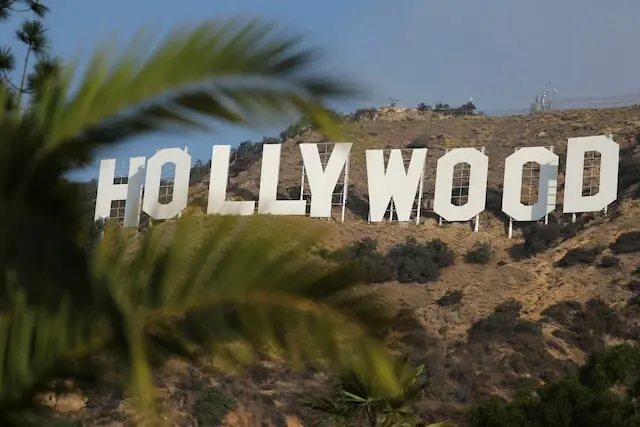

President Donald Trump said on Monday he would impose a 100% tariff on all films produced overseas that are then sent into the U.S., repeating a threat made in May that would upend Hollywood’s global business model.
The step signals Trump’s willingness to extend protectionist trade policies into cultural industries, raising uncertainty for studios that depend heavily on cross-border co-productions and international box-office revenue.
“Our movie making business has been stolen from the United States of America, by other Countries, just like stealing candy from a baby,” Trump said in a post on his Truth Social.
However, it was not immediately clear what legal authority Trump would use to impose a 100% tariff on foreign-made films.
The White House did not immediately respond to a Reuters request for comment on how the tariffs would be implemented.
Top U.S. studios Warner Bros Discovery, Paramount Skydance and Netflix also did not immediately respond to requests for comment. Comcast declined to comment.
“There is too much uncertainty, and this latest move raises more questions than answers,” said PP Foresight analyst Paolo Pescatore.
“For now, as things stand, costs are likely to increase, and this will inevitably be passed on to consumers,” he said.
Trump sets 10% tariff on lumber imports, 25% on cabinets and furniture
The president had first floated the idea of a movie tariff in May but offered few details, leaving entertainment executives unsure whether it would apply to specific countries or all imports.
After the announcement in May, a coalition of American film unions and guilds sent a letter to Trump, urging him to support tax incentives for domestic film production in a reconciliation package being drafted in Congress, aiming to help return more movie and television projects to the US.
The U.S. film industry recorded a $15.3 billion trade surplus in 2023, backed by $22.6 billion in exports to international markets, according to the Motion Picture Association.
From Australia to Canada
Studio executives told Reuters earlier this year that they were “flummoxed” by how a movie tariff might be enforced, given that modern films often use production, financing, post-production and visual effects spread across multiple countries.
Hollywood has increasingly relied on overseas production hubs such as Canada, the UK and Australia, where tax incentives have attracted big-budget shoots for films ranging from superhero blockbusters to streaming dramas.
At the same time, co-productions with foreign studios have become more common, particularly in Asia and Europe, where local partners provide financing, access to markets, and distribution networks.
Industry executives also warn that a broad tariff could affect the thousands of U.S. workers employed on overseas shoots, from visual effects artists to production crews, whose work is often coordinated across multiple countries.




















Comments
Comments are closed for this article.