


Govt rules out possibility of forming joint security force with China
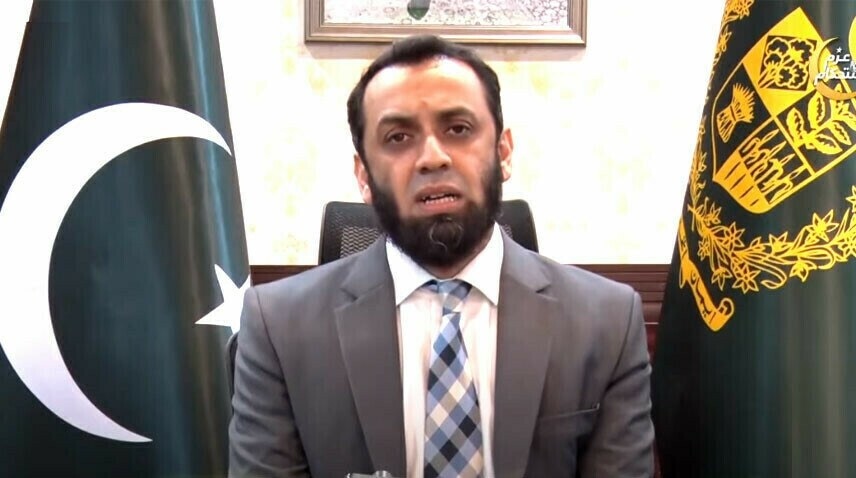

ISLAMABAD: Pakistan has ruled out the possibility of forming a joint security force with China to protect thousands of Chinese workers in Pakistan, Information Minister Attaullah Tarar said.
In an exclusive interview with Arab News, Information Minister Attaullah Tarar ruled out the possibility of a joint security force or Islamabad allowing Beijing to bring in its own security staff to provide protection to thousands of Chinese citizens working in Pakistan.
“Obviously, there has to be cooperation, there has to be intel-sharing, there has to be a lot of exchange of ideas, that happens all the time,” said Tarar, who was part of Sharif’s delegation to China.
“But with regard to on-ground security [presence of Chinese forces], I think Pakistani security forces, Pakistani armed forces, are well equipped to deal with the situation and they’re already dealing with it.”
Pakistan has deployed tens of thousands of army troops, paramilitary units and police to protect Chinese projects, including power plants and the Arabian Sea port of Gwadar.
“I think as far as the security situation is concerned, yes, it’s a concern,” the information minister said.
“And the prime minister [Sharif] also raised this in his speeches [in China] that we are faced with a situation where a security situation does exist, but things are getting better gradually.”
Tarar described Sharif’s recent trip to China as “historic,” highlighting the success of business-to-business (B2B) meetings held on the sidelines of the SCO summit. He said 900 business participants from both countries signed joint venture agreements worth USD1.5 billion and memorandums of understanding (MoUs) worth USD7 billion.
“I think this B2B conference was a great matchmaking event in which the EV [electric vehicle] sector, the textile sector, the mining sector, the energy sector, all sectors were covered,” the minister said.
“Chinese investors are ready to even relocate their industry to Pakistan because it is beneficial for them to export their products from Pakistan because the port is near, the Gwadar port [in Balochistan], the Karachi port.”
Asked which companies are planning to come to Pakistan, he said several textile firms, electric vehicle manufacturers and software development companies had shown interest.
“A number of joint ventures will be on the ground within the next six months,” Tarar said. “You will see a lot of business activity going on in Pakistan, with Chinese businessmen coming here, Chinese firms moving their offices here, opening new offices, and relocating industry.”
In response to a question on whether the Asian Development Bank would fund upgrades to part of Pakistan’s creaking railway system, replacing China after prolonged delays in financing, Tarar said “a lot of negotiations are going on.”
“We have a lot of discussions going on. And even in China, they were very positive with regards to facilitating any process with regards to the ML-1,” Tarar said, without providing further details.
“I don’t see any negativity on any side with regard to the ML-1. And ML-1, whichever arrangement is finalized, I think there will be cooperation and there will be facilitation from the Chinese side as well. Let’s see how it turns out eventually.”
Tarar also discussed a striking turnaround in Pakistan’s ties with the US after years of mistrust and diplomatic drift. In July 2025, the two countries finalized a landmark trade agreement that significantly reduced reciprocal tariffs — from around 29 percent down to 19 percent — on key Pakistani exports like textiles, leather goods, surgical instruments, IT services, and agricultural products, marking one of the lowest tariff levels among major Asian economies.
Just this week, Pakistan inked a USD500 million memorandum of understanding (MoU) with the US Strategic Metals and the Frontier Works Organization to develop its critical minerals sector, including immediate exports of antimony, copper, gold, tungsten, and rare earth elements, as well as plans for a US-backed poly-metallic refinery in Pakistan.
Analysts say this revival of Pakistan–US cooperation could inject new friction into its “iron brotherhood” with Beijing, forcing Pakistan into a delicate balancing act between its two most powerful patrons.
Asked if China was concerned, Tarar said Islamabad’s relations with other countries are “independent and unique“:
“With regard to the entire situation, the geopolitical situation, global politics, you’ve seen that Pakistan has gained importance, and Pakistan is seen as a serious country. And we’ve had a lot of diplomatic successes. So, I think one relationship is not at the cost of the other.”




















Comments
Comments are closed for this article.