


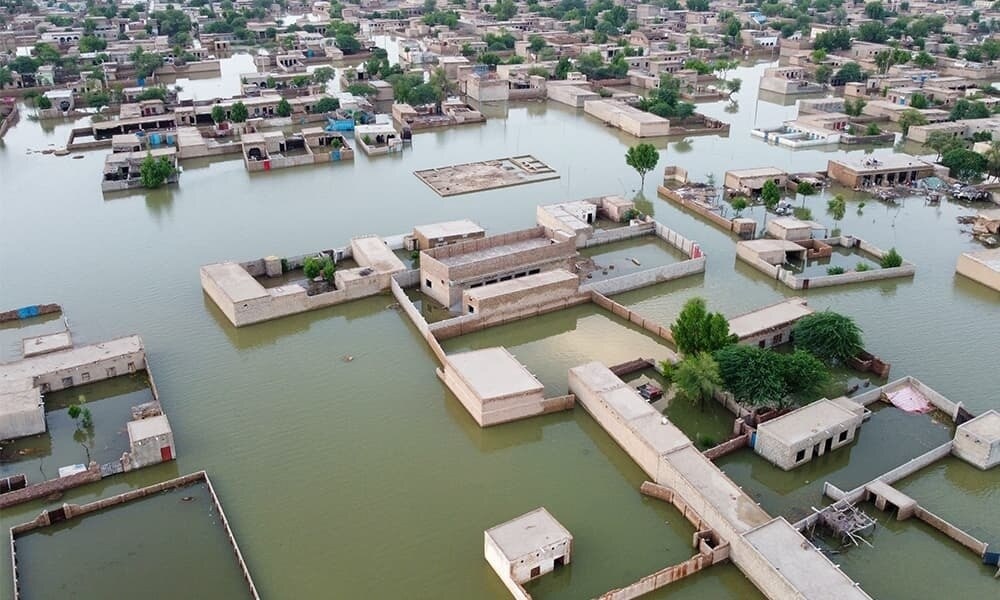
CHINIOT: Across the fertile plains of Pakistan’s Punjab, families are struggling to rebuild their lives after the worst flooding in decades swept away homes, destroyed crops, and drowned livestock.
“Thirteen of my 15 acres are gone,” said Muhammad Amjad, 45, a rice and potato farmer in Chiniot, as he stood by submerged fields. “Our rice is completely destroyed. Women and children have evacuated. Men are left guarding what remains.”
The provincial disaster management authority said more than two million people have been affected, with more than 2,000 villages inundated. Approximately 760,000 people and 516,000 animals have been evacuated, and at least 33 people have died in less than a week.
Amish Sultan, 50, lost his only source of income.
“I have 10 buffaloes. They’re so weak there’s no milk left for my children, let alone to sell. I used to earn 100,000 to 150,000 rupees a month. That stability is gone.”
Farm labourer Mehdi Hassan, 40, said entire neighbourhoods were washed away.
“My home is completely destroyed. We’ve been left on the roadside with whatever we could carry. We tried to build our own dams but the water still took everything.”
Officials say the floods are the worst in decades, with major dams near capacity, and more rain is forecast.
BUMPER TO BUST
Farmers and exporters warn the impact on agriculture will be staggering. Rice, sugarcane, maize, vegetables, and cotton fields across Punjab are under water.
“We were expecting a bumper rice crop this year,” said Ibrahim Shafiq, export manager at Latif Rice Mills.
“Paddy was forecast to open at 3,200–3,600 rupees per 40kg, but with flood damage, prices could rise to 5,000–5,500. That will push rice prices up for local consumers and make us uncompetitive against India internationally.”
Cotton losses also threaten the textile industry, which makes up more than half of Pakistan’s exports, at a time when the country faces a 19% US tariff in its biggest market. Agriculture technology firm Farmdar said the damage is likely to be exponential, given the vast stretches of farmland along the rivers now under water.
Ghasharib Shoukat, co-founder of commodities platform Zarai Mandi warned wheat, vegetable, and cotton shortages would ripple through supply chains, hurting exports and household budgets.





















Comments
Comments are closed for this article.