


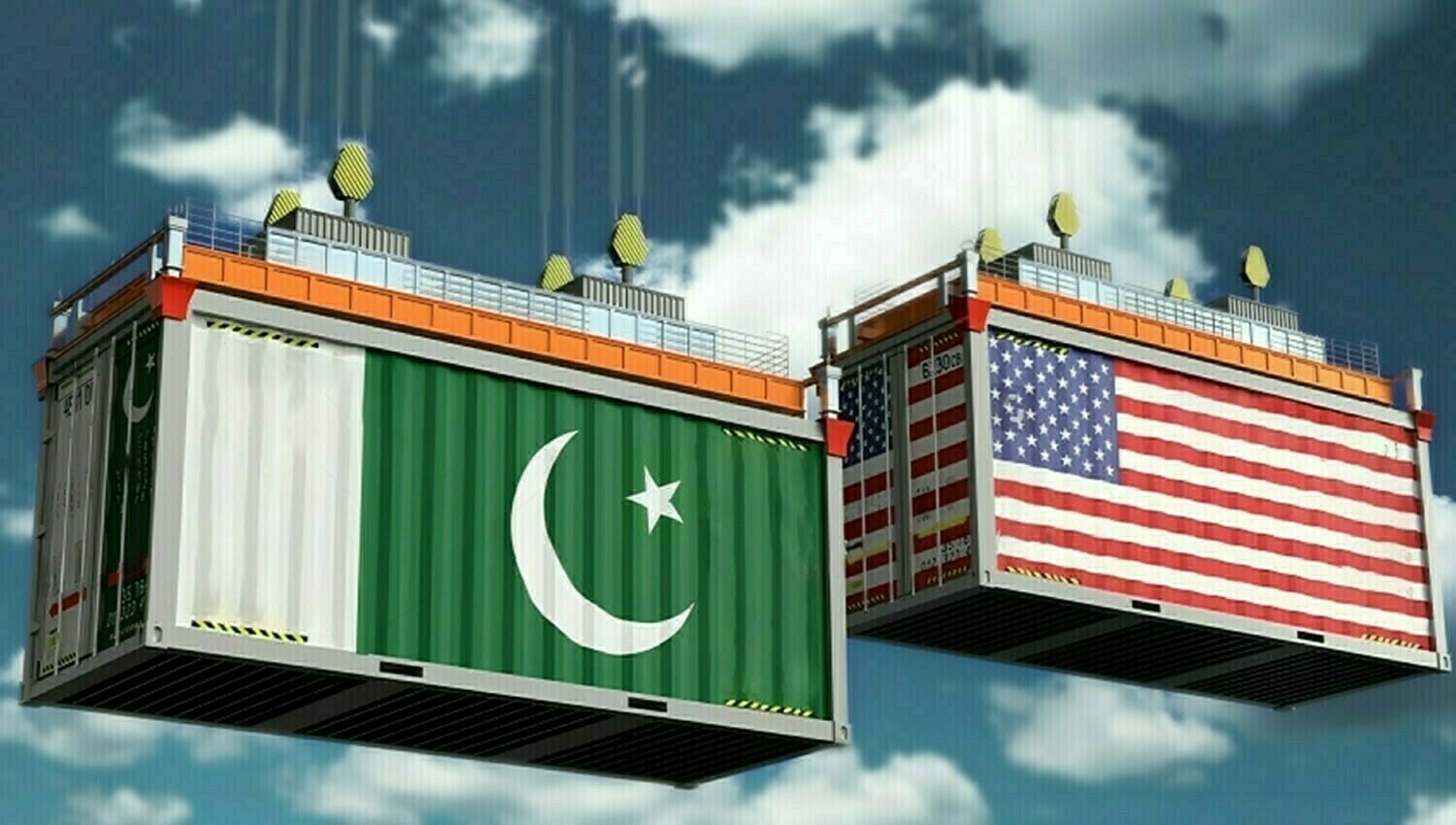
EDITORIAL: The considerable optimism surrounding what is being hailed as a ground-breaking US-Pakistan deal – encompassing trade ties and a framework for oil exploration and development – is understandable, given the historically transactional, largely security-focused and till recently quite frosty nature of the bilateral relationship.
However, this new-found positivity must be tempered, as the deal’s practical implications remain uncertain and hinge on how it is ultimately operationalised.
President Donald Trump had announced on July 30 that the two countries had concluded an agreement to jointly develop Pakistan’s oil reserves. This was followed by Pakistani officials announcing that a trade deal had been signed, although there was no immediate confirmation regarding the agreed tariff rate for our exports to the US. Prime Minister Shehbaz Sharif was quick to term the agreement as a “landmark” one, and much official commentary has echoed this sentiment, projecting it as a turning point in bilateral ties and a potential catalyst for accelerated economic growth.
With the White House now confirming a 19 percent tariff rate for Pakistani exports – down from the 29 percent initially declared in April under the Trump Administration’s so-called Liberation Day tariffs – there is indeed cause for some guarded relief. However, we must not ignore that even this reduced rate could hurt export performance, given the prohibitively high-cost structures of many of our industries and the heavy reliance on the US as Pakistan’s single-largest export destination, with limited diversification in our export markets, leaving us particularly vulnerable to this tariff rate.
The celebratory rhetoric that pointed to the 25 percent tariff imposed on Indian exports also needs to be tempered. India’s much stronger industrial base, leaner cost structures and more diversified trading relationships make it better equipped to absorb such shocks, even if many of its sectors will face disruptions, at least in the short term.
Moreover, although President Trump has been highly critical of India’s continued oil imports from Russia, recent reports suggest that Indian state-owned refineries have halted such purchases, signalling a recalibration of New Delhi’s policy in order to remain in Washington’s good graces. As a result, any space created for Pakistani exports in American markets due to increased tariffs on Indian products may prove limited at best.
Also worth noting here is Pakistan’s announcement of importing one million barrels of oil from the US in October. While diversifying energy sources beyond traditional Middle Eastern suppliers may have strategic value, it also raises questions about the potential impact on foreign exchange reserves and the balance of payments, given the potentially higher shipping and transaction costs.
Regarding the oil exploration aspect of the agreement, there is genuine potential in Pakistan’s largely untapped mineral wealth, and US support could help unlock long underutilised opportunities. Yet past experiences – most recently during the last PTI government – show that hopes around resource discoveries have often ended in disappointment. Still, credible assessments, including a 2015 report by the US Energy Information Administration, highlight a promising shale oil and gas potential in the Indus Basin. And given Pakistan’s limited exploration capacity, US collaboration could open important economic avenues.
That said, the lack of clarity around the agreement raises important questions. Even if actual exploration and extraction lie well into the future, a transparent, unambiguous and equitable mechanism for managing costs and dividing returns must be established from the outset. Clarity is also needed on the role of the provinces, which, under the Constitution, have a defined mandate in mineral exploration and development. How provincial roles are factored in the agreement will be crucial to avoid discord and internal divisions.
Despite the substantial ambiguities and unanswered questions, this renewed push for US-Pakistan economic cooperation is, nevertheless, a welcome shift. However, our economic managers must temper optimism with realism, anticipate potential risks and take steps to mitigate them.
Copyright Business Recorder, 2025


















Comments
Comments are closed for this article.