


US lawmakers warn Pakistan over ‘repression’, hint at possible sanctions
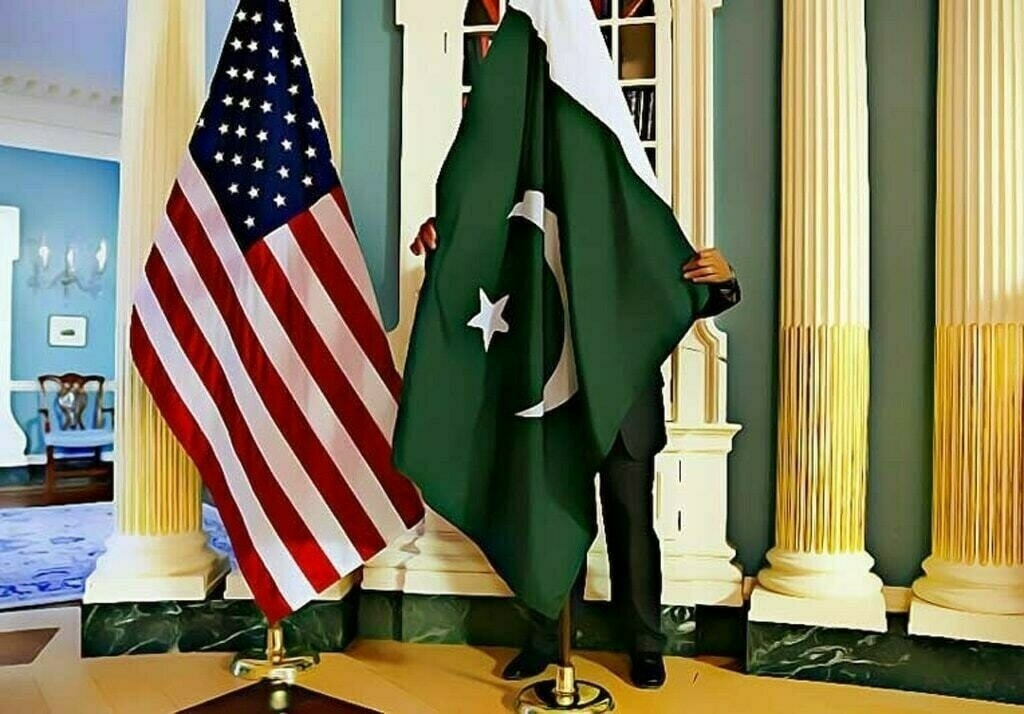

KARACHI: The US Congress may soon urge President Donald Trump’s administration to consider imposing sanctions on countries that suppress religious freedom and violate human rights, Republican Congressman Christopher H Smith suggested during a congressional hearing on Pakistan on Tuesday.
“One of the biggest disappointments — regardless of who is in the White House or at the State Department — is the absence of sanctions,” said Smith, who co-chairs the Tom Lantos Human Rights Commission (TLHRC).
Smith recalled that the only individual ever sanctioned under US religious freedom laws was Indian Prime Minister Narendra Modi, following the 2002 Gujarat riots. “We are going to call on the Irfa office to consider imposing (sanctions) — especially in light of the terrible acts committed against people of various faiths,” he said.
The Irfa office, based at the State Department, enforces the International Religious Freedom Act, which authorises the US government to designate and penalise countries that engage in or tolerate severe religious persecution.
“That’s it. We’ve got 18 sanctions here, and we are going to impose them on you,” Smith declared during the hearing on Pakistan’s current political and human rights situation.
Amnesty International’s advocacy director for Europe and Central Asia, Ben Linden; PTI leader Zulfi Bukhari; law firm Perseus Strategies’ Managing Director Jared Genser; and Afghanistan Impact Network founder Sadiq Amini provided their testimonies during the hearing.
Although the TLHRC does not directly recommend sanctions, Smith’s remarks were widely seen as a signal that such measures may be under consideration if current trends persist.
His Democratic counterpart, Congressman James McGovern, echoed the concern. “A vibrant Pakistani community in Massachusetts engages me all the time, and quite frankly, they are worried about the signals coming from our government right now,” he said.
The hearing also addressed last week’s White House meeting between Trump and Chief of Army Staff Field Marshal Asim Munir.
Bukhari, a former close aide to Imran, told the panel: “President Trump wanted to meet someone who is calling the shots. That’s why he met the army chief.”
Bukhari claimed nearly 200 politically motivated cases had been filed against Imran and his wife, Bushra Bibi. He alleged that “fundamental rights had been suspended” in Pakistan, the media silenced, and judicial independence undermined through “coercive” amendments.
He also questioned the legality of the February 2024 elections, which PTI has repeatedly alleged were rigged, and criticised the military trials of civilians that he said led to the conviction of dozens of party members and supporters.
“This is a purge,” he said. “It’s not justice.”
Toward the end of Bukhari’s statement, Smith urged the US administration to sit up and take notice of the situation in Pakistan.
He also urged the Trump administration to “redouble its commitment to democracy and human rights” in the South Asian country.
Speaking about the political climate in Pakistan, McGovern added: “They need to know that people are watching. They need to know we don’t like what we are hearing.”
The bipartisan hearing focused on civil liberties and political freedoms in Pakistan, highlighting reports of repression, persecution of minorities, and efforts to silence dissidents abroad.
Amnesty’s Ben Linden opened his testimony by raising concerns over the situation in Balochistan.
“Dr Mahrang and other Baloch detainees should be freed,” he said, referring to the rights activist who has been in prison for more than three months over cases on allegedly “attacking” the Quetta Civil Hospital and “inciting people to violence”.
Linden warned that recent crackdowns on PTI supporters should be seen in the context of a broader assault on fundamental rights.
In 2024 alone, over 300 new blasphemy cases were registered — most against Muslims. “Several of the accused were killed extra-judicially,” Linden said, calling the trend “a tragedy”.
He also condemned the recent blocking of US-based YouTube channels critical of Pakistan’s military, describing the move as “totally unacceptable”.
However, Jared Genser of Perseus Strategies stressed that Washington could not afford to disengage entirely.
“We don’t act that way with any regime. We have to engage. The key is for President Trump and Secretary (of State) Marco Rubio to say very clearly: we want a strong relationship with Pakistan, but this is what needs to be done to get there. And that includes releasing (ex-prime minister) Imran Khan and other political prisoners,” Genser said.
He noted: “We need to talk about the tragedy that Pakistan is today in terms of human rights. The Pakistani diaspora is a ray of hope.”
McGovern concurred: “We need to talk. We need to engage. And we need to be talking about political prisoners, the future of Imran Khan … but also how you do it.”
In earlier remarks, TLHRC Co-chair Smith warned that the US “cannot stand by” while military influence allegedly subverts civilian rule in Pakistan.
Earlier on Tuesday, US lawmakers also heard disturbing accounts of harassment faced by Pakistani dissidents in the US. Multiple speakers alleged that within 48 hours of a protest outside the Pakistani Embassy in Washington on June 14, “family members of critics were abducted in Pakistan.”
Lawmakers, including Democratic representatives Jimmy Panetta, Suhas Subramanyam and Greg Casar, expressed support for safeguarding the civil liberties of Pakistani Americans.
During the commission’s hearing, speakers also urged Congress to oversee foreign surveillance operations on US soil and to press technology companies to resist censorship demands from foreign military courts.
Established in 2008 and named after Holocaust survivor and former House Foreign Affairs Committee chair Tom Lantos, the TLHRC holds bipartisan hearings to guide US human rights policy.
Tuesday’s session underscored longstanding concerns about Pakistan’s democratic trajectory and signalled growing interest in potential policy responses — including targeted sanctions.
Copyright Business Recorder, 2025















Comments
Comments are closed for this article.