


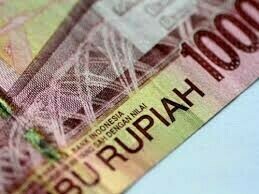
SINGAPORE: Indonesia’s currency teetered near a record low against the U.S. dollar on Wednesday as worries over slowing growth and rising government spending shook confidence in Southeast Asia’s biggest economy.
The rupiah was flat at 16,585 per U.S. dollar at 0400 GMT, hovering near the all-time low of 16,800 touched in June 1998, during the Asian Financial Crisis and just after the fall of Indonesia’s authoritarian leader, General Suharto.
On Tuesday, the rupiah hit a post-crisis low of 16,640, before the central bank intervened to defend the currency.
“Sentiment is very poor whether you’re looking at equities or the rupiah,” said Pauline Ng, head of equities for Southeast Asian nations at JPMorgan Asset Management.
“With the new administration coming in, there was a market expectation that it would be business as usual. Miscommunication and some of the policies have led to uncertainty in the market.”
The rupiah has lost 3% this year, making it the worst performing Asian currency and prompting the central bank to step into the market regularly to steady the declines.
Indonesia’s benchmark index has also suffered, and hit its lowest level in over three years on Monday, although it has recovered somewhat, up 3.5% on Wednesday.
Asian currencies: Rupiah hits lowest in nearly 27 years
Investor confidence in Indonesia has been waning as worries grow about Prabowo’s massive social spending plans, budget cuts and the cancellation of a tax hike.
Prabowo’s ambitious programme to provide free meals to more than a quarter of his people at a cost of 71 trillion rupiah ($4.29 billion) has brought scrutiny from investors.
Markets have been concerned about the cost of the programme, worried that additional debt to fund it could affect the country’s hard-won reputation in recent years for fiscal prudence.
The launch of a new sovereign fund Danantara Indonesia has also raised concerns over potential political interference despite Prabowo’s insistence the fund could be audited anytime and by anyone.
The rupiah’s 1998 nadir followed the collapse of Suharto’s 32-year rule in the face of mass street protests and, in the markets, an attack on Southeast Asia’s highly leveraged economies.
There are echoes of the past as foreigners pull more than $2 billion out of the stock market this year and Prabowo, Suharto’s former son-in-law and a special forces commander under his rule, expands the military’s role in government.
Aninda Mitra, head of Asia macro strategy at BNY Investment Institute, said the rupiah would remain relatively fragile until greater clarity emerges on the specifics of fiscal needs and sources of funding and how these affect growth.
“Local authorities may have to utilise a broader array of tools over a longer period of time to smooth any adjustment in the onshore rupiah market,” he said.






















Comments
Comments are closed for this article.