


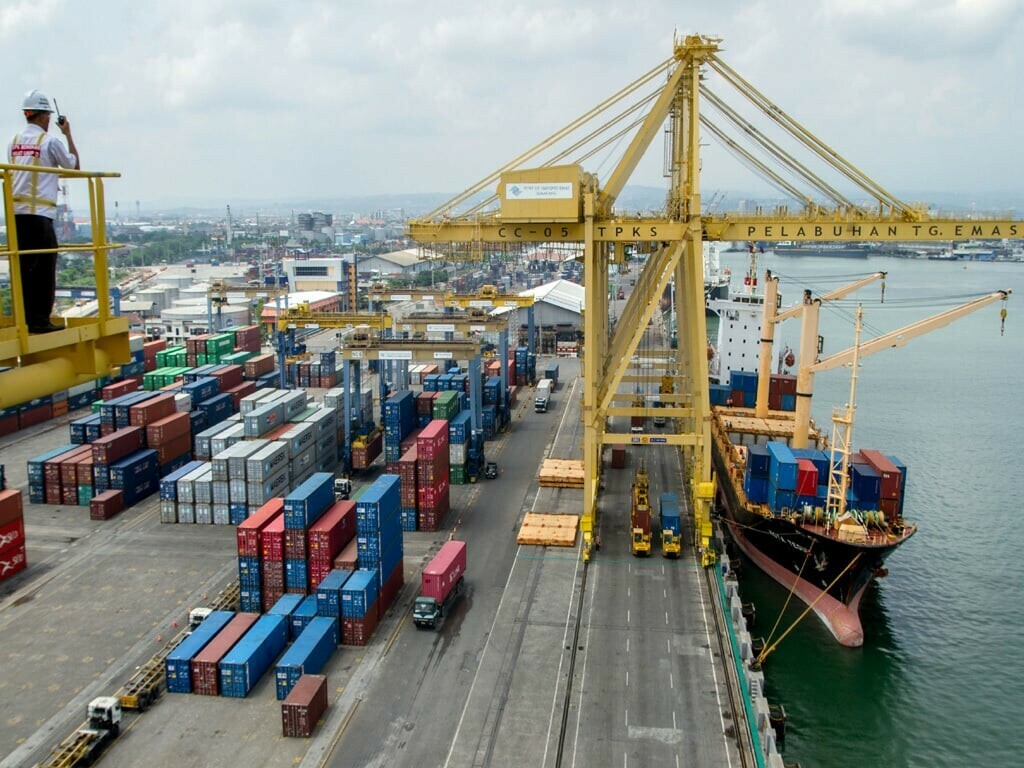
TOKYO: Japan’s exports in November fell for the first time in three months dragged down by China-bound chip shipments, underscoring worries that slowing overseas economies will complicate policymakers’ efforts to wind back on stimulus.
November exports fell 0.2% from the same month a year earlier, Ministry of Finance data showed on Wednesday.
It was the first year-on-year decline in three months. That compared with a 1.5% rise expected by economists in a Reuters poll.
It followed a 1.6% rise in October.
Weak exports are a source of concern for Japanese policymakers who are hopeful that external demand can help counter weak domestic consumption. “Japan has no driver of economic growth now.
Private consumption may have bottomed out, but economic growth is likely to remain slow this quarter,“ said Takeshi Minami, chief economist at Norinchukin Research Institute.
“A rebound in the yen and slowing exports weigh on Japanese firms’ profits, making it difficult for the Bank of Japan (BOJ) to confirm a virtuous cycle of wages and prices and scrap its negative rates policy in the coming year.”
Japan, ASEAN agree to boost maritime security cooperation
The central bank on Tuesday maintained its ultra-loose policy settings, opting to await more evidence on whether wages and prices would rise enough to justify a shift away from massive monetary stimulus.
Japan’s economy, the world’s third largest, contracted a faster-than-expected annualised 2.9% in July-September as capital expenditures and consumption – key drivers of domestic demand – slumped.
Exports to China put a drag on overall shipments including items such as chips, with food shipments falling 60% due in part to Beijing’s ban on Japanese seafood and some other produce.
China-bound food exports fell to 8.6 billion yen ($59.8 million) in November, the lowest amount since January.
China-bound exports fell again in November, down for the 12th month in a row.
Exports to the United States, Japan’s key ally, grew 5.3% on demand for hybrid vehicles and car parts as well as airplanes.
It was the slowest pace in three months.
Imports fell 11.9% in the year to November, versus the median estimate for an 8.6% decrease, bringing the trade balance to a deficit of 776.9 billion yen.
It was a second straight month of shortfall.




















Comments
Comments are closed for this article.