


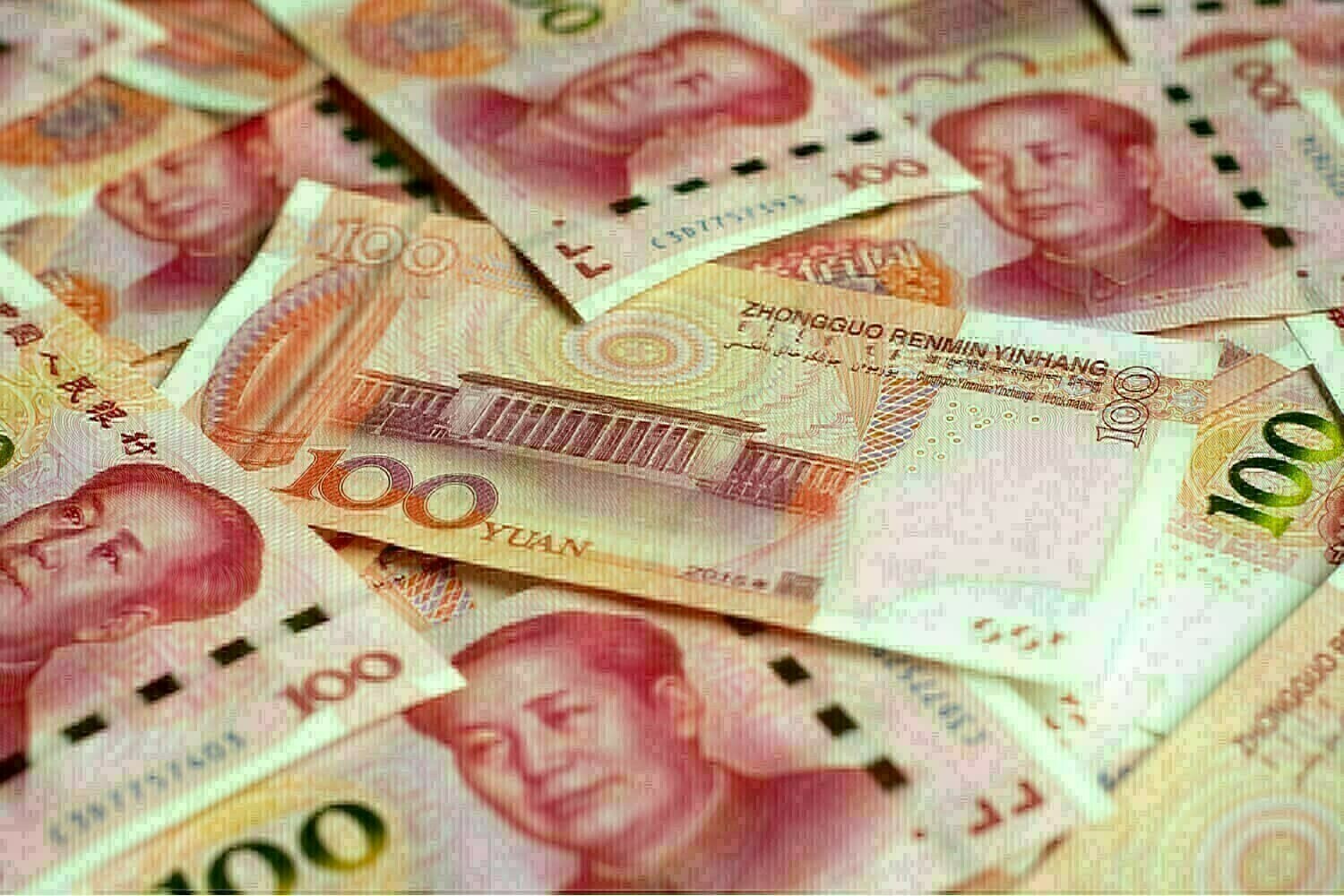

HONG KONG: China’s yuan firmed against the dollar in a tight range on Monday as investors refrained from risky bets ahead of key domestic data later this week and US economic figures that could shed hints on the Federal Reserve’s monetary policy path.
Keeping the battered yuan afloat is the central bank’s month-long effort to set the daily fixing at stronger-than-expected levels. The yuan has lost over 5% this year.
The People’s Bank of China set the midpoint rate, around which the yuan is allowed to trade in a 2% band, at 7.1851 per US dollar prior to market open, firmer than the previous fix of 7.1856, and over 1,000 pips stronger than market consensus.
The spot yuan opened at 7.2902 per dollar and was changing hands at 7.2837 at midday, 63 pips stronger than the previous late session close and 1.37% weaker than the midpoint.
Investors will be closely watching the country’s official purchasing managers’ index (PMI) for August scheduled for Thursday, which is forecast to stay flat compared to a month ago at 49.4, according to a Reuters’ poll.
The PMI for July already showed that manufacturing activity fell for a fourth straight month while the services and construction sectors teetered on the brink of contraction, indicating the world’s second-largest economy grew at a slow pace in the second quarter.
China’s yuan inches lower, traders cautious ahead of US Fed chair’s speech
Up for release is also a report on the US personal consumption expenditures price index, the Fed’s preferred inflation gauge, due out on Thursday, and non-farm payrolls data due on Friday, as investors parse for cues on the monetary policy path.
“The non-farm payrolls data will be closely watched as it would affect US treasury yields,” said Saktiandi Supaat, head of FX research at Maybank.
The yuan has been under pressure due to the crisis in the country’s property sector, which accounts for a quarter of China’s economy.
Further weighing on the yuan is the country’s sputtering economic recovery, and China’s widening yield spreads with the US which reached the widest in 16-year last week.
“The next two to three weeks is still an important window for policy actions. Without material easing measures in the near term, China’s economy and markets may see more downward pressure in the fourth quarter, and first quarter of 2024,” said Bank of America analysts in a research note on Tuesday.
The dollar index fell to 103.854 from the previous close of 104.058.
The offshore yuan was trading 0.06% weaker than the onshore spot at 7.2881 per dollar.
Offshore one-year non-deliverable forward contracts (NDFs), considered the best available proxy for forward-looking market expectations of the yuan’s value, traded at 7.0872, 1.38% away from the midpoint.
One-year NDFs are settled against the midpoint, not the spot rate.
























Comments
Comments are closed for this article.