



TEHRAN: Iran and Russia agreed Wednesday to collaborate on the construction of the final part of a commercial transport network linking to the Gulf and India while avoiding Western sea lanes.
Iranian Transport Minister Mehrdad Bazrpash, who signed the agreement with his Russian counterpart in Tehran, said the 164-kilometre (102-mile) railway in Iran’s north would be completed within three years.
It is the only missing link in the International North-South Transport Corridor (INSTC) from northeast Russia via Azerbaijan to Iran’s southern coastline and on to India by sea.
US says Iran and Russia expanding military cooperation
Russia and Iran are both under international sanctions that restrict trade.
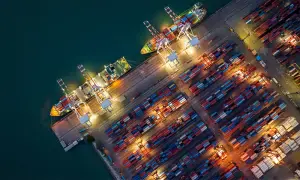
The freight network of ship, rail and road routes, which covers some 7,200 kilometres, avoids the Suez Canal between the Mediterranean and the Red Sea which would otherwise transport some Russian seaborne cargo.
Iranian President Ebrahim Raisi, who attended the signing ceremony, and Russia’s Vladimir Putin, who spoke there via videoconference, both hailed the economic opportunities the agreement presents.
The planned railroad would connect Rasht, a city in northern Iran, and the Astara crossing on the border with Azerbaijan.
Bazrpash said the “process of construction” of the Rasht-Astara railway “has started and we will finalise it within the next three years”.
Raisi said that, once completed, the INSTC will boost regional trade and noted the “great potential” in ties with Russia.
The latest agreement is “an important strategic step on the path of cooperation between the Islamic Republic of Iran and the Russian Federation”, he said.
Putin praised the “obvious economic benefits” for both Moscow and Tehran in the form of new jobs and investments.
“This unique north-south transport artery, of which the Rasht-Astara railway will be a part, will help significantly diversify international transport flows,” Putin said.
“The transportation of goods through the new corridor will have a significant competitive advantage,” he argued.
“The delivery of goods from Saint Petersburg (in Russia) to Mumbai (in India) will take about 10 days, compared to the journey through traditional trade routes that takes 30 to 45 days.”
‘Strengthening ties’
Putin said Russia and Iran “attach paramount importance to strengthening their economic and trade ties” as well as their bilateral relations in general.
Moscow has come under punishing Western sanctions since its invasion of Ukraine in February 2022.
Tehran, already facing sanctions over its nuclear activity and human rights issues, has been targeted with fresh Western restrictions over claims it was supplying Russia with attack drones to be used in the war, which Tehran denies.
On Tuesday, Washington warned that the two sanctions-hit countries were “expanding their unprecedented defence partnership”.
“Interactions between Iran and Russia in matters regarding the selling of advanced weapons, especially more advanced UAVs, are now continuing,” said US National Security Council spokesman John Kirby.
Tehran and Moscow have sought to boost cooperation in key areas to help prop up their economies in the face of sanctions.
Russian Deputy Prime Minister Alexander Novak visited Iran on Tuesday and met with the Islamic republic’s oil minister to discuss “new projects” in oil and gas exploration.
The Iranian minister, Javad Owji, on Wednesday said Russian companies were “currently… investing in seven Iranian oil fields, and we agreed with Mr Novak that Moscow invest in the development of six other oil fields”.
Novak also said the two countries had set a goal of increasing freight transit by rail to up to 15 million tons per year by 2030.
Russia’s second largest bank, VTB, has recently opened a representative office in Iran, as the two countries move toward connecting their banking systems to circumvent sanctions.














Comments
Comments are closed for this article.