




ISLAMABAD: Centre for Economic Research in Pakistan (CERP) and International Growth Centre (IGC) have proposed to the government to hire Imams of mosques as agents for preaching against electricity theft in Peshawar Electricity Supply Company (PESCO).
The proposal has been floated by a team of both organisations guided by Dr. Ijaz Nabi and led by Professor Robin Burgess (London School of Economics) and Michael Greenstone (University of Chicago) and supported by economists Tim Dobermann (LSE), Faraz Hayat (University of Chicago) and Usman Naeem (Tutfs University).
The team is currently undertaking a Randomised Controlled Trial (RCT) in PESCO to test whether religious and financial incentives can help reduce bill non-payment and theft in a cost-effective way. The ongoing work has been carefully planned with the Secretary Power’s Office and approved by the PESCO BOD.
Local survey team and/ or the SDO/ DISCO officials would recruit Imams from approx. 5 biggest mosques in each feeder. These Imams would be asked to disseminate the message to all other Imams of their communities.
PESCO chief spells out reasons behind ‘poor’ show
At the time of recruitment, the Imams would be unaware of the exact message required to be conveyed and the timings. “It ensures that we maintain complete control over when the intervention begins.” As per the research team’s instruction, the survey team would assign the treatment (delivering messages on electricity theft during Friday sermons) to the Imam/ mosque/ feeder. The treatment would last for 3 months.
Religious leaders have full discretion to deliver their precise message content but they should be asked to specifically mention: “stealing electricity is theft and not paying bills is equivalent to not honouring debt”.
Financial subsidy: A random sample of approximately 50 households per feeder would be given per unit subsidy (e.g., Re.1/unit) on the electricity bill. The survey team would deliver the treatment and this treatment would also last for three months. Other implementing partners would transfer the subsidy amount. This would be done entirely independent of the government and entirely financed by the research team. This intervention should be interpreted as “cash transfer “to households.
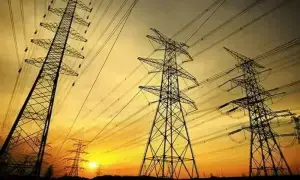
According to the report, faced with bad supply and ever-higher prices, customers exit the grid or give up paying altogether creating a negative fiscal spiral. Until this cycle is broken, the government would remain stuck in propping up ailing power sector using scarce capital. Pakistan, unfortunately, embodies this tale. Its power sector debt exceeds 5.2% of GDP, total losses surpass 25%, remote areas face hours of load shedding a day, and annual energy subsidies exceed the country’s budget on health and education. In short, theft due to a lack of enforcement acts as a supply side cost on the system, lowering the total electricity that can be produced and supplied to the poor.
Copyright Business Recorder, 2022


















Comments
Comments are closed for this article.