


New virus mutation raises vaccine questions
- As countries accelerate their vaccination programmes, there is concern that the new mutation may render certain vaccines less effective.
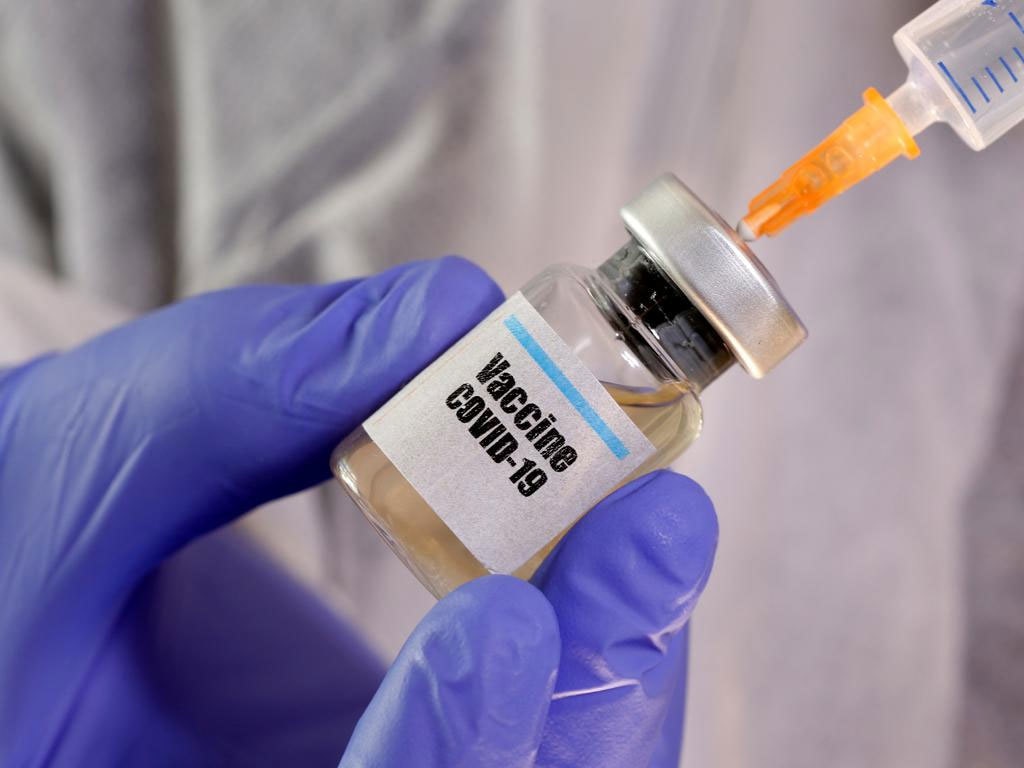
PARIS: As the British coronavirus variant occupies countries' pandemic plans due to its increased transmissibility, other mutations to the Sars-CoV-2 are provoking concern among scientists who are scrambling to work out if they will still respond to vaccines.
In particular, one mutation, known as E484K, detected initially in South Africa and on subsequent variants in Brazil and Japan, has raised alarm among researchers.
Ravi Gupta, professor of microbiology at the University of Cambridge, said it is this mutation -- and not the much-covered British variant -- that is "the most worrying of all".
Although research into the new variant is limited, a Brazilian study this month looked at a patient who had recovered from Covid-19 only to become reinfected with the new, mutated strain.
The paper has yet to be peer-reviewed, but the authors found that the E484K mutation could be "associated with escape from neutralising antibodies" -- meaning it could bypass the body's natural defence memory that bestows immunity.
As countries accelerate their vaccination programmes, there is concern that the new mutation may render certain vaccines less effective.
The Pfizer and Moderna vaccine, for example, use mRNA technology to deliver instructions to the body to produce a harmless coronavirus spike protein, which the immune system then learns to kill in anticipation of a genuine infection.
With E484K, as with the British variant, the mutation occurs on the virus' spike protein, which allows it to bind more easily with human cell receptors, potentially heightening its infectiousness.
Gupta said the mutation "could be the start of problems for spike vaccines".
"They should all be effective at the moment but we worry about further mutations occurring on top of these ones," he told AFP.
Pfizer and German partner BioNTech said last week that their vaccine was effective against the N501Y mutation found on the British virus variant, known as B117.
Francois Balloux, professor of Computational Systems Biology and Director of University College London's Genetics Institute, said it was unlikely that the South African variant had mutated sufficiently to "bypass the protection provided by current vaccines".
But, he warned: "The E484K mutation has been shown to reduce antibody recognition.
"As such, it helps the virus Sars-CoV-2 to bypass immune protection provided by prior infection or vaccination," Balloux said.
There have been several mutations to the novel coronavirus since it emerged in late 2019, and most have had a negligible effect on its transmissibility or severity.
But the British variant has shown in several studies to be up to 70 percent more infectious than normal virus strains.
And the South African variant appears to be more effective at avoiding the body's natural response.
One pre-print study in December concluded that the two new variants show that Sars-CoV-2 "has the potential to escape an effective immune response".
Researchers studied what happened to the virus when it was left in contact with plasma taken from a patient who had recovered from Covid-19.
Within three months, the virus had taken on several mutations, including E484K.
The authors suggested that "vaccines and antibodies able to control emerging variants should be developed."
Lead researcher Rino Rappuoli, an immunologist at pharma giant GlaxoSmithKline, told AFP that the current spike protein mutations should not pose a problem for existing vaccines, however.
And even if the virus mutates to better evade immune response, vaccines should bestow at least some level of effective immunity.
"Even if you lower the efficacy, there would normally still be some neutralisation of the virus," Vincent Enouf, from Paris's Pasteur Institute, told AFP.
To be on the safe side, Gupta advocated an accelerated vaccination programme, bestowing as much immunity as current vaccines can deliver "as fast as possible all over the world."



















Comments
Comments are closed for this article.