


Low unemployment alone not enough to justify Fed rate hikes, Clarida says
- Econometric models," particularly those including a necessary tradeoff with falling unemployment leading to higher inflation.
- If policy seeks only to return inflation to 2% following a downturn," Clarida said.
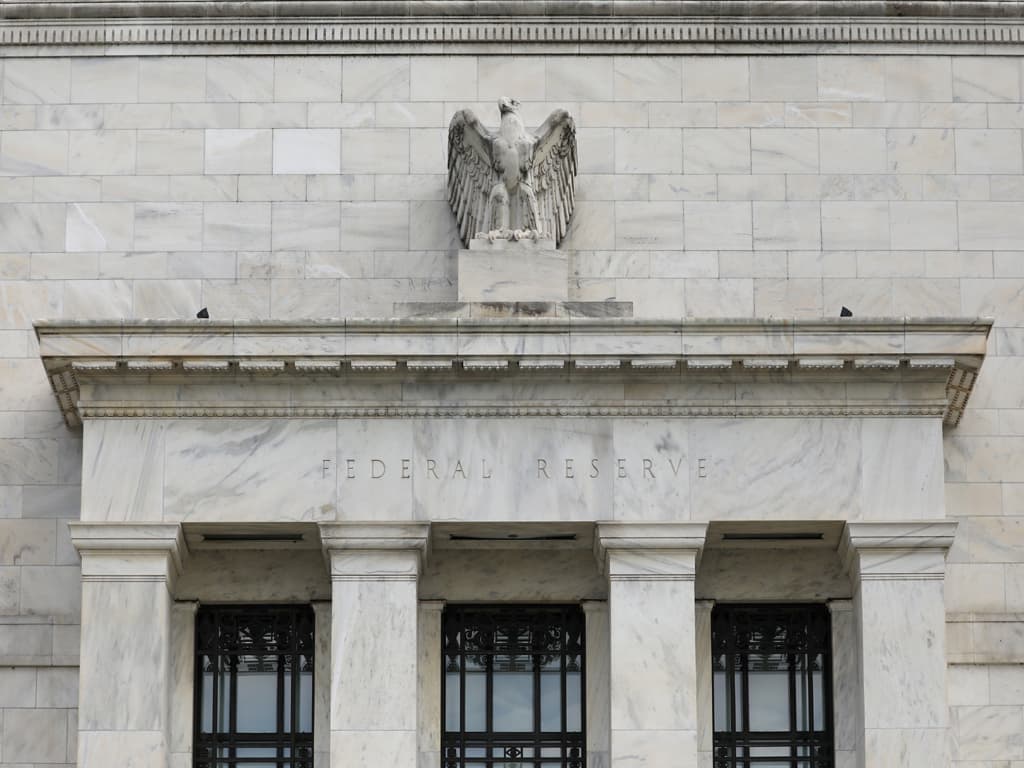

The Federal Reserve's new approach to monetary policy means a low unemployment rate on its own doesn't warrant higher interest rates, a "robust" change meant to acknowledge the economy is different than that of textbook models," Fed Vice Chair Richard Clarida said on Monday.
"A low unemployment rate by itself, in the absence of evidence that price inflation is running or is likely to run persistently above mandate-consistent levels or pressing financial stability concerns, will not, under our new framework, be a sufficient trigger for policy action," Clarida said in prepared remarks for a presentation organized by the Peterson Institute for International Economics in Washington.
"Econometric models," particularly those including a necessary tradeoff with falling unemployment leading to higher inflation, "can be and have been wrong ... A decision to tighten monetary policy based solely on a model ... is difficult to justify."
Clarida's comments, describing the new policy as a "milestone" for the US central bank, elaborate on the Fed's announcement last week of a new strategy that aims to use higher inflation when the economy is strong to offset the impact of periods of weaker prices.
It was justified, Clarida said, as emerging research showed the economy has changed so much since 2012 that keeping the same framework risked embedding inflation below the Fed's 2% target into market and household decision-making - putting the United States on the same weak growth path as Japan, for example.
"If policy seeks only to return inflation to 2% following a downturn," Clarida said, the previous approach "will tend to generate inflation that averages less than 2%." That, in turn, means the Fed's policy interest rates would be lower than they would be otherwise, and downturns risked being longer with higher unemployment.
The new policy aims to use periods of higher inflation to specifically offset periods of weakness.
The central bank's work, Clarida indicated, isn't done. Now that the long-run policy document is set, the Fed will begin studying changes to its Summary of Economic Projections, the "dot plot" of policymaker forecasts, which may be the vehicle to flesh out issues like how long an averaging period the Fed will use.




















Comments
Comments are closed for this article.