


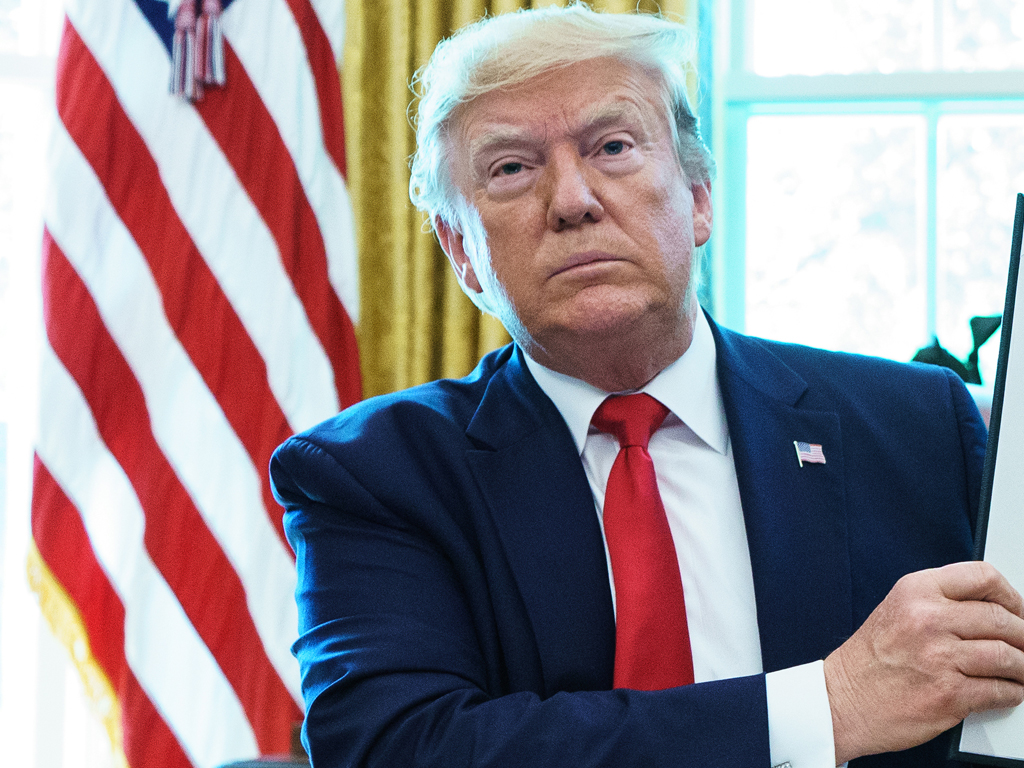
 With the death toll climbing and Wall Street reeling, President Donald Trump is set to announce "substantial" measures including tax relief to counter the coronavirus threat to the faltering US economy.
The outbreak has already prompted airlines to cancel flights internationally and within the United States, the Federal Reserve to make its first emergency rate cut in 12 years and Wall Street stocks to have their worst trading session since the global financial crisis in 2008.
Previous presidents have moved quickly to address the economy in times of crisis, and Trump's proposal to Congress is aimed at hourly workers and small businesses and will include aid for workers in the gig economy who worry about calling in sick.
Those are in addition to steps announced to help airlines and the cruise industry and agreements by insurance companies to waive copays for people seeking tests for the virus.
"I've been saying fiscal response is a more appropriate response to the spreading of the virus," Rubeela Farooqi, chief US economist at High Frequency Trading, told AFP, pointing to an expansion of paid sick leave and a tax cut as measures the administration might take.
Given the emphasis on quarantines to keep people from spreading COVID-19, paid sick leave is seen as particularly important, yet it's not guaranteed in the US.
"The vast majority of low wage workers have zero paid sick hours," said Arthur Wheaton, a professor at Cornell University who specializes in labor.
"The most vulnerable or precarious workers in the country have the least protections or security in case of sickness or emergencies," he said, adding that workers in the gig economy - drivers for delivery companies or ride-sharing services - are even worse off.
Similarly vulnerable are small businesses with few employees who are sensitive to drops in demand.
"Business cycles usually hit small retail establishments and restaurants ... relatively lightly compared to heavy industries. This one, I think it's going to be the reverse," Alan Blinder, a former Fed vice chair.
Amanda Ballantyne, national director of The Main Street Alliance, which works with small businesses, said employers are asking for expanded unemployment benefits or other forms of direct support against the outbreak.
"There's a feeling of unpredictability and anxiety. Some businesses have already started contemplating temporary layoffs," she said, adding, "There's a real need for some kind of stimulus money and emergency support."
Fears for the wider US economy are real: in a report last week, the Fed said the virus has already disrupted travel and access to goods for US industry, and businesses are fearful it may get worse.
Investors expect the Fed to cut the benchmark borrowing rate again at the March 17-18 policy meeting to stem the economic uncertainty, and Trump has spoken in favor of a payroll tax cut, which not all economists agree would be the right move. "A payroll tax cut is the politically most expedient way to shovel money to those who need it least," tweeted Justin Wolfers, an economics professor at the University of Michigan.



















Comments
Comments are closed for this article.