



Pakistan wants banks to lend more to small businesses. Its credit-guarantee scheme may be rewarding them for doing what they already do.
Pakistan’s banks have little trouble finding borrowers. The government is their largest and, by regulatory standards, safest customer. Small businesses are another matter. Lending to them consumes capital, requires collateral and carries the prospect of a lengthy recovery when things go wrong. The government, meanwhile, offers banks a return for taking virtually none of that trouble.
The preference is hardly surprising. Sovereign exposures carry a zero-risk weight, while rupee-denominated government guarantees enjoy favourable treatment under expected-credit-loss rules. A loan to a small manufacturer, by contrast, attracts a 75 percent risk weight, provisioning requirements and the usual demands for security. The bank must earn considerably more on the latter to justify holding it.
Pakistan’s SME Risk Coverage Scheme, introduced in 2024, was supposed to make that calculation less lopsided. The government agreed to absorb 20 percent of principal losses on small-enterprise loans and 10 percent on medium-enterprise loans. Banks retain the remaining exposure, along with the obligation to secure the loan. They can claim against the guarantee only once an account reaches the regulatory classification of “Loss” well into the delinquency cycle.
While at face value this appears to be quite a boon, a bank must originate the loan, monitor the borrower, pursue recovery and wait for the account to deteriorate before the guarantee pays. The central bank has offered to share the cost of failure without doing much to improve the economics of lending in the first place. A six-month treasury bill yielding 12.45 percent carries no credit-risk capital charge under the standardised framework. An SME loan priced at KIBOR plus four percent offers a higher nominal return, but a less attractive one once capital requirements are taken into account.
An SME loan earns roughly 47 percent on risk-adjusted capital, against 145 percent for the treasury bill. A 20 percent first-loss guarantee raises the loan’s return to 57 percent if the covered portion receives no regulatory capital relief, or 71 percent if it qualifies for sovereign treatment.
The distinction matters. A guarantee is valuable not merely because someone else promises to absorb a loss. It is valuable because that promise can free the bank’s capital for another loan. Without such recognition, the state may be assuming risk for which the lender receives little immediate regulatory benefit.
Ceteris paribus, SBP’s first-loss coverage would need to reach roughly 53 percent before the SME loan matched the treasury bill’s return on capital. That is more than the loss typically expected when a borrower defaults.
What the balance sheets reveal
An alternative benchmark for guarantee performance is to assess what banks have done with the protection provided to them.
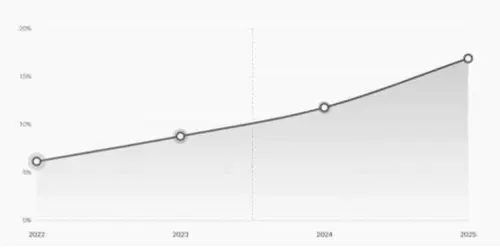
Credit-risk mitigation deductions in retail portfolios grew sharply across a sample of banks. They went from 6.2 percent of gross retail exposure in 2022 to 16.9 percent in 2025, and from 6.1 percent to 14.2 percent once the fastest-growing lender is set aside.
The numbers do not say what drove the rise. Retail exposure covers more than SME loans, and the mitigation line mixes guarantees with other collateral such as deposit liens and government securities. What the trend does show is that banks are holding growing protection against their retail books. The trend raises an uncomfortable question. If banks are obtaining more protection against retail exposures, how much of it supports lending that would not otherwise have occurred?
A guarantee attached to an already well-secured loan may reduce the bank’s capital requirement without materially changing its willingness to lend. The borrower gains little, the state assumes a contingent liability and the bank enjoys a more comfortable balance sheet. That may improve the resilience of the banking system. It is not necessarily an improvement in access to finance.
The distinction between protecting existing credit and creating new credit is central to the economics of any guarantee scheme. The former makes a bank safer. The latter is what justifies public money being put at risk.
There has certainly been growth. Outstanding SME financing increased from Rs641bn in December 2024 to Rs906bn by June 2026. Applying the scheme’s 10–20 percent coverage rates to that cumulative figure produces an indicative Rs31bn–62bn of guarantees, before allowing for repayments, portfolio composition or the precise terms of coverage.
But disbursement may not improve additionality. A bank can refinance an existing customer, renew a facility or extend credit against collateral it would have accepted without government support. All three generate lending figures. None necessarily demonstrates that the guarantee brought a previously excluded borrower into the banking system.
A subsidy worth earning
What does it take to actually move the needle? The remedy is not necessarily to make every guarantee larger but perhaps accomplishes its goal by better risk sharing. A higher first-loss share would improve the bank’s economics, but would also expose the state to greater losses with nothing in return. With the SBP’s risk coverage scheme in place, banks are merely intoxicated by a risk distortion on a pool of loans that are the state’s priority and without reform the scheme may inadvertently reinforce the very risk aversion it was designed to overcome. Prospect theory suggests that lenders may attach greater weight to potential losses than to equivalent gains, while ambiguity aversion makes unfamiliar borrowers particularly unattractive.
At present, a bank may obtain protection while retaining much of the collateral it would ordinarily demand. A better arrangement would reward banks for releasing collateral, lending to first-time borrowers or extending credit beyond their existing secured portfolios.
Such conditions would make the subsidy harder to collect without changing behaviour. They would also provide a test of whether banks genuinely need the protection they request.
Pakistan does not lack deposits, nor does it lack enterprises in need of finance. What it lacks is a sufficiently attractive reason for banks to exchange sovereign exposure for the risks of a small business.
The government has offered to bear part of those risks. Until that offer changes the return on capital, banks have little reason to change their minds.
Copyright Business Recorder, 2026
The writer is an economic researcher and financial analyst with a special focus on capital markets






















Comments