


SDPI conference: Pro-people reforms, empowered LGs, progressive tax structures urged

ISLAMABAD: Top Pakistani leaders and economic experts have sought pro-people reforms, empowered local governments, progressive tax structures, and deep governance overhauls to achieve sustained and just economic growth in the country.
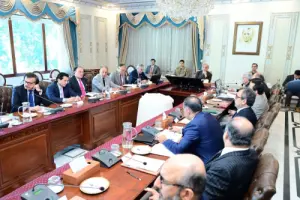
The demand was made at a high-level dialogue, titled ‘Reforms for Growth in Pakistan: From Priorities to Delivery,’ on the occasion of the 29th Sustainable Development Conference organized by the Sustainable Development Policy Institute (SDPI) in collaboration with the UK’s Foreign, Commonwealth and Development Office.
Speaking on the occasion, Punjab Assembly Speaker Malik Muhammad Ahmad Khan said meaningful reform must begin with adherence to the Constitution, the rule of law and the authority of elected representatives. He said unpredictable governance, political victimization and excessive regulation had discouraged investment, whereas education and public services remained neglected.
The Chairman of the National Assembly Standing Committee on Finance and Revenue, Syed Naveed Qamar, called for an approach that combined fiscal discipline with political consensus and meaningful consultation.
He said expenditure pressures, debt servicing and the narrow tax base could not be addressed through isolated measures, questioning why the Council of Common Interests (CCI) was not being used more effectively for matters involving the federation and provinces.
The Chairman of the National Assembly Standing Committee on Privatization, Dr Farooq Sattar, said the 18th Amendment and the National Finance Commission (NFC) award had strengthened provinces without ensuring a comparable transfer of powers and resources to districts. He called for elected and fiscally empowered local governments, predictable district allocations and stronger participation in local economic planning.
He suggested considering district financing under the NFC’s constitutional remit, alongside Provincial Finance Commission mechanisms, and advocated a longer-term, cross-party development consensus and possible new administrative units.
Former finance minister and Secretary-General of the Awaam Pakistan, Dr Miftah Ismail, stressed that better education, healthcare and the quality of provincial expenditure are essential to growth. He called for reconsidering electricity’s fixed and variable cost structure, including a two-part tariff, and said a durable exit from IMF dependence would require lower fiscal and external deficits and stronger export earnings rather than optimistic deadlines.
Former finance minister Asad Umar said Pakistan would not achieve sustainable growth or move beyond repeated IMF arrangements without reducing deficits and building an export-competitive economy. He argued that an effective state was essential, but responsibilities, authority and accountability needed to rest together.
Former federal minister for maritime affairs Syed Ali Haider Zaidi argued that raising tax rates was no substitute for controlling the state’s costs and eliminating institutional inefficiencies. He urged changes to what he called an outdated administrative ‘operating system’, backed by a fair justice system, stronger accountability and greater investment in citizens.
Muzzammil Aslam, former adviser to the chief minister of Khyber Pakhtunkhwa on finance, highlighted tax exemptions, particularly in property, agriculture and other revenue categories, as constraints on broadening collections.
Recalling provincial revenue reforms, he said KP’s own-source revenue had risen from about Rs65 billion to Rs150 billion while rates were reduced and transactions were increasingly digitized.
Former finance minister Prof. Dr Hafiz Ahmed Pasha urged comprehensive and progressive tax reform, saying salaried employees and large-scale manufacturers were disproportionately taxed while property, retail and wholesale trade, and agricultural incomes remained undertaxed. He estimated a more equitable tax base could mobilize an additional 3 - 3.5 percent of GDP and create fiscal space for development spending and lower borrowing.
Dr Kaiser Bengali, former adviser to the chief minister of Sindh, differed on the priority, identifying the budget, trade deficits and the debt incurred to finance as Pakistan’s principal economic problem.
He said expenditure was growing faster than revenue and urged the elimination of duplicative federal ministries and departments, attention to non-development spending and reduced government borrowing that crowded out business credit.
Chairman Public Accounts Committees, Punjab Assembly Ahmad Iqbal Chaudhary said the growth debate should extend beyond national aggregates to the performance of provinces, cities and districts. He urged reliable provincial-to-local fiscal transfers, greater accountability for local growth and public services, and an end to what he described as the ‘poverty of participation’ that excludes citizens from decisions over every day needs.
Former special secretary finance Noor Mohammed said excessive government demands on limited financial resources reduced liquidity available for private investment. He emphasized the weak value obtained from some public spending, institutional duplication, and the need to reform the civil service.
Former chairman of Punjab’s P&D Board Suleman Ghani urged political parties to agree on a 20-30-year vision for economic governance while allowing delivery responsibilities to move closer to citizens. He said local governments should be equipped to provide primary education, health, and other services, supported by an appropriate restructuring of decision-making authority.
Copyright Business Recorder, 2026



















Comments