


Australian shares close at lowest in over a week; miners, banks weigh
- The S&P/ASX 200 index finished down 0.6% at 8,834.50, its lowest close since October 26
Australian shares fell as miners and banks weighed heavily, with investors reacting to high interest rates and signals that the RBA's tightening cycle might be nearing its end.
- Market's reaction to the RBA's interest rate decisions.
- Impact of high interest rates on key Australian sectors.
- New Zealand's rising unemployment and its monetary policy implications.
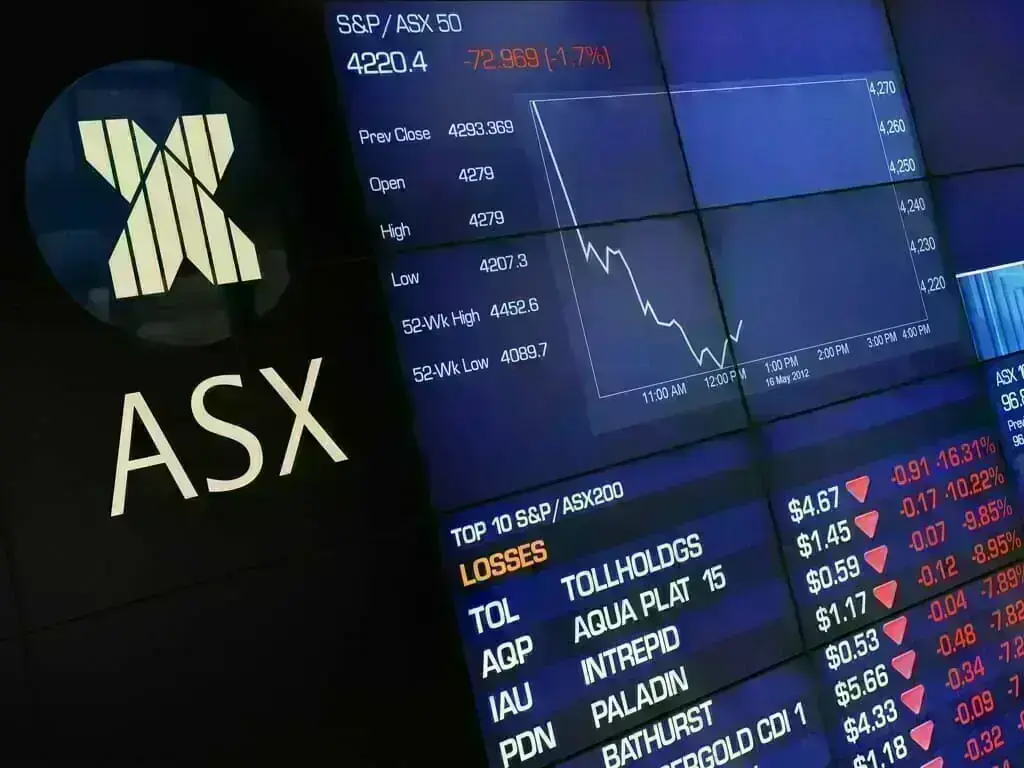
Australian shares closed lower on Wednesday, with miners and banks weighing the most as investors assessed the impact of high interest rates on the economy after signals that the central bank’s tightening cycle may have run its course.
The S&P/ASX 200 index finished down 0.6% at 8,834.50, its lowest close since October 26.
The benchmark rose 0.3% in the previous session, after the Reserve Bank of Australia raised its cash rate to an 18-year high of 4.85% in a split vote and dropped its reference to further hikes if needed.
“The market is cautiously optimistic that we are approaching peak interest rates, but investors are increasingly selective as the impact of higher rates flows through to the economy,” said Grady Wulff, senior market analyst at Bell Direct.
Short-term government bond prices rose over two sessions after the RBA’s dovish tilt, pushing the 3-year yield down to 4.756%.
These bonds typically track central bank rate expectations.
Falling 3-year yields point to markets expecting peak rates, but they also reflect slowing growth, Wulff said, adding that the RBA will wait for sustained disinflation before easing, making this a data-dependent environment.
Financials recovered most losses to close down 0.2%, largely on a 0.6% slip in Commonwealth Bank of Australia.
Consumer-reliant discretionary and real estate sectors ticked 0.7% and 1.1% lower, respectively.
Miners fell for the fifth straight session, dipping 1.3% as copper prices hovered near 11-week lows.
BHP and Rio Tinto shed 1.5% and 1.7%, respectively.
In New Zealand, the S&P/NZX 50 index ended up 0.5% at 13,783.45.
Data showed the country’s quarterly unemployment climbed to an 11-year high ahead of a tight election contest this week.
“Today’s labour market data seem unequivocally weaker than expected…While likely not a gamechanger for the cycle overall, it will add ammunition to the arguments of the MPC (Monetary Policy Committee) doves that a pause in interest rate rises will make sense soon,” said Kelly Eckhold, Westpac NZ’s chief economist.




















Comments