



Food and fuel keep monthly price increases elevated. Softer core inflation offers some comfort, but households may be absorbing the shock through falling purchasing power.
Pakistan’s headline inflation fell to 9.6 percent in October from 10.3 percent in September. That is welcome, but the monthly numbers offer little reassurance. Consumer prices rose by another 1.1 percent, the fourth consecutive monthly increase above 1 percent. Six of the past eight months have crossed that threshold.
The annual rate Is easing while the cost of living keeps climbing. Households have good reason to pay more attention to the latter.
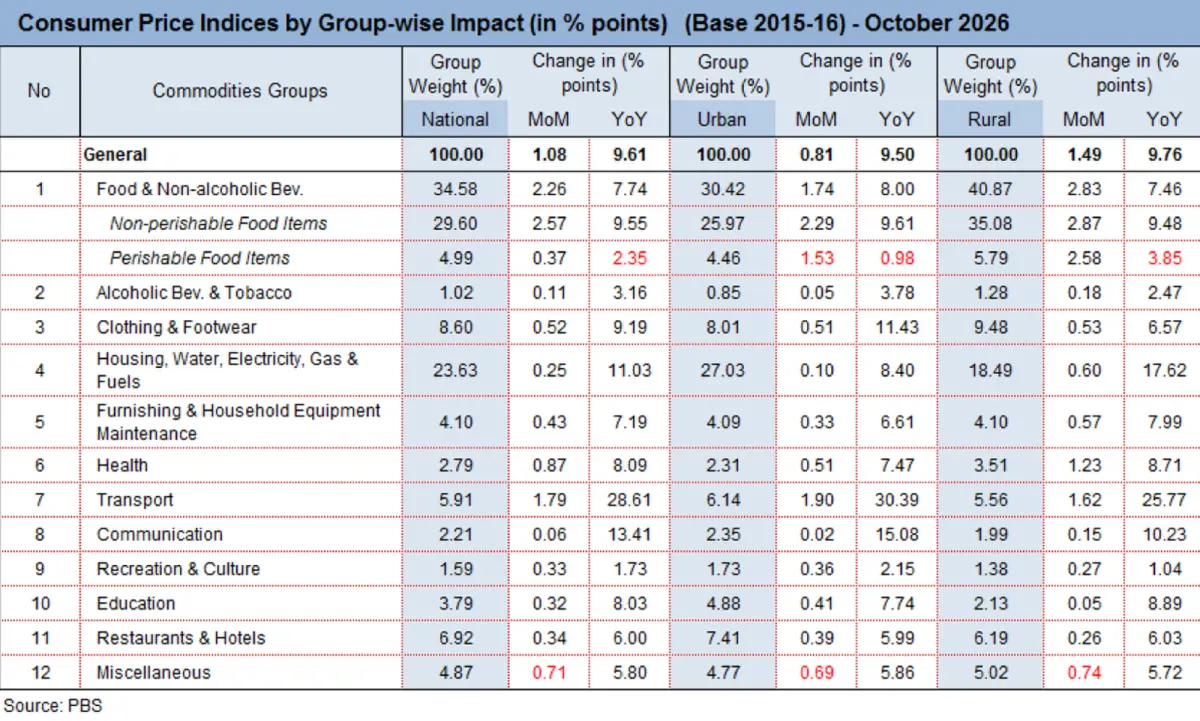
Food and energy remain the main sources of pressure. Inflation averaged 10.1 percent in the first four months of FY27, against 4.8 percent a year earlier. The war-driven energy shock is keeping prices elevated, while domestic food supply problems are adding to the burden.
There is some comfort in core inflation, which excludes food and energy. It eased to about 7.6 percent in October from 8.4 percent in September, suggesting that the broader transmission of higher energy costs remains contained. Even so, its four-month average of 8.3 percent remains above the 7.5 percent recorded a year earlier.
October’s immediate pressure came from food. Non-perishable food prices rose by 2.6 percent during the month and were 9.6 percent higher than a year earlier. The monthly increase was sharper in rural areas, at 2.9 percent, against 2.3 percent in cities.
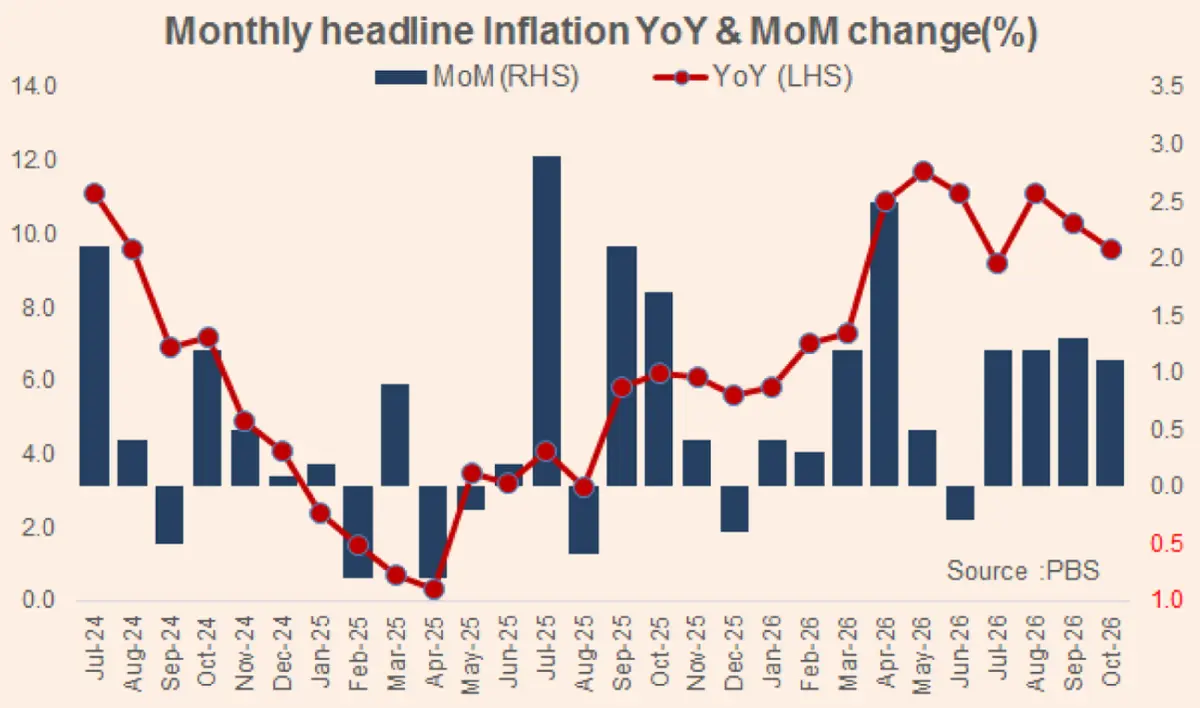
Wheat and flour were prominent contributors. Wheat prices rose by about 9 percent in both urban and rural markets, while flour became roughly 7.5 percent dearer in cities and 9.4 percent dearer in rural areas. Chicken prices increased by about 17–19 percent, alongside increases in several pulses.
The rural burden deserves attention. Average inflation over July–October stood at 10.6 percent in rural areas, against 9.7 percent in cities. October’s annual readings were lower, at 9.8 and 9.5 percent respectively. Rural households face higher headline inflation even though rural core inflation, at 7.1 percent, is below the urban reading of 7.8 percent.
Energy remains the larger threat to the outlook. Transport prices were 28.6 percent higher than a year earlier, while housing and utilities rose by 11 percent. Urban motor fuel prices increased by 41.3 percent and electricity charges by 22.9 percent.
LPG presents a particular winter risk. Urban prices were already about 69 percent higher than a year earlier in October. Further supply disruption would raise cooking costs for households and eateries just as seasonal demand strengthens.
Its small weight in the CPI limits its direct contribution to headline inflation. That does not make the household burden small. Higher cooking costs can also feed into prepared-food prices, although the timing and extent of that transmission will depend on how much businesses can pass on.
The distinction matters for core inflation too. Softer readings suggest that a broad second-round acceleration has yet to take hold. They do not, by themselves, establish the absence of wage pressure. Nor does contained pass-through necessarily mean households are coping well. Businesses may be absorbing costs through lower margins, while households cut other spending to pay for essentials.
The Inflation outlook therefore remains uncomfortable. If food and energy pressures persist, the annual rate could return to around 10 percent in November and remain near double digits through the winter. Favourable base effects may subsequently bring the reported rate down. They will not reverse the price increases households have already absorbed.
The State Bank has raised Its policy rate by 50 basis points to 12 percent. Its task is to prevent a persistent supply shock from spreading into expectations and broader price-setting. Further decisions will depend on energy prices, food supply and evidence of that transmission.
But interest rates cannot repair wheat supply arrangements, secure LPG deliveries or remove power-sector inefficiencies. Those responsibilities sit with government.
Fiscal constraints limit the room for petroleum levy relief. They do not excuse avoidable supply disruption or the continued transfer of energy-sector costs to consumers. Monetary policy can help contain inflation’s spread. Government must address the costs it controls.
For households, a lower annual inflation number is welcome. Relief will require the monthly bills to stop rising so quickly.





















Comments