


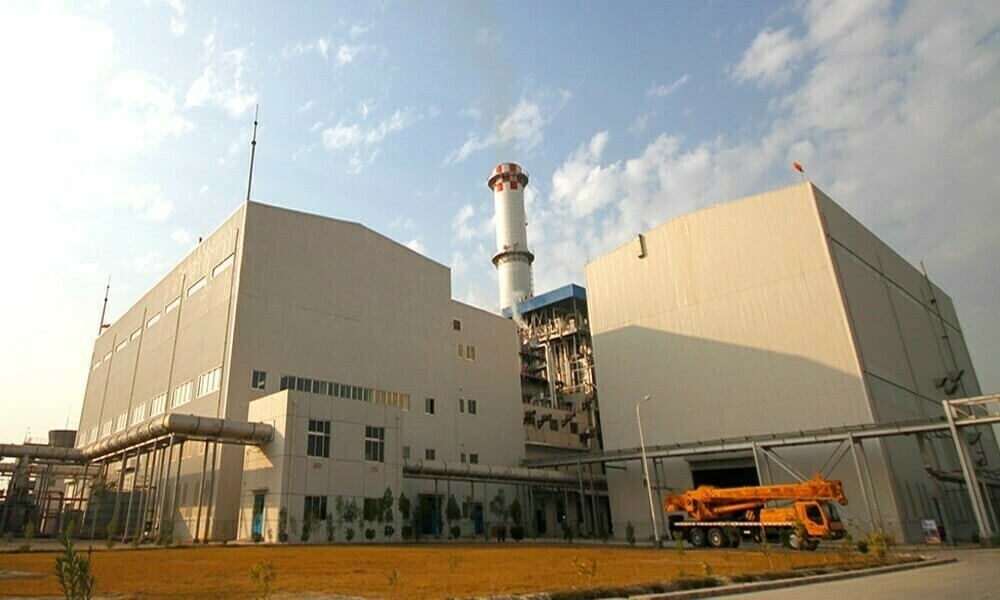
ISLAMABAD: Engro Powergen Qadirpur Limited (EPQL) has approached the Central Power Purchasing Agency-Guaranteed (CPPA-G) and the National Electric Power Regulatory Authority (Nepra), challenging the rejection or return of its invoices for electricity supplied under the power purchase agreement (PPA) in the absence of relevant government notifications in the Official Gazette.
In a letter dated September 28, 2026, addressed to the chief executive officer of CPPA-G, the Nepra chairman and the regulator’s registrar, EPQL argued that the absence of an SRO or Official Gazette notification for monthly fuel price adjustments and quarterly tariff indexations should not, by itself, disrupt contractual invoicing and payment arrangements.
The company maintained that CPPA-G’s position represented a departure from its longstanding practice of processing invoices on the basis of relevant Nepra tariff determinations published on the regulator’s website.
READ ALSO: Engro Powergen Qadirpur Limited: performance and outlook
The dispute centres on the interpretation and implementation of the power purchase agreement originally executed on October 26, 2007, between the then National Transmission and Dispatch Company Limited (NTDC), now referred to in the correspondence in the context of CPPA-G’s power-purchasing responsibilities, and the company now known as Engro Powergen Qadirpur Limited.
According to EPQL, CPPA-G has taken the position that the capacity purchase price (CPP) and energy purchase price (EPP) invoices submitted by the company cannot be processed without the relevant SRO or Official Gazette notification of the applicable tariff adjustment for the relevant month or quarter.
EPQL said CPPA-G had consequently refused to accept or had returned invoices on this basis.
The company argued that the issue was not whether statutory or regulatory requirements could be disregarded, but whether delays in completing the formal notification process could be used as grounds to reject invoices and disrupt payments due under the PPA.
In its letter, EPQL referred to Section 11(7) of the Regulation of Generation, Transmission and Distribution of Electric Power Act, 1997, read with Rule 18(2) of the NEPRA (Tariff Standards and Procedure) Rules, as well as clarifications issued by Nepra on July 22 and August 19, 2026.
The company said it was not seeking to circumvent applicable statutory requirements governing the legal effectiveness of tariff determinations.
Instead, it argued that routine monthly fuel price adjustments and quarterly tariff indexations determined by Nepra should be distinguished from the subsequent administrative process of issuing an SRO or publishing the relevant decision in the Official Gazette.
According to EPQL, publication in the Official Gazette is a formal process undertaken by the relevant government authorities and remains outside the company’s control.
The company maintained that delays in this process should not automatically become grounds for CPPA-G to reject or return invoices where the applicable tariff adjustment has already been determined by Nepra.
EPQL argued that the PPA did not contain any provision permitting CPPA-G to reject or return an invoice solely because the relevant tariff determination had not yet been published in the Official Gazette.
It further maintained that where CPPA-G required clarification or additional information to verify an invoice, the agreement provided specific procedures for obtaining the necessary details.
Similarly, where CPPA-G disagreed with the amount invoiced, the PPA provided a mechanism for disputing the invoice rather than rejecting it outright merely because the relevant notification was unavailable.
The company specifically referred to Section 9.5(b) of the PPA, which, according to its interpretation, requires an invoice to state the applicable energy price determined in accordance with the agreement, together with documents, information and calculations reasonably required by CPPA-G to verify the amount claimed.
EPQL said the agreement also contained a mechanism under Section 9.5(d) for CPPA-G to request clarification or additional information.
The company argued that these provisions established the contractual procedure for verifying invoices and obtaining supporting material.
It maintained that CPPA-G could not introduce an additional ground for refusing to process invoices when the agreement already specified the available mechanisms for clarification and disputes over invoiced amounts.
The letter also referred to Section 9.7(a) as providing a mechanism for disputing an invoice where CPPA-G disagreed with the amount claimed.
On this basis, EPQL argued that the absence of an Official Gazette notification should not automatically entitle CPPA-G to reject an invoice, defer its due date or suspend the contractual payment process.
The company’s position is that any disagreement concerning an invoice should be handled through the procedures expressly provided in the PPA.
EPQL also cited Clause 12.9 of Part V of Schedule I to the PPA, which it said specifically addresses situations in which revised tariff adjustments have not yet been notified.
According to the company, the clause provides that the last-notified adjustments continue to apply until the revised adjustments are notified, after which payments are to be revised accordingly.
EPQL argued that this provision establishes a contractual mechanism for dealing with the period between a new tariff determination and its formal notification.
It maintained that rejecting invoices because the relevant monthly or quarterly adjustment had not yet been published in the Official Gazette would be inconsistent with this arrangement.
The company further argued that delays in notification or publication are matters arising from processes undertaken by government authorities and should not, in themselves, interrupt contractual invoicing and payment.
EPQL stated that the PPA had been implemented for more than 15 years, during which invoices had been processed on the basis of Nepra tariff decisions in accordance with the timelines stipulated in the respective agreements.
It also referred to a 30-day execution-related term and the cost of working capital component in the CPP tariff framework as supporting its position that payment arrangements had been structured around established timelines.
The company warned that the disputed practice was directly affecting its cash flows and its ability to meet contractual and financing obligations.
EPQL argued that delays in processing invoices could create financial difficulties for a power producer even where the underlying tariff adjustments had already been determined by the regulator.
It maintained that a power producer should not be penalised for delays attributable to a third party performing statutory or administrative functions, particularly where the producer itself had no control over the publication of the relevant notification.
The company said the contractual framework did not provide for payment obligations to be suspended because of delays in the government notification process.
It therefore sought urgent intervention from CPPA-G and Nepra to resolve the matter and ensure that the applicable contractual and regulatory mechanisms were implemented.
In its letter, signed by Chief Executive Officer Athar Abrar Khawaja, EPQL requested CPPA-G to process its invoices in accordance with the PPA and not reject or return them solely because the relevant SRO or Official Gazette notification had not yet been issued.
The company also requested that, where clarification was required concerning a monthly fuel price adjustment or quarterly tariff indexation determined by NEPRA, CPPA-G should seek the necessary information under Section 9.5(d) of the PPA.
Copyright Business Recorder, 2026
















Comments